by Erin Joyce ’25
September 26, 2023
When the 2022-2023 Legislative Session adjourned for the summer on April 21 after a tumultuous spring, the public had questions. What is the legislature doing? How are things staying the same even after getting national attention? Why doesn’t the hill seem to care?
On March 27, an individual armed with assault-style automatic weapons breached the Covenant School in Nashville and took the lives of three nine-year-old students and three teachers: Evelyn Dieckhaus, William Kinney, Hailey Scruggs, Mike Hill, Katherine Koonce, and Cynthia Peaks. A week after the shooting, the Tennessee State Capitol was flooded with Tennesseeans—a large number of USN students among them—protesting the refusal of Republicans in the legislature, who have the controlling vote, to pass gun control laws.
In April, Tennessee packed the Plaza again, this time in support of House Representatives Justin Jones and Justin Pearson, who were expelled for taking the public’s protest to the well of the House floor. Jones and Pearson were reinstated just before the end of the regular Legislative session and subsequently requested Governor Bill Lee to call a special session specifically for the passage of gun reform bills.
Lee called the session on August 8 despite pushback from his fellow Republican legislators; however, its scope was hazy. Lee dedicated the session to bills concerning “public safety” and only mentioned gun control in brief on the last bill on his approved slate—one that would eliminate state taxes on firearm lockers, and safes. It would also provide free gun locks (devices resembling zip ties that can typically be purchased for eight dollars) with the purchase of a firearm. No further gun reform legislation would be heard.
When I arrived at the Tennessee State Legislative Plaza on Monday, August 21 for the first day of the session, it was noticeably empty, save for a pack of State Troopers gathered by the steps of the library and a booth set up by the Equity Alliance, a Nashville-based nonprofit dedicated to building Black political power. As I got closer to the Capitol Building, crowds began to appear: the most represented groups were the Equity Alliance, Moms Demand Action, a gun control advocacy organization, and several seemingly affiliated Libertarians attempting to talk with MDA representatives.

In one conversation, one representative of the Libertarian group said that “[the] government shouldn’t limit guns,” yet later said that “parents shouldn’t be allowed to permanently disfigure their child” in reference to gender-affirming care for trans youth, which was banned in the state of Tennessee earlier this year. A pregnant woman in front of me who had also been listening in shook her head and said, “ridiculous.”
Shortly after I entered the building, I watched as the state trooper in charge of the security desk pointed to the woman’s water bottle and said, “no water bottles inside.” When asked why, he said, “Water bottles make good squirt guns, and frozen water bottles make good weapons.” This policy was apparently targeted at protesting citizens who brought their water bottles to sustain themselves on the 94-degree day.
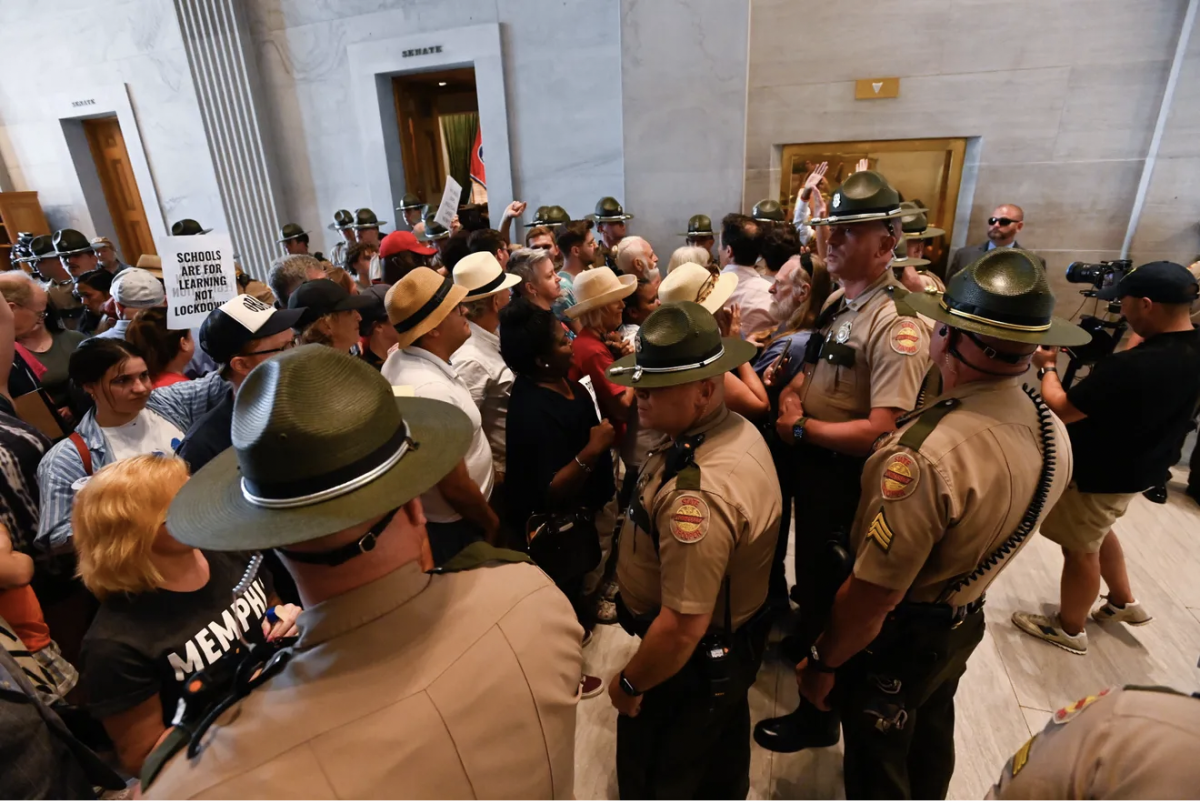
The rotunda, where protesters were usually allowed to gather, was empty, yet roped off, and protesters were crammed into a small lobby just outside the chamber. It was 2:49 P.M. The session was set to start at 4:00, and the Capitol was packed. Looking around, several slogans on signs prevailed: “Protect Kids, Not Guns,” “We Don’t Have to Live This Way,” and “Do Your Job.”
I watched as several people opened their phones to an Instagram livestream; in another room of the Capitol, the previously expelled Representative Justin Pearson was getting sworn in in front of a joyous audience. Not long after the ceremony ended, Pearson emerged from one of the elevators on the side of the lobby and started to lead a chant.
“Whose house?” Pearson asked the crowd.
“Our house!” they responded.
When the other representatives started to come out of the elevators, troopers tried to move protesters back behind them to give the representatives room, but the lobby was so packed that there was no room to move as the troopers directed. Despite this, troopers continued to push against the crowd.
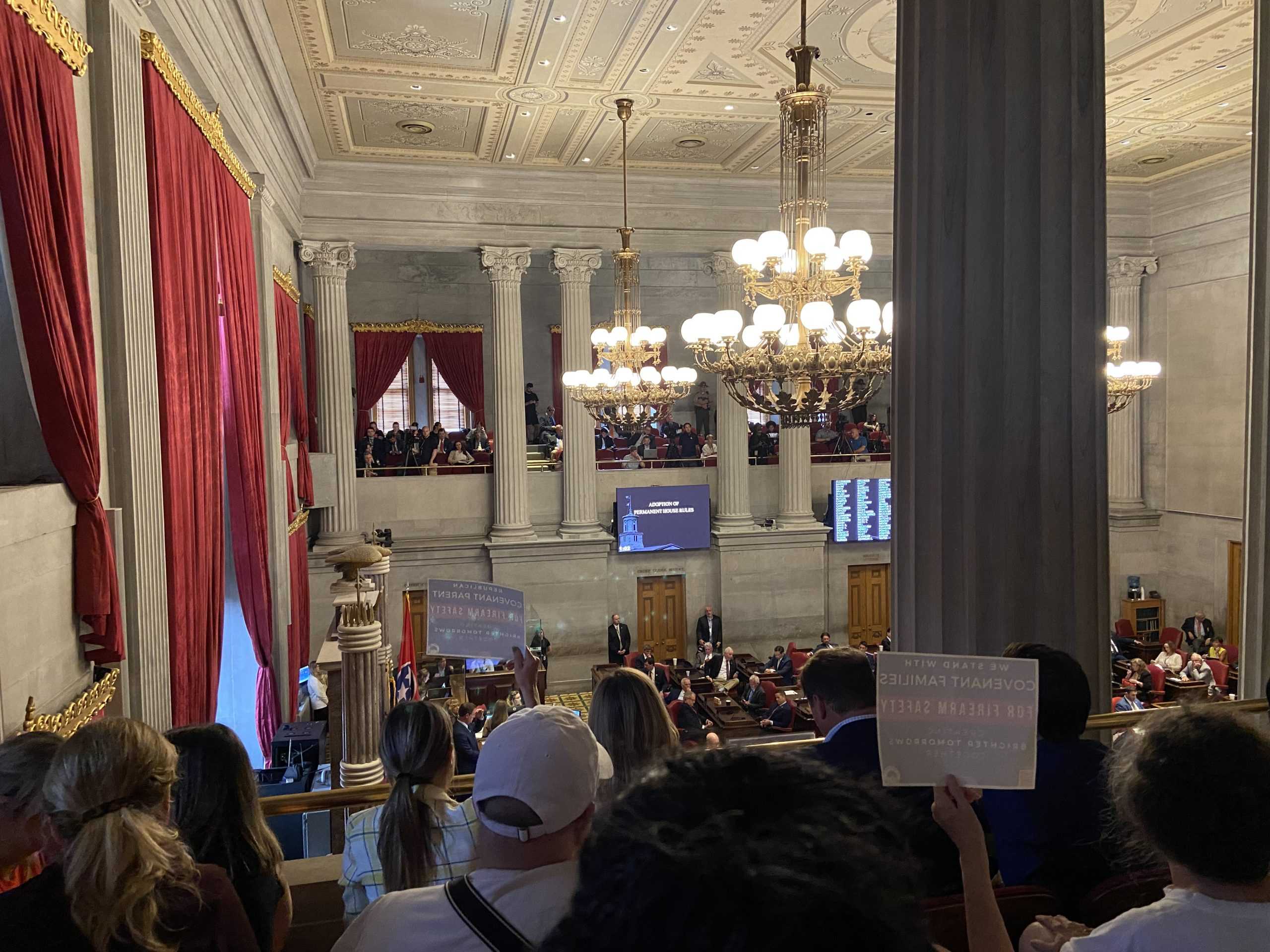
The last minutes before the session began were chaotic. One of the galleries had been reserved for the press, which was unprecedented: The galleries are meant to be exclusively reserved for the public to watch legislative proceedings. There was only space for 150 people to watch the proceedings from one gallery. I was among the last 20 to be admitted.
After I took my seat, a frustrated protester came around to share some relevant information: the state had instituted a bathroom policy for viewers in the gallery. Only one person would be allowed to leave the gallery at a time, and the same person who left would be required to return to their seat, meaning they wouldn’t be allowed to give their seat to someone else outside the gallery.
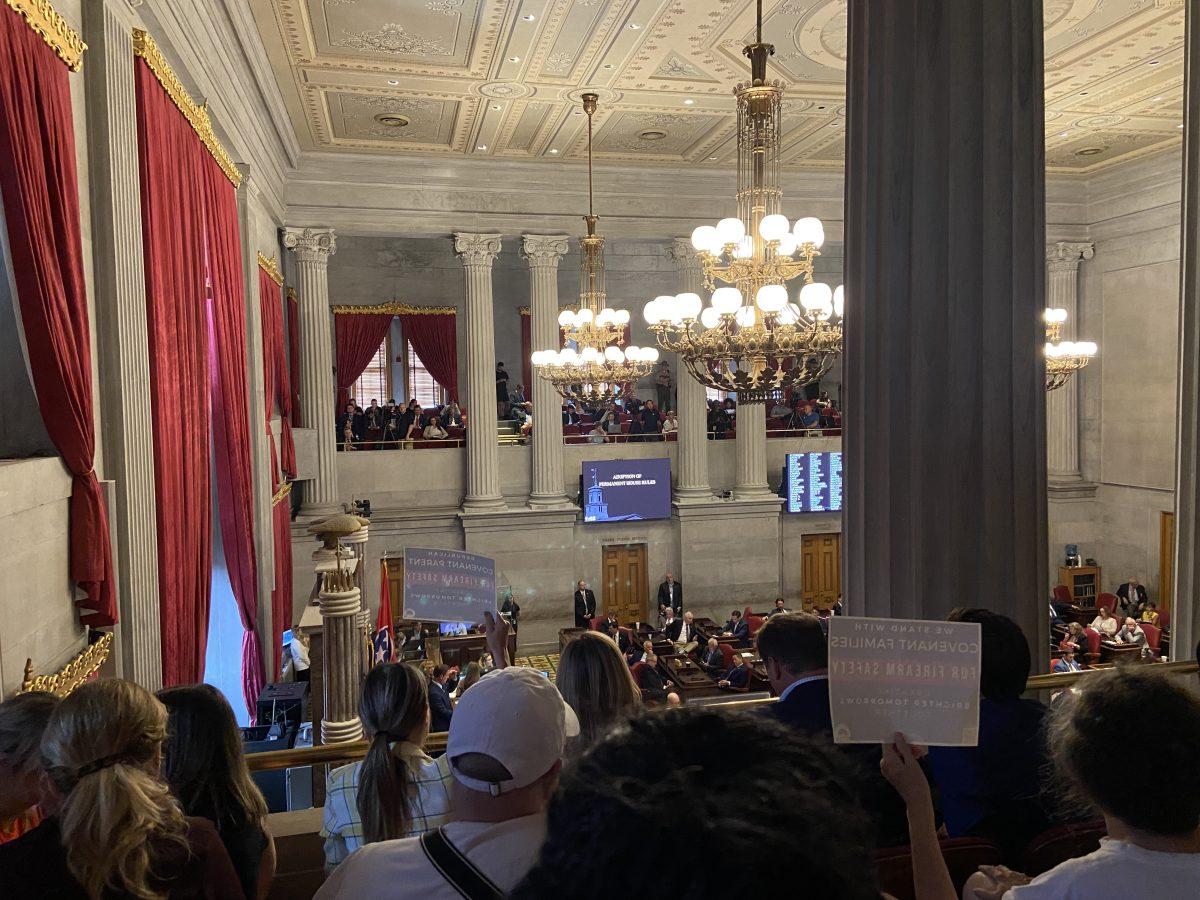
“Fascism at work,” the protester said.
Shortly after, House Speaker Cameron Sexton gaveled in the session. The first bill on the table was a motion to permanently adopt new House rules. The most notable changes were additional punitive measures for “material disruptions,” which were not defined anywhere in the bill. For one “material disruption” of House proceedings, the legislator responsible would not be recognized on the floor for three legislative days. For four of these disruptions, they would be silenced for the rest of the session.
There was outrage in the gallery and on the floor. “These rules scare me as an American who is supposed to represent free speech and democracy,” responded Representative Jason Powell when he was recognized for debate. “Shame on all of you who voted for these rules… if I cause a “material disruption…” the people of the 53rd district will be silenced for three days.”
The counterargument that Representative William Lamberth and other Republican representatives made to this point was that the two previous options to punish legislators, either censure or expulsion, weren’t sufficient choices.
Another stipulation in the rules banned protesters from carrying 8×11 signs—signs the size of a normal piece of paper—in the gallery. Multiple representatives, including Rep. Pearson, pointed out the hypocrisy of this, given that citizens can carry guns in the gallery.
“Why are we scared of a sign?” he asked his fellow legislators.
The rules passed. In the days following, troopers removed anyone bearing signs, including parents of children at the Covenant School, from House Committees until a federally-appointed Judge issued an injunction against the no-sign rule, lending a healthy dose of credibility to the recently popular saying: Tennessee legislators don’t pass laws, they pass lawsuits.