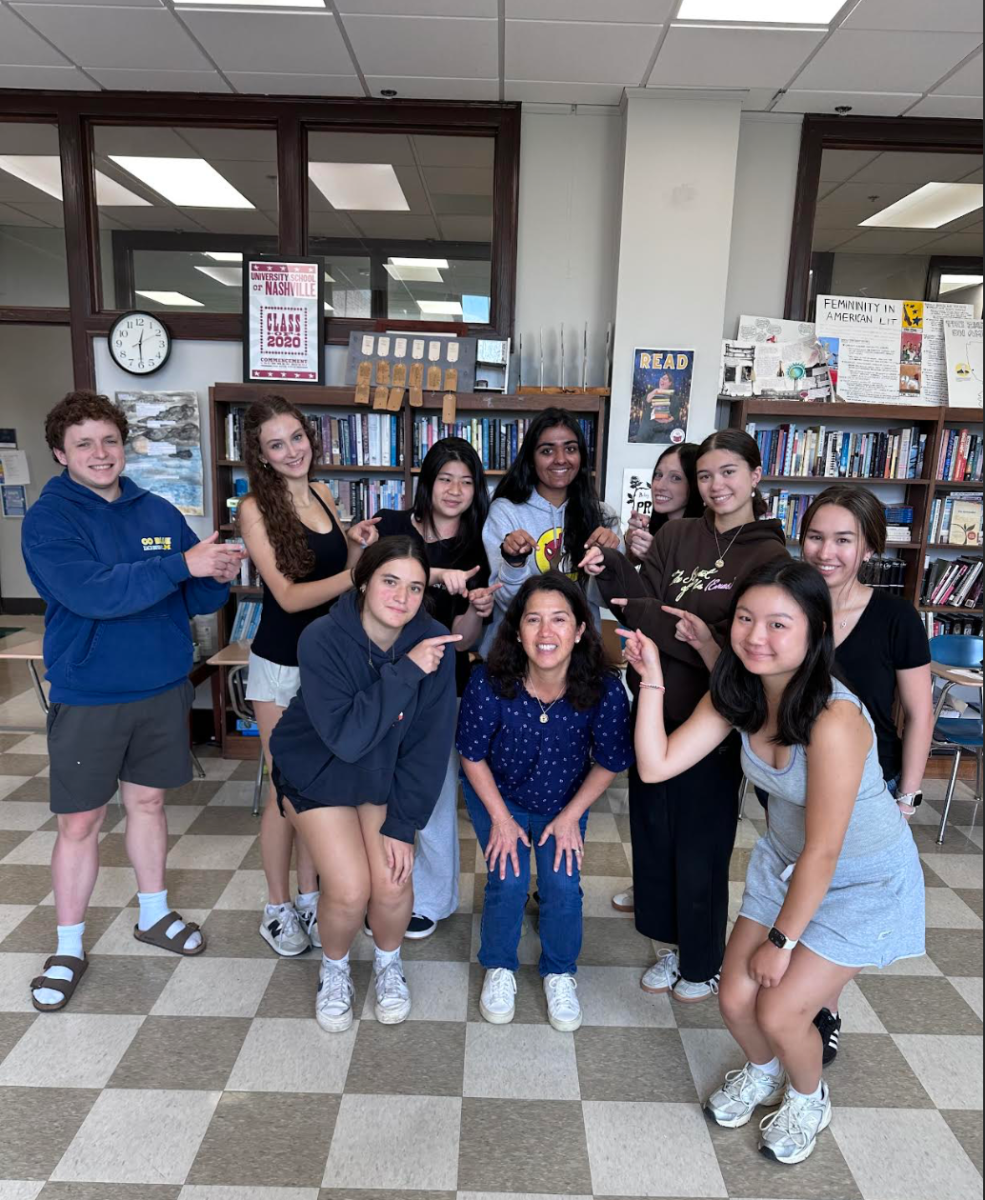
We had the opportunity to shadow Harpeth Hall seniors Lulu Kohler and Madi Whiteley, on Thursday, April, 23.
Going into the day, we were not totally sure what to expect. USN is very distinct in its culture, environment, and location, so we were sure Harpeth Hall would surprise us, and it did.
Before we even entered the campus, we saw multiple parking lots with more parking options for students, specifically upperclassmen, than can be provided by USN. With on-campus tennis courts, soccer and lacrosse fields, and a track, student-athletes only have to walk a few steps for their sports practice.
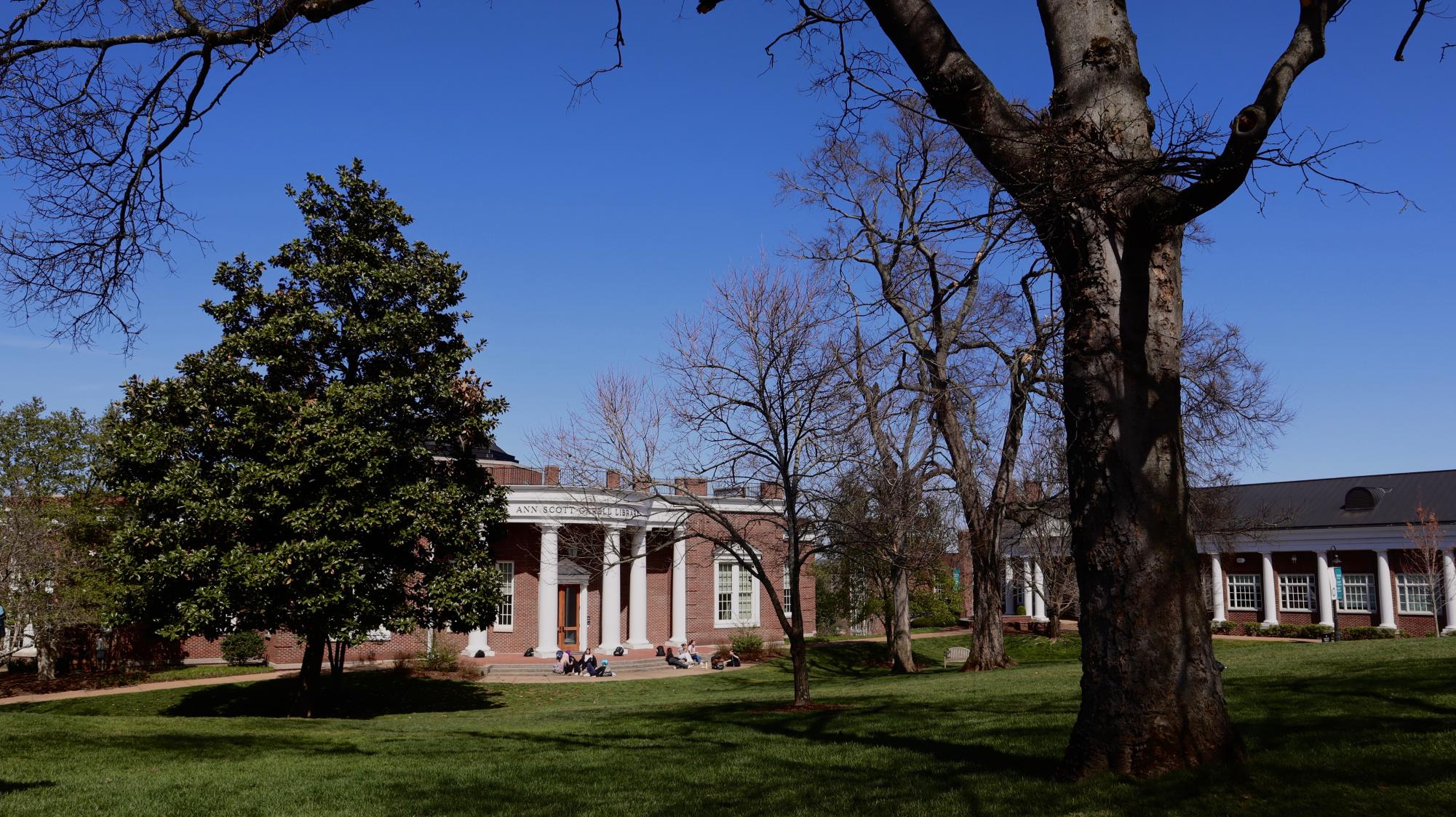
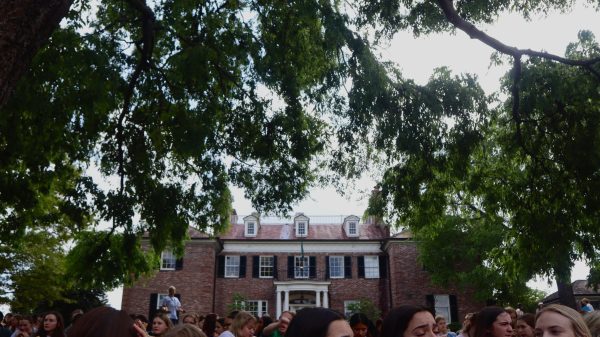
The rest of the campus is magnificent. What stood out most to us was the historic buildings and walkways that were situated next to green grass and benches. The size of the campus was unbelievable, and many of the students we spoke with said they were lucky to have such a great space. Over 40 acres are dedicated to athletic and arts facilities, educational buildings, administration, and dining.
The campus is historical – Souby Hall and the Senior House in the middle of the campus were the original two buildings when the school opened in 1951. In 1968, they added a middle school and began to expand their campus. Today, Harpeth Hall has have around 720 students and 108 faculty members, a significant increase from the 161 students and 15 faculty members in 1951.
Every single staff member we met was kind, considerate, and most of all, welcoming. When Jackie first arrived and was unsure of how to find Souby Hall, a faculty member helped her by giving clear directions, adding that she could ask anyone she came across and they would be willing to guide her. Cody had a similar experience, having lengthy conversations with multiple staff members. All of them were so excited to share their community with guests.
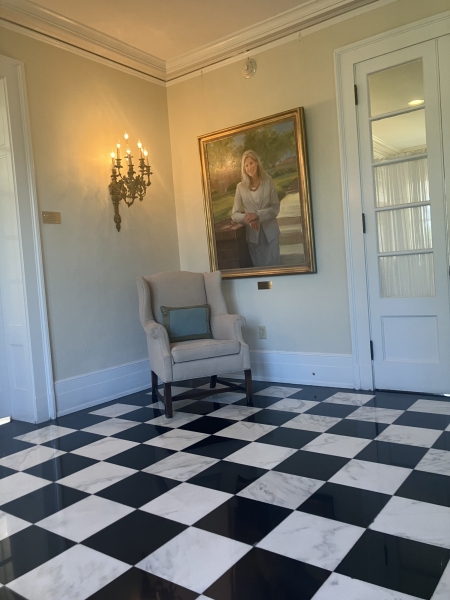
The campus was so big that any new visitor could easily get lost. Eventually, Jackie was able to find “Souby”, as the students call it, and was greeted with smiles from adults inside and offered a seat on a comfortable old-timey sofa. As students came and went, she noticed a couple of things they all had in common: ID badges around their necks or in their hands, and a clear dress policy that involved a uniform. Although the seniors had a “dress-down” day and many were in sundresses or sweaters and skirts, the rest of the students looked coordinated and orderly with plaid skirts and HH attire, a stark difference to walking the halls of USN.
Cody was in a unique position on Harpeth Hall’s campus: he was a guy at an all-girls school. As per usual, he was also late getting there and completely lost. During that initial walk to find where he was supposed to check in, Cody says he felt somewhat alien. At every turn, there was someone new, wearing a shocked expression at the fact that there was a guy on campus. Eventually, after ending up in the completely wrong building and receiving a visitor’s lanyard, the novelty subsided slightly.
However, even being totally outside of the campus norms, he was struck by how welcoming and inclusive an environment Harpeth Hall fosters. Everybody was excited to share what made their school such a unique place and was fascinated to hear about Cody’s experience at USN. Socially, Harpeth Hall’s environment seemed like nothing short of an open book–everybody seemed to mesh together amazingly well.
Jackie was able to attend a few different senior classes with Lulu Kohler, including AP Art History, AP English, and AP Chinese. Although the only class she was really familiar with was English, where they were currently wrapping up reading “Beloved” by Toni Morrison, she found the other classes to be intriguing in their own right. She could tell that the AP Art History class and teacher were loved by the students. Everyone was an active participant in class and took the information from the teacher’s lecture with curiosity and interest. Glancing around, Jackie noticed open notebooks, stickers with notable artwork, colorful pens, and focused hands that made sure to capture the meaning of every art piece discussed in class.
AP English was a different experience, though Jackie could easily compare it to how English classes generally work at USN. Everyone had read a portion of the book as homework, and a specific student had been chosen to complete a “reading summary,” which was read over at the start of class. Following the read-aloud, a “5QQ” (5-question quiz) was issued – a regular occurrence. Then, students broke into groups assigned by the teacher and shared their thoughts on a few discussion questions. The whole class came back together to review, talk about upcoming classes and assessments, and share reminders about the AP Exam. Overall, it was an enjoyable, lighthearted, and educational environment.
Although the average student-faculty ratio is 7:1, the AP Chinese class that Jackie attended had only two students. Jackie spent the class listening to audio excerpts on AP Classroom and picking up on certain words. It was an engaging experience even though she knew nothing about the language itself.
The schedule at Harpeth Hall is a little different than here at USN, with a 7-day class rotation dictating the classes students have on any given day. Additionally, a time is blocked out once every rotation for “Sun Clubs,” which are similar to electives here at USN, and include the Logos journalism program, which we’ll get into later. Overall, the students seemed pleased with the class rotations and the amount of designated free time. Additionally, every Wednesday, they have a late start where classes begin at 9:00 AM rather than 8:00 – a feature of the school that is appreciated by all who attend.
Lunch was one of the highlights of our day. If you were to ask a student in the USN halls at random what they know about Harpeth Hall, it would not take long for someone to mention the reputation surrounding their food. Harpeth Hall’s lunches are famously good. Right at 12:15 PM, as classes let out, a rush of students descended on the cafeteria.
The beautifully lit and spacious building felt more like a college dining hall than anything else. Lines moved quickly and efficiently, and students were met with myriad food options. The day’s lunch was chicken and waffles, and we could not hide our shock at just how good it was. The chicken with sriracha honey? Divine. Smore pizza? Exquisite. It was safe to say that the lunch, also provided by SAGE, lived up to our high expectations. The students themselves seemed also totally enthused with the lunch. None of the general apathy that is known to surround school lunches was present, which was neat in its own right.
Harpeth Hall’s newspaper, Logos, is utterly different from what we were used to here at The Peabody Press. With a staff of over 40 people, encompassing roles from “freshmen interns” (who seem to be responsible for every menial task possible) to an editor who specializes in graphics, competition for what content actually makes the newspaper is fierce. Oftentimes, writers have to vie for specific spots in their assigned section due to the sheer number of people working on the newspaper. This stands in stark contrast to our nine-member writing staff at USN, which often relies on guest submissions to help fill out each issue of our newspaper.
When talking with a number of Logos’ staff members, they were outright shocked at the prospect of a newspaper not only functioning, but thriving with such a limited staff. This contrast is partly due to the structural differences in how these two newspapers run.
At Harpeth Hall, the newspaper operates as an extracurricular rather than a class, which makes it a more schedule-friendly, lower-commitment endeavor. This also means, in the words of current Logos editor-in-chief Madi Whiteley, that the newspaper can be seen as more of a “résumé builder,” which can create challenges with people living up to their commitments. She adds that writers sometimes fail to deliver articles because they lack genuine commitment to the newspaper, leading to occasional last-minute scrambles to write entire articles during the editors’ “Saturday workdays.”
In terms of workflow and publishing rates, the two papers are remarkably similar, both publishing around four or five times a semester, with relatively similar amounts of content.
Cody had the opportunity to sit in on a meeting between Logos’ faculty sponsors and the new editors-in-chief (EICs) for the 2026-27 school year. Summer projects were the main topic of discussion while they waited for section editor applications to roll in.
Among their paper’s goals for next year, a few rose to the top: creating a new website, updating their style guide, and re-evaluating their layout practices. These conversations felt remarkably familiar, with a focus similar to much of what we have discussed and done with the Peabody Press this year. The only noticeable difference is that these conversations were held exclusively with the EICs and advisors, rather than with the staff as a whole.
The experience was emblematic of the biggest difference between our two papers: our smaller staff allows for more collaboration in the creative process. While a larger staff has many inherent benefits, we left the day thinking that there is an intrinsic, unique value to the way the newspaper here at USN operates.
On the day of our visit, the seniors spent their lunch period in an “Almost Alumnae Luncheon.” The mother-daughter lunch is just one of the many senior traditions and privileges, which seem to be a point of emphasis on Harpeth Hall’s campus. Each year, the senior class chooses a theme before the first day of school as a fun way to build a sense of community coming back from summer break. Additionally, they finally get access to the much-coveted Senior House. The small cottage, situated right next to Souby, serves as a student hangout spot exclusively for seniors. It is decorated every year to match each class’ theme and is the site of the “signing wall,” where seniors actively sign a wall when they commit to a college. These signing days are a highlight of the end of the school year. Everyone attends and has a chance to celebrate their classmates’ achievements and decisions, which once again speaks to the incredible sense of camaraderie and community within Harpeth Hall’s halls.
We really appreciate being hosted by students from Harpeth Hall’s Logos Program. Thank you to Mr. Guthrie, Lulu Kohler, Madi Whiteley, Sophia Huddleston, Elizabeth Eyler, and all of the administration and students who made this visit happen. It was a great opportunity to see the different environment, classes, and campus culture in comparison to USN.
Going to a school like USN, we’re often compared to other private schools like MBA, Ensworth, and Harpeth Hall.
It’s easy to get lost in the USN bubble, so experiencing a day in the life of a student outside of our typical environment was new and exciting.
We’re glad we went.