Those who have taken a dance class before either have the physical and mental rigor that comes with excelling in dance, or can respect it.
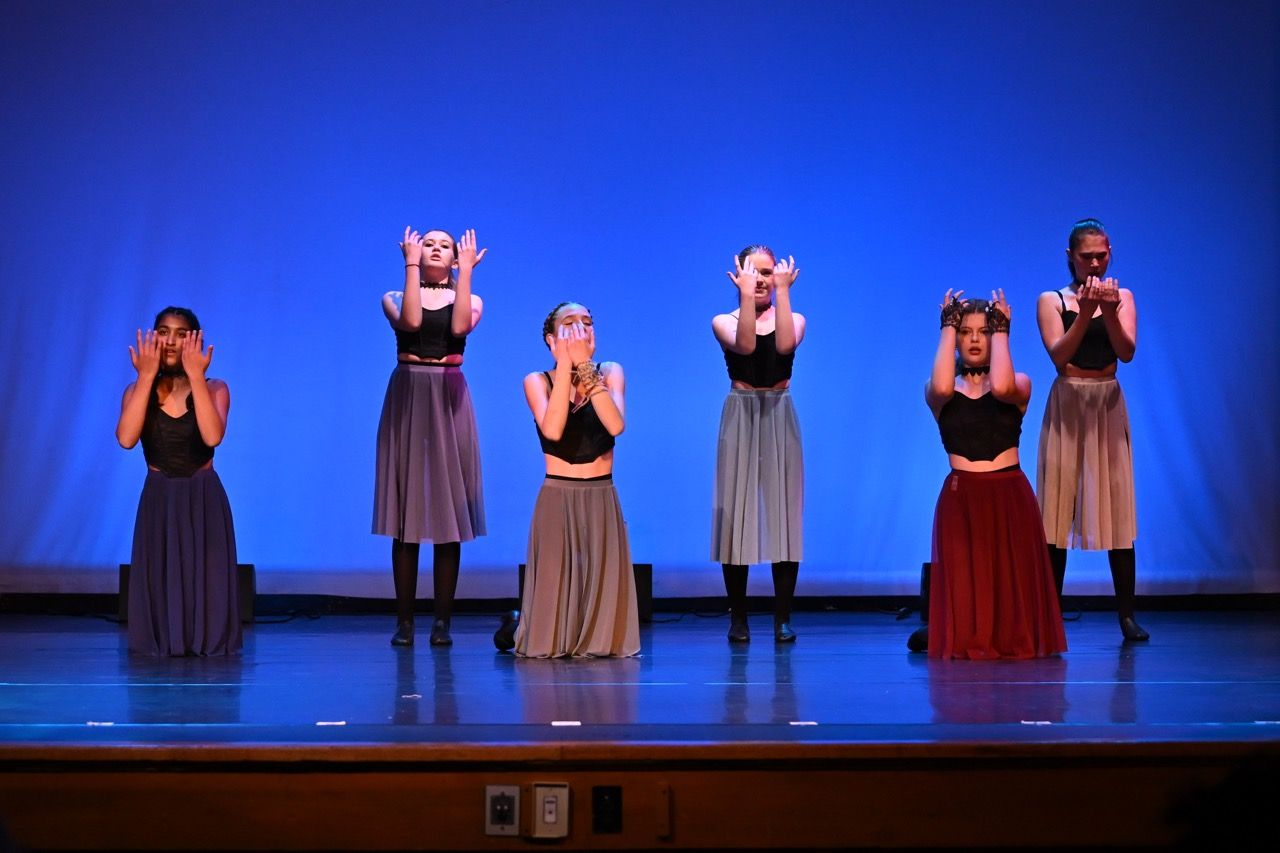
The high school dance classes offered at USN, though less competitive than local dance companies such as Nashville Ballet, continue to provide educational dance opportunities to the portion of students who choose to enroll – 8.7% in the 2025-26 school year.
In comparison, around 8.5% of students are enrolled in the HS MIC (musicianship, improvisation, composition) Ensemble and HS Band class, though enrollment in band requires students to take it both semesters, which is not the case with any of the dance classes.
Out of 402 high school students, 35 students enrolled in dance courses offered by high school dance teacher Caren Lyons, spread out over the total five class periods. This year, USN offers Dance Fitness and Performance, Foundations of Dance, Intermediate Dance, and Advanced Dance to students. Based on course enrollment and student interest in the Spring, the school decides which courses to offer for the subsequent school year.
Each dance class counts for both a Physical Education credit and meets the Performing Arts credit requirement for students. Of course, while the motivation for taking a dance class can sometimes simply be to meet a credit requirement, often students seeking a deeper understanding of, or interest in, dance will enroll.
The actual content of the classes can change every year, aiming to become individualized for the students in the room. For example, this semester, the Dance Fitness class has become a more foundational course, focusing on the styles and movement aspects.
“Generally, as the course level gets higher, there is more of an emphasis on working to become a better performer and develop an artistic identity,” said Lyons.
The courses have evolved over the years for a multitude of reasons, including the fact that there are waves of student interest that come and go over the years.
Additionally, one interesting theory is that the 2025-26 schedule change to a three day rotation has made it more difficult for students to take art classes during the day. Though this theory is not yet supported by much research, it’s one that might explain the lower numbers of participants in dance classes in recent years. Of course, enrollment and interest, and numbers ebb and flow, even year to year, just like the place that dance has in our community. But one thing is for certain: it is always driven by the interests of the students.
Expanding the dance program is an idea that is being considered as a possibility, but any sort of change is dependent on the interests of students. Other dance-adjacent opportunities at USN include musical theatre dance, the cheer team and, in past years, a dance team that has performed at athletic events. There have also been performances for lower and middle school by high school dancers, but these opportunities alone aren’t enough to strengthen and expand the dance program as a whole.
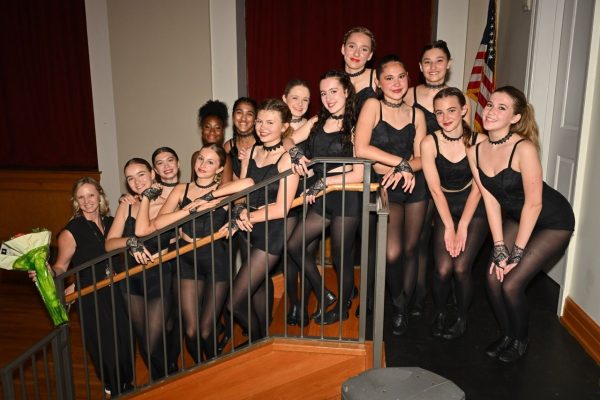
Lyons noted, “It’s so difficult to do so because the USN community is focused on many different endeavors.” Lyons says that finding a balance is the best option.
To add another layer of complexity, next year, USN has decided to introduce ‘Advanced Topics’ courses. For the performing and visual arts, the impact will vary, and it is an opportunity to add more accelerated subjects to class or dive even deeper with a focused independent study. Next year, the department will offer AT Dance Composition and Performance.
Lyons discussed the range of student experience and interest within even a single class.
“Those are two opposite extremes, but one of the things to me that is so beautiful and special about our dance program is that we put all those people together,” she said.“It’s really important to be able to learn with people of different backgrounds and with different levels of interest. That’s the world we live in – the world where we’re trying to be able to have conversations with people that disagree with us, and so finding that in the dance studio is where that magic happens.”
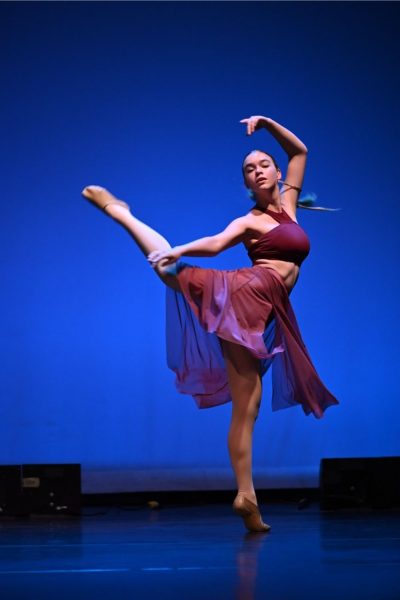
Lyons says that because USN is not an art-centered school in the way that, for example, Nashville School of the Arts is, the groups that are placed in dance classes are decided based on student schedules as opposed to proficiency levels. This results in students learning how to collaborate with people who have different levels of experience, a valuable skill to learn sooner rather than later.
By looking into the future and speculating on potential changes to the dance program, the question of cross divisional collaboration appears. Because USN is a K-12 school, there are so many different skills that are taught to students from kindergarten up that it can be hard to determine where dance, movement, and expression might play a part in early development. It is important for young kids to incorporate movement into their everyday school routine, and dance would be an amazing way to do so.
A typical Advanced Dance class in high school at USN would look like walking into one of the two studios and beginning glass in a group circle discussion where everyone is invited to share what is going on in their lives. Next, class involves a physical warmup that focuses on different dance styles because, as Lyons said, “there is no right way to do it.” The rest of class could then involve progressions, improvisation exercises, or choreography.
Sydney Laureys ‘27 discussed her perspective on classes within the USN dance program, showing the importance of collaboration.
“[The class] fosters creativity, but also focuses on an individual’s contribution to a group and that part of teamwork,” Laureys said.
Lyons herself grew up dancing in a studio, was on her high school dance team competitively, and then studied dance in college, focusing on performance and the style of American and commercial dance. After graduation, she performed for four years before attending graduate school at Lesley University to get her masters in dance therapy. She then focused on inpatient and outpatient movement therapy, allowing her to explore the more artistic side of dance, rather than commercial.
Lyons started teaching at USN in 2019, and her goal since has been to bring her own dance background to each class, matching the student interest in dance education.