Artemis II, the second stage of NASA’s long-term plan to establish a permanent lunar bas, concluded its missions on Saturday, April 11.
Its four astronaut crew — Commander Reid Wiseman, Victor Glover, Christina Koch, and Jeremy Hansen – participated in a variety of firsts. They traveled the farthest from Earth any human being has ever been, reaching a distance of 252,756 miles from Earth. Koch and Victor became the first woman and Black astronaut, respectively, to journey to the moon. The crew of the Artemis also became the first people to return to the moon since 1972.
They also participated in, arguably, the most sentimental moon mission ever undertaken. Humans have been looking to the heavens since the birth of our species. Counting the stars, reaching our hands up to try and touch the sky, attempting to imagine what might be beyond us and our world.
Detractors of space travel criticize its prohibitive expense and lack of practical value. However, NASA research has led to a variety of important discoveries that we use in our daily lives. Wireless technology, memory foam, CAT scanners, LED lights, and the portable computer all emerged from engineers attempting to overcome challenges presented by space travel.
It’s a testament to what our species can achieve when we gather our best and brightest to work towards a goal. The original Apollo moon missions, beginning in 1968, brought a divided nation together in a moment of wonder. Now, in 2026, NASA is attempting to inspire that same sense of awe once more.
For the entire time the crew was in the capsule, their experience was livestreamed directly to Earth, excluding notable breaks during sleeping hours and times where they were changing clothes. Because of this, their most heartwarming moments were captured on video.
On the first day of their trip, Glover commented on his view of Earth.
“Trust us. You look amazing. You look beautiful. We’re all one people,” Glover said.
As the crew passed over the far side of the moon, they discovered several new craters that hadn’t been discovered on previous missions. One was a bright spot, a highly reflective raised area. Wiseman had lost his wife to cancer in 2020, which left him to prepare for the Artemis mission as a single father. The other three crew members proposed naming the newly discovered bright spot after her: Carroll.
As the spacecraft went out of communication, completely cut off from contact with the Earth, Glover gave a moving parting message to mission control, captured by Newsweek.
“As we get close to the nearest point to the moon and farthest point from Earth, as we continue to unlock the mysteries of the cosmos, I would like to remind you of one of the most important mysteries there on Earth, and that’s love,” Glover said.
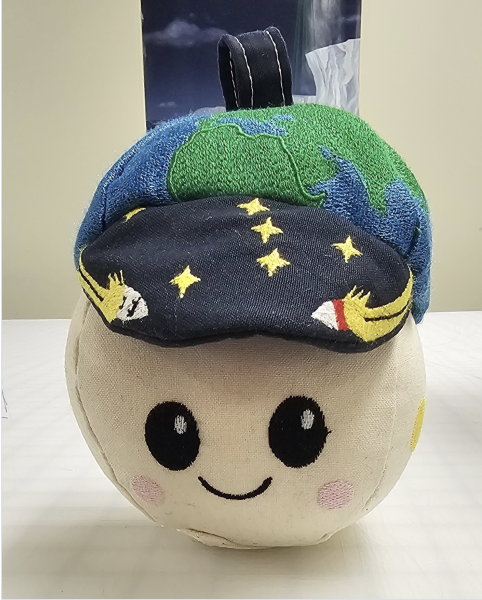
Along with the astronauts, a variety of meaningful objects were transported in the Orion capsule. A memory card containing the names of millions of people was contained in a plush toy designed by an 8-year-old. Rise, a representation of the iconic earthrise photo from the original Apollo missions, was created by Lucas Ye, a second grader from California. Rise serves as a gravity indicator: if the astronauts see it float, they know they’ve entered zero gravity.
Additionally, parts from the 2003 Columbia were incorporated into Artemis II’s boosters, and pieces of the 1986 Challenger shuttle were brought on board. In this way, those missions, which both ended in the tragic loss of crew members’ lives, finally reached the moon.
As the crew finally viewed the moon up close, they were overwhelmed by what they called indescribable beauty.
“It’s everything from the training, but in three dimensions and absolutely unbelievable,” Wiseman said. “This is incredible.”
“Copy, moon joy,” Jacki Mahaffey at NASA mission control laughed in response.
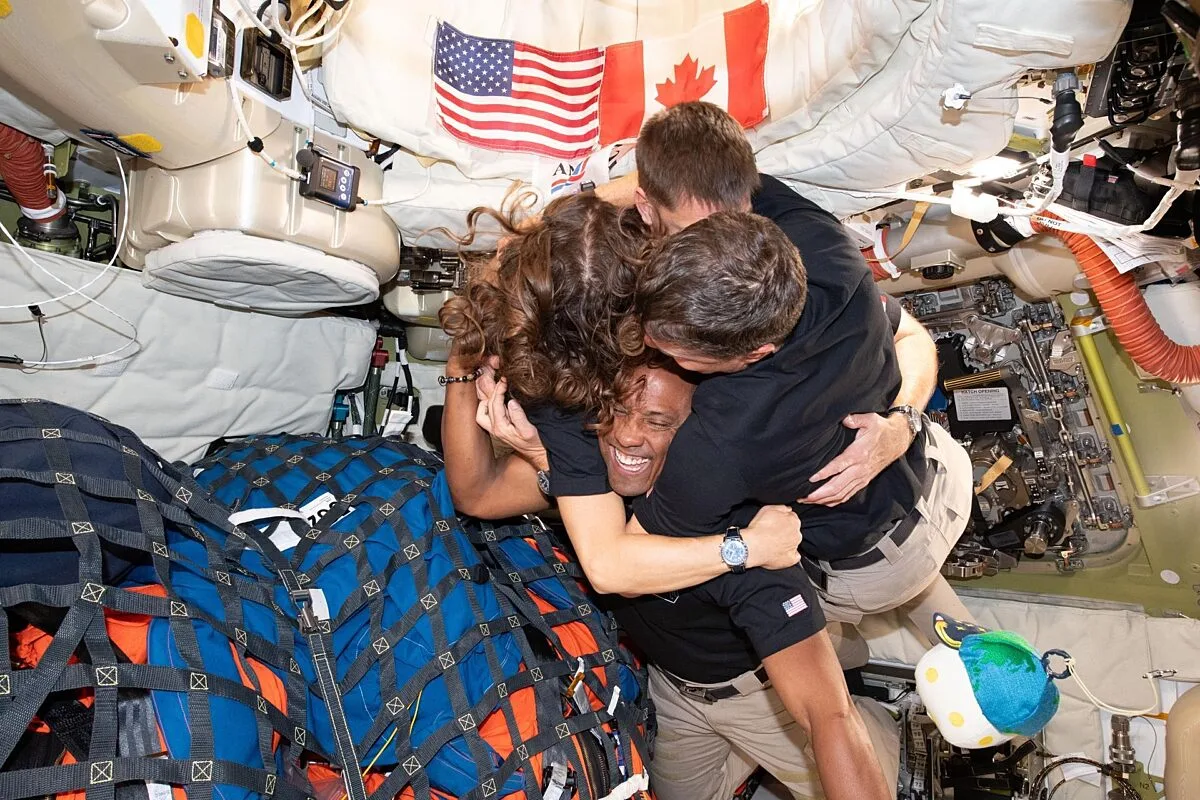
“Moon joy” has become a rallying cry for the mission, which was closely followed by millions back on Earth. There’s something beautiful in the way that as four people reached the furthest distance from Earth anyone had before, their instinct was to hug. This group hug, and what it represents, is a powerful reminder of what we can achieve as a species when we put our effort towards discovery instead of cruelty.
It’s the hope for a future where that kind of unity becomes commonplace: a future where we all reach towards progress, peace, and even moon joy, because of our love for our fellow people.