


























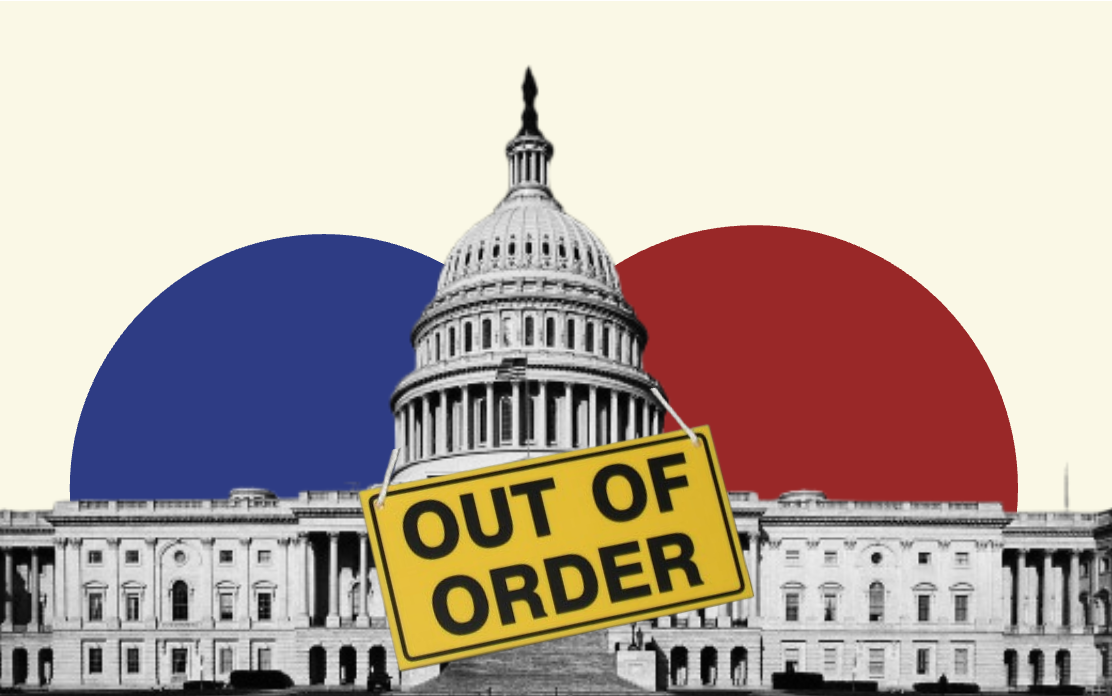
The recent federal government shutdown officially became the longest in United States history on November 14, lasting for 43 days.
This beat the previous record of 35 days from Sat, Dec 22, 2018 – Fri, Jan 25, 2019, also under the first Trump Administration, caused by disputes over the Mexican-American Border Wall and proposed expansion of the barrier between the two countries.
The shutdown, which began on October 1, was due to a failure to pass appropriations legislation, or legislation to provide funding to various governmental departments and facilities for their upkeep and personnel.
The legislation, having been passed in the House but blocked in the Senate by a coalition of Senate Democrats, was blocked from passing fourteen times in an attempt to include the extension of ACA subsidies and protection for federal workers from further layoffs.
While shutdowns have been occurring within the federal government since 1981, none have been as long, divisive, or harmful as this most recent one. The effects of this shutdown were widespread and catastrophic. Over 900,000 government employees were furloughed and another 2 million were working without pay.
This left vital programs and operations which rely on government funding in a deteriorated state.The Federal Aviation Administration, responsible for the safety of our airspace and air traffic control, is currently in a shortage of 3,000 air traffic controllers.
In a post on X on October 31, FAANews, the media wing of the Federal Aviation Administration, stated that “nearly 13,000 air traffic controllers have been working without pay for weeks” and that “currently, half of our Core 30 facilities are experiencing staffing shortages, and nearly 80 percent of air traffic controllers are absent at New York–area facilities.”
Since then, the operational ability of the FAA has diminished even more.
In a press conference on November 5, Transportation Secretary Sean Duffy announced flight cancellations and delays as a result of the staffing shortages.
“There is going to be a 10% reduction in capacity at 40 of our locations,” Duffy said. “This is about where the pressure is and how we alleviate the pressure,” he added, in a quote gathered by NBC News
But it isn’t just American airspace that is affected.
Programs such as SNAP, or the Supplemental Nutrition Assistance Program, have been temporarily suspended.
According to the USDA, SNAP provides low-cost food options and discounted groceries, and also funds EBT cards for nearly 41.7 million Americans.
With this essential program being suspended, 12% of the United States’ population were left without access to affordable food and groceries.
However, the shutdown isn’t just an issue of funding. The inability of both congressional Democrats and Republicans to come to a deal to end the shutdown highlights the growing political divide within our government.
The deal, proposed by Republicans on September 23, would extend government funding through January 30, 2026, while also funding SNAP and pay benefits for federal workers.
However, it does not include the health care benefits, such as improvements in the Affordable Care Act or the reversal of recent Medicaid cuts.
“This healthcare crisis is so severe, so urgent, so devastating for families back home, that I cannot in good faith support this CR [Continuing Resolution] that fails to address the healthcare crisis,” said Senate Minority Leader Chuck Schumer (NY) in an address to the Senate.
This is an important issue for the Democrats, who are attempting to garner power in any ways they can.
While seven Democratic senators and one Independent senator voted in favor of the funding plan, they have been shunned by their party for refusing to hold the line.
“Votes made it clear: the American people want leadership with a backbone. And at a critical moment when they need leaders to stay strong under pressure the Senate is on the brink of caving on a bill that the American people can’t afford,” said Democratic Governor of New Jersey Phil Murphy in a quote to Newsweek.
Many Democratic party leaders expressed their frustration at the lack of commitment from their fellow party members after their success in the November elections.
In a statement on X, California Governor Gavin Newsom called the compromise to end the shutdown “Pathetic.” and that “This isn’t a deal. It’s surrender.”
Members of Congress voting in favor of the measure have defended themselves by stating that an extension in the funding would allow time for Democrats to regroup and form a plan for getting their healthcare plans passed.
In a statement to Time, Senator Dick Durbin said, “There is very little about this CR [Continuing Resolution] that I like — but there is even less I like about shutting down the government.”
Others described the moral implications of keeping the government shutdown.
“I know the pain it is causing working families … With the government open, we can focus on passing a full, bipartisan budget for 2026 … If Republicans want to join us in lowering costs for working families, they have the chance to do so. And if they do not come to the table, they will own the premium increases they cause,” said Senator Catherine Cortez Masto in a similar quote to Time.
As the vote for the bill now makes its way to the House of Representatives after passing in the senate, it may lead to the passage of a vital funding bill and the possible reopening of the federal government.
However, little has been done to heal the widening partisan divide. It has revealed the split within the Democratic party and has further solidified Republicans’ power as a majority seat holder in both the Senate and House.
With another funding deadline looming on January 30, 2026, the question remains if Congress can come together once more to govern on the future of the American people.