by Emerson Unertl-Coffman ’28
October 2, 2024
On November 5, Nashvillians will head to the polls en masse to vote in the presidential election. They will also have the opportunity, however, to bring into effect a sales tax surcharge to support Nashville’s infrastructure in a plan labeled “Choose How You Move” by Mayor O’Connell.
The project plan, as described on transit.nashville.gov, claims to improve mobility connections and housing opportunities by creating bike lanes, sidewalks, and bus service linking more remote areas of Nashville together.
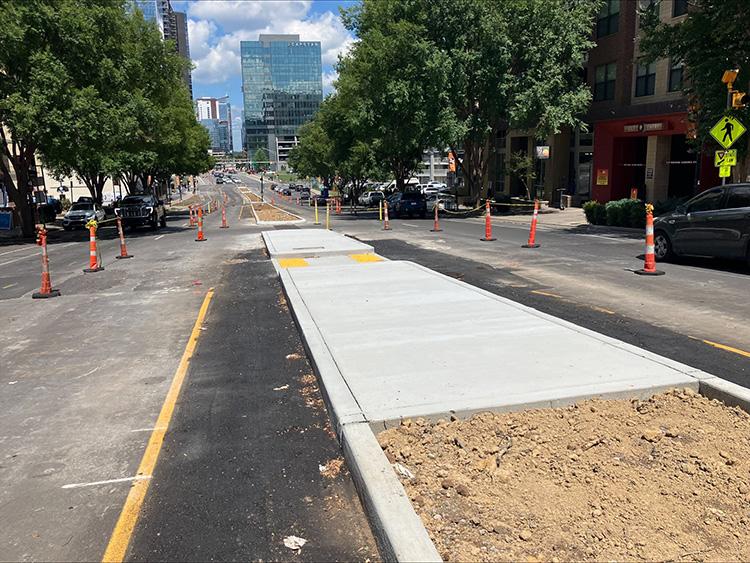
Some planned improvements include drastic restructuring of some of Nashville’s major transit corridors, referred to in the plan as “all-access corridors.” This would include better bus service, protected bike lanes, and more sidewalks all over Nashville.
Mackey Luffman, history and social studies teacher at USN, as well as frequent bike and bus commuter, has followed the project plan closely.
According to Luffman, getting more people out on bikes and buses could solve many of Nashville’s traffic issues.
“The way to solve the traffic problem is to get cars out of traffic,” Luffman said. “And when I’m on my bike or on the bus, that’s one less car.”
Luffman also notes that “over the past couple of years, parking in the USN lots, particularly on 19th Avenue, has become more of an issue. Riding my bike or taking the bus solves the parking problem right away.”
Another problem Choose How You Move will try to solve is the matter of cyclist and pedestrian safety. With a startling total of 67 traffic fatalities in 2023 alone, it is clear that improvement is necessary.
Steve Smail, a science and art teacher, website manager, and mountain bike coach at USN, notes that traffic can be quite intimidating at times. He bikes to school about once a week outside of the mountain biking season.
“I’m always afraid of a collision. I’m always afraid of someone not seeing me, or in some instances, I’m afraid of someone seeing me and not caring,” Smail said.
Another planned addition to Nashville’s transit system are 12 new WeGo transit centers around Nashville. Nashville’s current system is a “hub and spokes” model, meaning that all the buses leave WeGo Central, located in the middle of downtown Nashville, drive to the outer regions of Nashville, and drive back.
This model can disincentivize using WeGo for people living in the outer areas of Nashville to other locations in the outer areas. Doing so would involve taking the bus downtown and back out again, taking much more time than a car would.
Additional transit centers would make WeGo more available to people, said Luffman.
“My bus route is easy because I’m just on one line. But for other people I know who don’t have that convenience, it can be intimidating. They’ll have to make two or three transfers if they want to get from where they live to where they work,” he said.
Luffman also notes that the additional centers will help in a psychological sense.
“It will be simpler for people to see the bus as a viable alternative,” he said.
The funding for all these projects would come from a 0.5% sales tax surcharge, collections of which would start on February 1, 2025. It is projected to generate $150 million per year. The funding would mostly come from the sales tax, of which about 60% is paid by tourists. Combined with the supporting federal grants, Nashville residents and businesses could expect to pay for 28% of the project’s total funding
The conceptual implementation schedule would see the improvements over the next 25 years, with the tax surcharge ending once the outstanding debt has been repaid. Over the course of the first three years, Nashvillians would see WeGo service enhancements as well as improvements to sidewalks, safety, and lighting. By the third year, construction on West End, Downtown-Westside, and Charlotte Pike will be under construction, finished the year after.
Luffman acknowledges the long time frame of the project and its limitations.
“It’s not going to create a transit utopia. My generation will pass before I can live out in East Nashville and not need a car to, say, meet a friend for a picnic at Green Hills Park or go out to like, Phillips Toy Mart on Charlotte,” he said.
Still, if the plan lives up to all it promises to be, it will certainly be a huge benefit for everyone in Nashville, whether they take a bus, bike, car, or sidewalk.