by Bronson Schmidt ’25
March 7, 2025
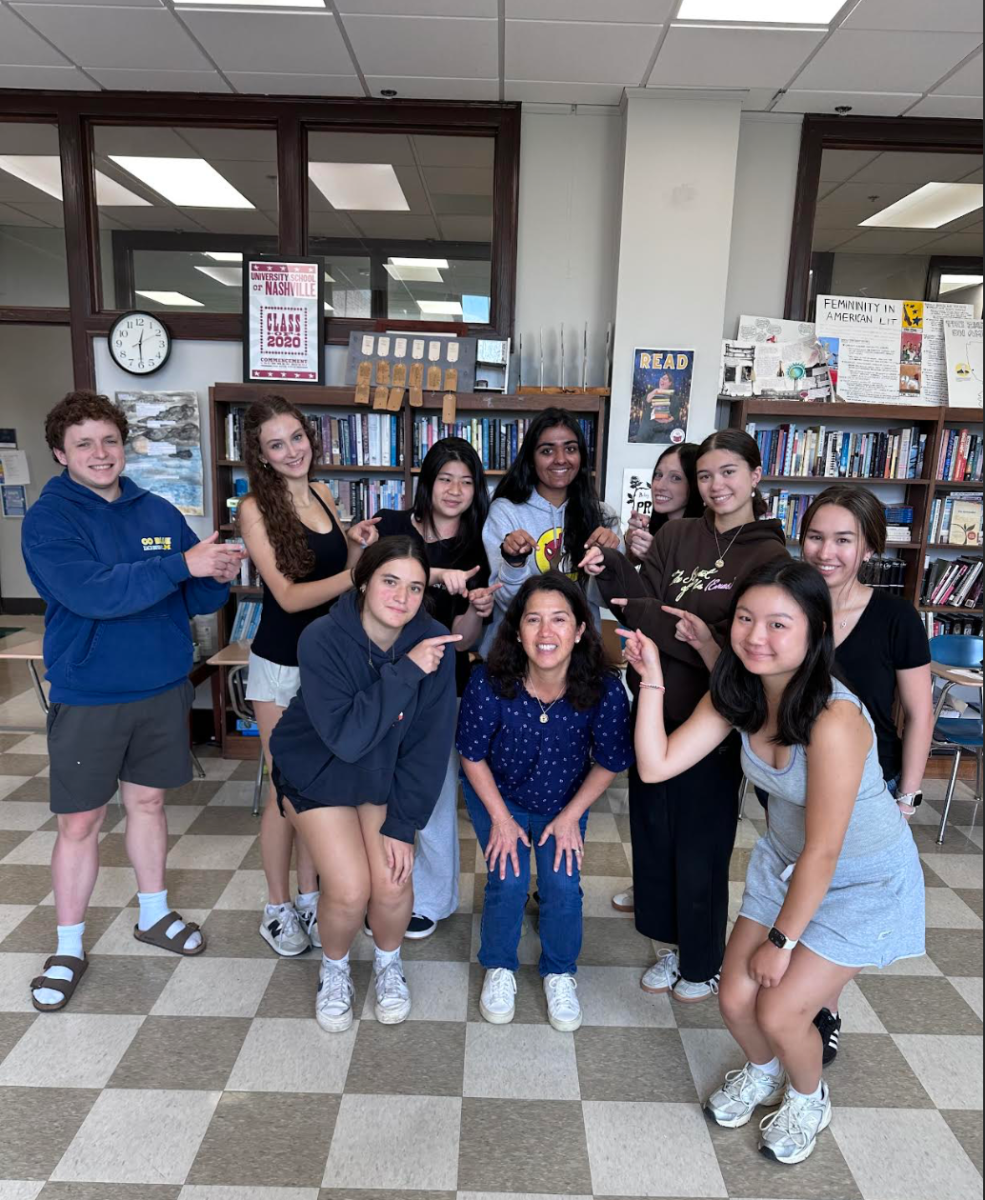
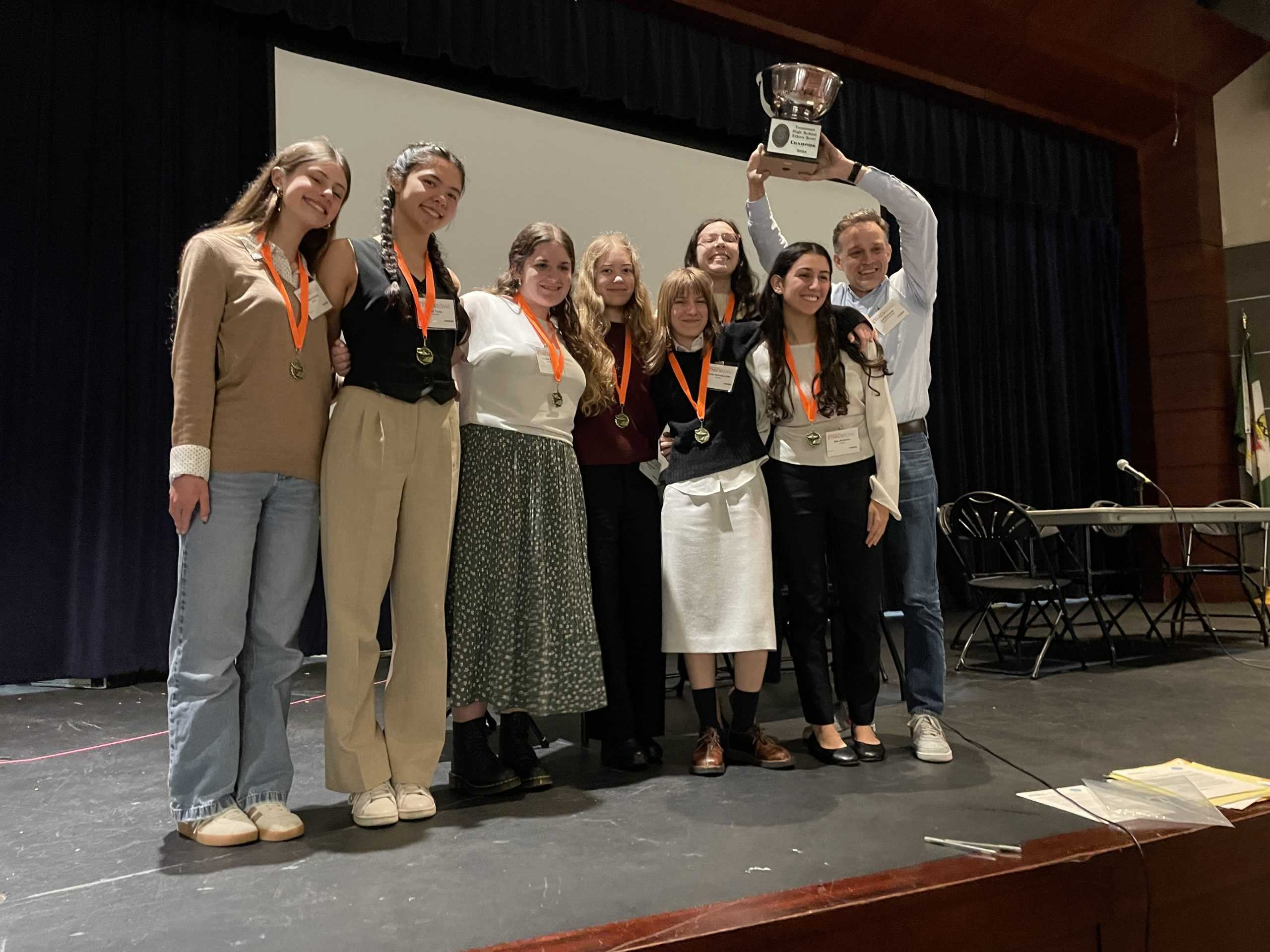
There is no better embodiment of USN’s curious spirit than our Ethics Bowl team. In the past two years the team has demonstrated an incredible mastery of competition and sportsmanship, representing USN all the way from West Tennessee to the national stage.
As Margot Ross ‘24 covered last spring, USN’s Ethics Bowl team had a phenomenal performance in 2024. USN’s Ethics Bowl team was created in the fall of 2022, and by their second year they had already secured a regional and divisional championship, securing a place at nationals. This year they have continued their success streak, becoming regional champions of West Tennessee and runner-ups for the multi-state divisional championship.
Ethics Bowl can be best thought of as debate, if debate weren’t a fight to convince someone that you’re more right than someone else, but instead an open discussion about how to reach a middle ground. Whereas debate pits two ideological arguments against each other in a fight to the death, Ethics Bowl invites differing viewpoints to be synthesized into some greater thesis, with an emphasis on the philosophical revelations that emerge along that process.
In order for this philosophical discussion to be directed towards a competition, the National High School Ethics Bowl organization releases a set of fifteen case studies of ethical dilemmas. These case studies all examine stories based on real life phenomena with necessary context and ask open ended questions for teams to contemplate. Ethics Bowl teams will create theses for each of these cases and practice the argument of these theses in preparation for the regional, divisional, and national competitions, which all use the same case set.
USN’s Ethics Bowl team began meeting in early autumn. Interest among students had increased from last year, sporting nearly twice as many committed members as before. This year the competition allowed for a school to send two teams, so team members were assigned to be on either the A team or B team.
The practice schedule for Ethics Bowl began as a once per week lunch activity, gaining more intensity and commitment during December and January. In order to divide fifteen cases among the members of A team and B team, teams were divided into three groups, each of which specialize on five specific cases. This separation of duty strategically sidestepped one of the biggest obstacles when it comes to USN’s extracurriculars– the exceptionally busy schedules of students.
“It’s super hard to get seven people to have meeting times when you have to meet multiple times a week. It’s super hard to work around everyone’s schedules. Everyone has different sports, different extracurriculars. It’s a lot easier to have groups of two or three people meet outside of the weekly meeting than to have everyone meet,” said Zinnia Nichols Loller ‘25, the founder and current captain of the Ethics Bowl team.
The separation of cases plays a pivotal role in the happenings of the standard Ethics Bowl competition round. In any given Ethics Bowl round a coin is flipped to determine the order of the two teams competing against each other. The first team is assigned a case and a question which they have five minutes to present on, after which the second team has two minutes to confer followed by three minutes to present their own thoughts and ask the first team questions. Then the first team gets to confer and respond to the second team for three minutes which is followed by ten minutes of questions from the round judges. This process then repeats but in the opposite order with a different case, where all the while judges are scoring both teams based off of their responses and presentations.
“Some of the things you get scored on by the judges are whether you acknowledge other viewpoints than your viewpoint, [and especially] respectful dialog,” said Nichols Loller. “It’s not just how good your own presentation is, but [also] the clarity of your argument.”
Understanding how to prepare for these rounds and the process of dynamically switching which member of the team is addressing cases is integral in preparing for the competition, which is exactly what the team practiced leading up to the regional competition on February 1.
The regional competition encompassed Middle Tennessee and was hosted in Knoxville by the University of Tennessee Knoxville’s Philosophy Department. After a three hour drive to the competition, USN’s A and B teams performed spectacularly in the competition.
“There were four seeding rounds, semi finals, and then finals, and if you don’t get to semi finals you get a consolation round. We won all the seeding rounds. We had perfect scores [except] we tied on one ballot,” said Nichols Loller ‘25, who was a member of the A team.
Along with the A team’s high scoring streak came a similarly spectacular performance from the B team. The B team had only lost one round by the start of the fourth round, landing both USN’s A and B teams in the fourth round competing against each other. This round proved to be incredibly close and a testament to the consistency of talent across both teams, with the A team winning by only one point. This interaction between A team and B team showed each team the other’s strengths in new ways.
“It was really nice to see, because the team is actually gonna be okay next year [after we graduate], because they were really good. […] We hadn’t really faced them ever,” said Caroline Keiper ‘25, a member of the A team.
“It was honestly a really good experience, and we didn’t feel any competition with them. [We knew that] whoever won, USN was winning and we knew that USN was bringing home a trophy either way,” said Nichols Loller ‘25.
USN did, in fact, bring home a trophy. After a strong final round, USN returned home to Nashville as regional champions, earning them a spot in the divisional competition, which encompassed states in South-Western America.
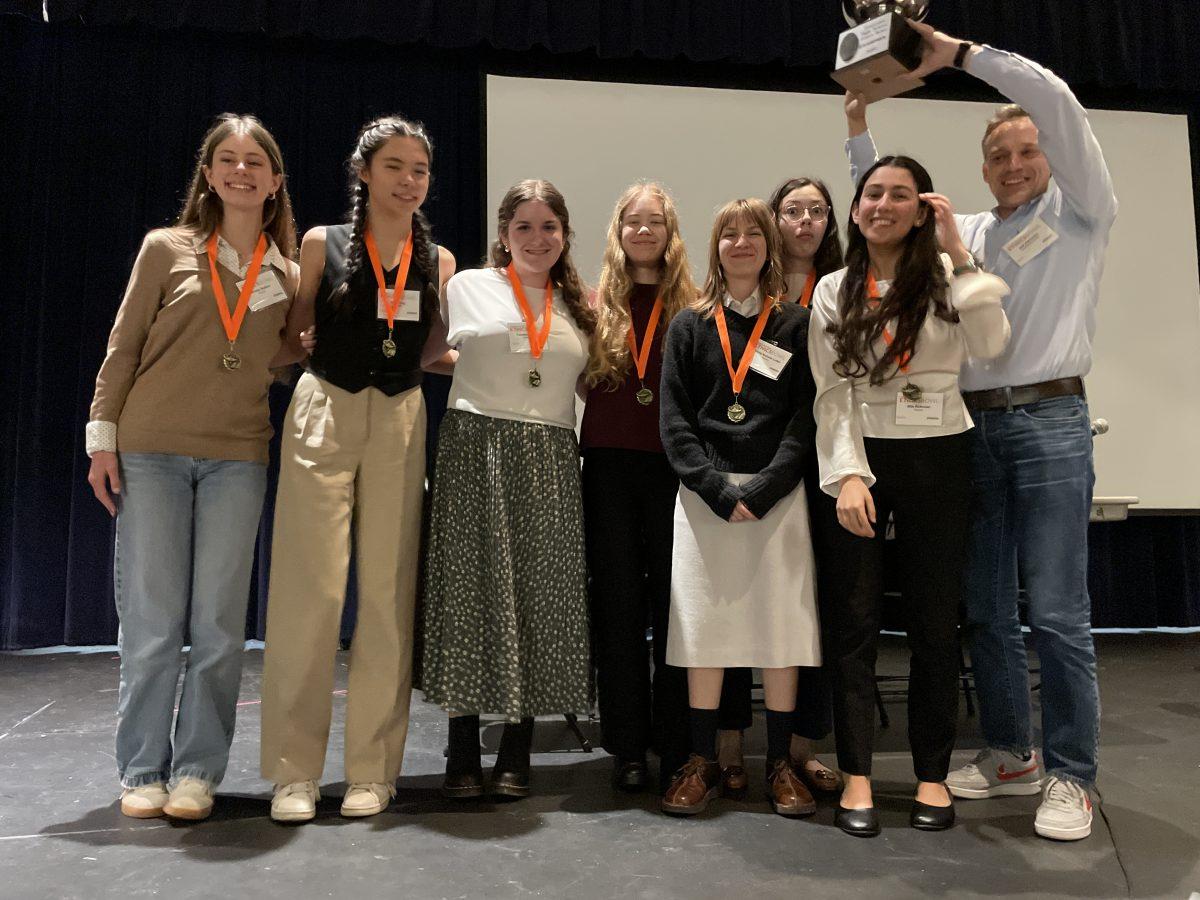
The divisional competition proved to be a well matched fight between USN and All Saints Academy, a school from Winter Haven, Florida, which consisted of one long round between the two teams. While Florida’s team ended up taking the first place trophy, USN still put up quite a fight.
“[Fair judging] is difficult because the judges are all philosophy people that have their own formed opinions. Sometimes with philosophy PhD students […] there definitely is some judge bias,” said Ellie Rothman ‘25, a member of the A team. “I think that worked for us a lot at the regional competition– it definitely helps us and hurts us sometimes. But I think in this case, they may just not have agreed with our arguments. There’s not much you can do about that.”
Here arises an underlying concern within the nature of Ethics Bowl; the framework of an elimination-based competition may undermine the importance of the ethical discussions themselves.
“Ethics Bowl is a philosophy competition, but at the end of the day, it is a competition. Its purpose is more than something like policy debate; to teach people new world views and encourage civil discourse and conversation. But I think that it’s still meant to do that in a competition format, and that’s what makes people want to do it,” said Nicholas Loller. “Having Ethics Bowl in a competition style format does hinder ethical discourse, […] because you can never have a truly tension free [environment].”
While USN’s Ethics Bowl team does compete for the sake of competition, it is undeniable that there is a vivid search for curiosity that drives the pursuit of Ethics Bowl’s excellence. The process of preparing for Ethics Bowl competitions does not only yield competitive advantages, but also insights about everyday life.
Some of the connections between Ethics Bowl and student’s lives can be found within the classrooms themselves. Amelie Soslow ‘25 found connections between the ethical dilemmas of the case sets with her AP Government class.
“A lot of the cases were about government this year, so I would learn something in AP Government and be able to apply that to the ethics that we were talking about. For example, there’s a case about whether it’s good to vote for a third party candidate, and last year there was one about secession,” said Soslow ‘25.
The importance of Ethics Bowl as a lens for life extends far beyond the classroom as well. Keiper, a former USN policy debate team member, expressed her profound connections between Ethics Bowl and debate in her Common App personal essay.
“I did policy debate for a while, and you argue about not really important stuff. It’s trivial– it’s like arguing for the sake of arguing, and you win by pointing out tiny little details [in] people’s arguments. But with Ethics Bowl, I feel like I’ve definitely learned to collaborate more, because you’re arguing to find a solution, whereas in debate, it was like you were arguing to win, and in Ethics Bowl, well, it’s like you’re arguing to find a solution,” said Keiper. “You collaborate so much that you train yourself to do that outside of Ethics Bowl as well.”
As the 2024-2025 school year comes to an end the sun will set on this year’s Ethics Bowl team. This year’s A team consists entirely of seniors who competed at Nationals last year, and so their graduation will undoubtedly spark major changes in Ethics Bowl’s roster and culture.
But if both A and B team’s performances have proven anything this year, it’s that Ethics Bowl is more than just a competition. It’s an invitation for moral discourse that exists beyond the realm of school teams and accolades; it is the pursuit of a better perspective of the world and a more meaningful era of interpersonal communication. While this year’s team will move on, their spirit will inspire