by Saawan Duvvuri ’26
May 2024
Feminism is on its rise in our society, and its impacts are flourishing across the USN community. With the advent of the #MeToo movement, the wide viewership of media like the Barbie Movie, and so many other feminist movements, women across the nation are fighting against oppression and advocating for gender equity.
Women’s rights movements are thriving on USN’s campus as well, and several women in the high school community are leading feminist change at USN. From starting clubs and organizations encouraging women to pursue male-dominated careers to teaching classes with diverse representation, women across USN are advancing gender equity in our high school.

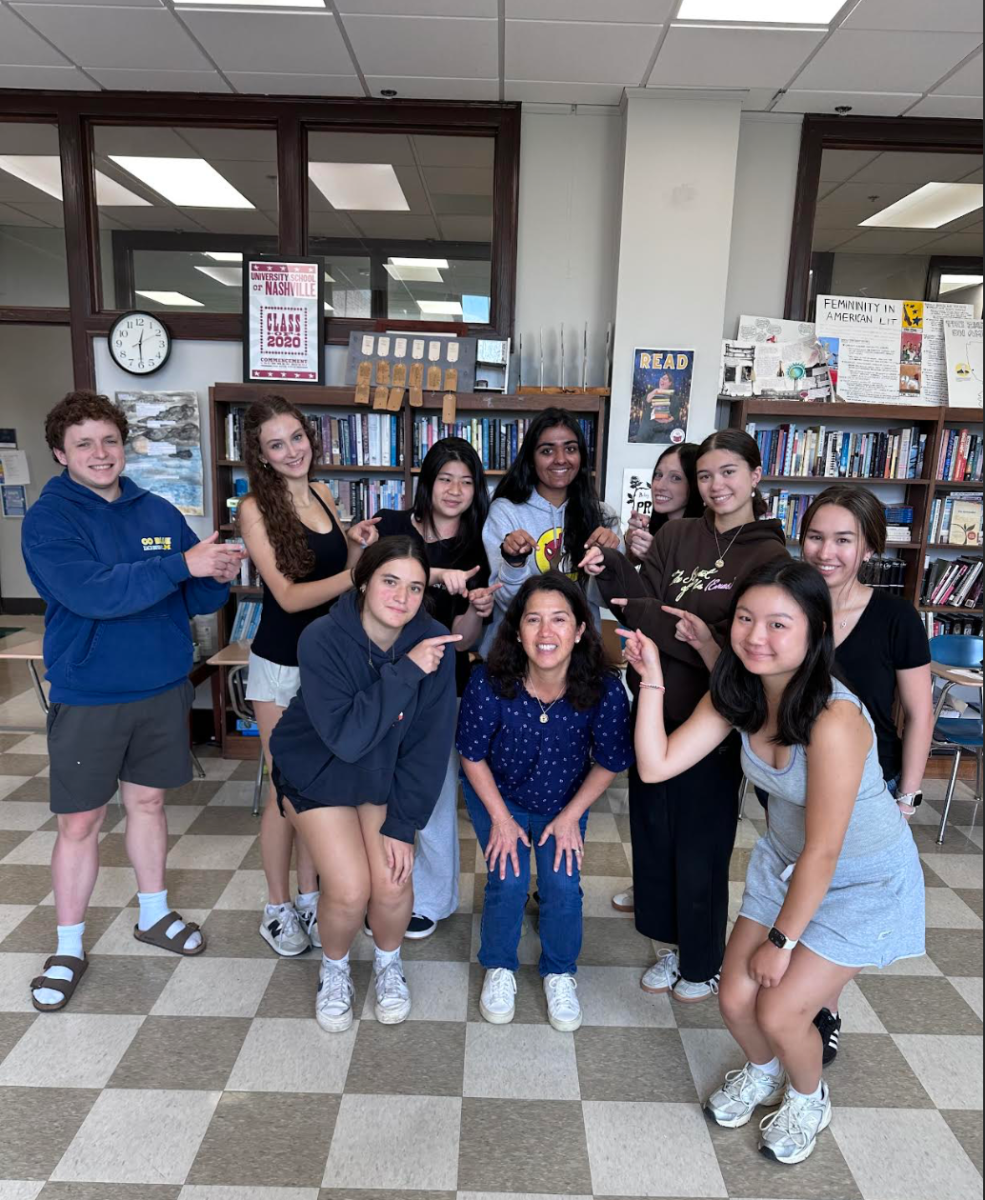
Dr. Ann Wheeler, a high school English teacher, founded the class Women Writing for Change this year, an English seminar primarily for juniors and seniors.
“The purpose of Women Writing for Change is to show students how women [have] used their writing skills and voices over the past 100 years to help people see where social change is needed” Wheeler said.
Although the class is in its first year at USN, Wheeler taught the class for multiple years on the Malone School Online Network (MSON) before it was offered in the high school.
“I noticed that women’s voices and literature weren’t given enough attention in normal English classes,” Wheeler said.
Since starting Women Writing for Change, which is composed entirely of female students, Wheeler has noticed that “women are able to speak their minds more often,” and that “women in the class feel more comfortable sharing their opinions.”
“Women are able to relate more to the texts we read in class. Many feel like they can empathize with the topics discussed in the class, which almost always revolve around women’s oppression and gender inequality” Wheeler said.
However, Wheeler expressed disappointment with the lack of men who signed up for the class.
“Men may feel uncomfortable in a space centered around women, and they may fear constant critique in the literature we read,” Wheeler explained.
However, Wheeler believes that Women Writing for Change is immensely beneficial to men as well as women.
“Men are trapped in the patriarchy in the same way that women are. Men cannot show emotions as freely, and they cannot be stay-at-home dads as easily,” Wheeler said.
Furthermore, Women Writing for Change addresses intersectionality within feminist movements, focusing on “Female authors of color, queer writers, and highlighting how white feminists may have been blind to the struggles of women of color.”
“Women Writing for Change is not just about feminism but about tackling the patriarchy as a whole,” Wheeler explained, encouraging more students to take similar classes in the future.
However, due to a lack of enrollment in the class, Women Writing for Change will not be offered at USN in 2024-2025. Students will have to wait a year to see if the course is offered again in 2025-2026.
“Feminism is not growing as fast as it needs to. While USN’s heart has always been in the right place, there are so many women’s issues that have been accepted for so long that they have become invisible,” Wheeler said.
Wheeler cites several areas of gender inequity that our society still has to rectify.
“[We still have] to make significant strides towards achieving gender equity in sports, dress codes, and certain school policies that continue to impact women,” Wheeler says.
Wheeler also mentioned the work the Feminism Club at USN has done for women’s rights at USN and wider Nashville.
The Feminism Club, also called “Fem Club,” is led by Cleo Gauthier ‘24, who was able to provide a statement on the purpose and goals of the Feminism Club.
“The purpose of the Feminism Club is to educate the student body and provide a safe environment for productive discourse and action regarding matters of gender equality,” Gauthier said.
After noticing “a rise in misogynistic initiatives both politically and on social media,” Gauthier started feminism club to “help combat the repercussions of these influences.”
“Through discussions with our members and the administration, we find ways to encourage and ask questions about how to be less destructive members of a predominantly patriarchal society,” Gauthier said.
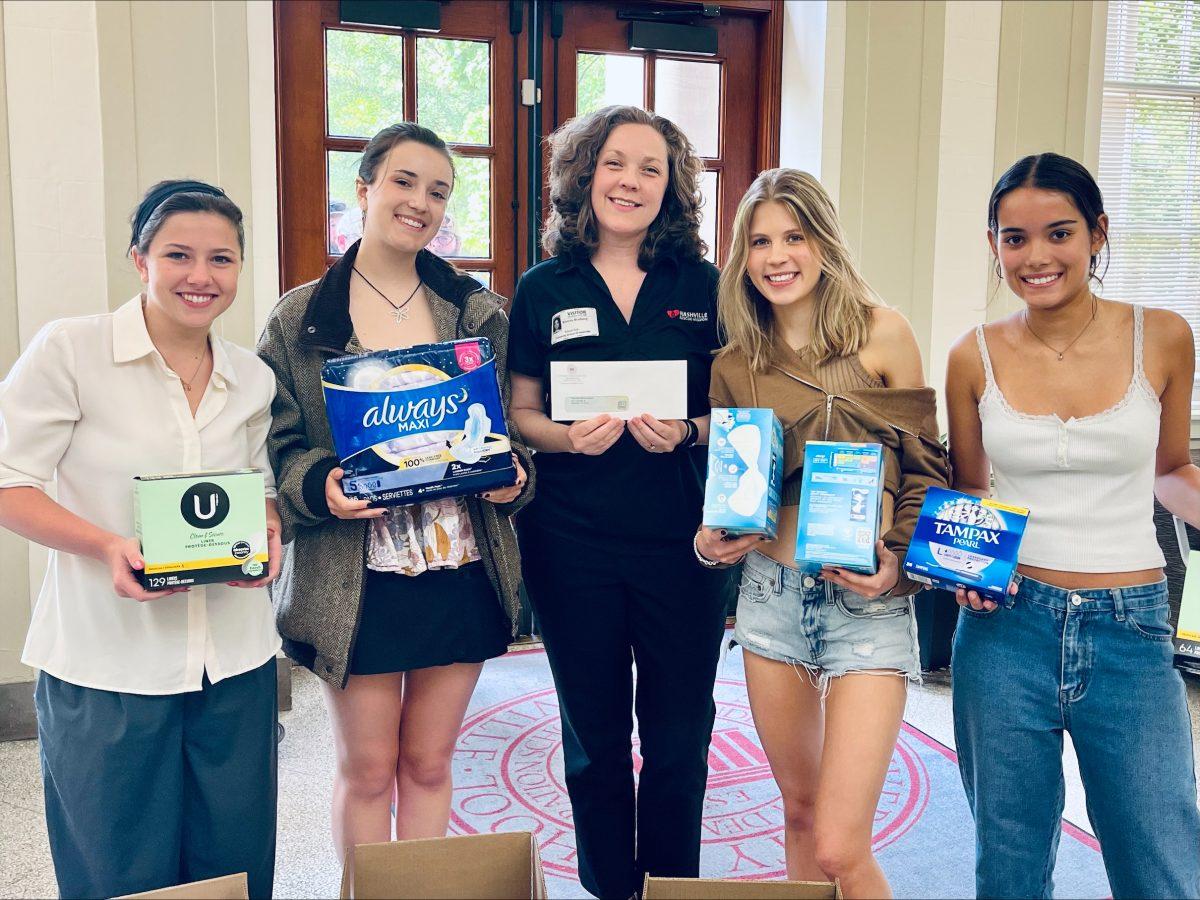
Notable achievements of the Feminism Club include organizing a lunch and learn with the executive producer of the Barbie Movie, as well as hosting a menstrual product drive at USN to help underserved women across Nashville.

Like Dr. Wheeler, Gauthier notes a lack of male engagement in Feminism Club.
“It can be difficult to get a lot of male interest or attendance at Fem Club meetings, which makes it difficult to spread awareness about our mission past the confines of our largely female club,” Gauthier said.
“We invite and highly encourage all male students and faculty members to join meetings, and when they do, their voice and questions are heard and valued equally to any other club members. We actually love having the male perspective in our group discussions,” Gauthier says.
Another woman working directly with gender issues pertaining to USN high schoolers is Iliana Behague-Mentzel ‘25, the Founder and President of Women in STEM Club.
“I started Women in STEM because I noticed that women were not very involved in a lot of STEM clubs, and I felt left out in male-dominated academic environments and organizations,” Behague-Mentzel said.
Behague-Mentzel has been at USN for 12 years, and since she came to USN’s high school, she has seen a lot more women become able to participate in leadership opportunities.
“USN is a very progressive and diverse school, and there are a lot of powerful women on campus. It is really important for young girls to have access to mentors and female role models,” Behague-Mentzel said.
Women in STEM organizes various initiatives to promote its mission of empowering girls to pursue careers in STEM (Science, Technology, Engineering, and Mathematics) where they are traditionally underrepresented. Some of Women in STEM’s most notable events included a panel with different female professionals from Vanderbilt and across Nashville, who discussed how they have navigated gender-based discrimination and struggles to achieve their career goals. Notably, Women in STEM does not just focus on STEM careers, but also provides support for women to pursue other academic interests, including fields in the humanities and social sciences.
Behague-Mentzel has also collaborated with other feminist organizations at USN in their events, including Feminism Club, and she hopes to work with other organizations at USN to promote gender equity in the workforce.
Along with their events and presentations on women’s academic advancements to society, Behague-Mentzel ensures that discussions on overcoming barriers for women of color are highlighted in club meetings and panels.
“Addressing intersectionality in women’s rights is really important for Women in STEM” Behague-Mentzel says.
Similarly to Wheeler and Gauthier, Behague-Mentzel has noticed a lack of male involvement in club meetings.
“Men are encouraged to join in on our meetings, and many of our panels offer relevant and helpful advice to men as well,” Behague-Mentzel said.
As women’s equity issues become more widely addressed in society, students across USN are working to make strides in gender issues on campus. Hopefully, the social change these women at USN are implementing and leading will continue and grow over the years at USN’s high school and beyond.