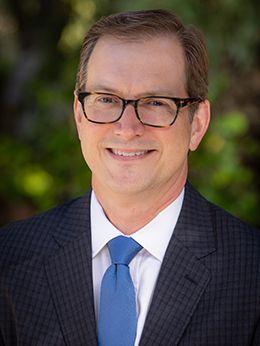
Incoming Director Rob Hereford spoke with the Peabody Press on Tuesday, October 14 via Zoom.
1. How did you become involved with education and school leadership, and what have your past educational experiences looked like?
RH: I started out as a history teacher 33 years ago, and I gradually grew in that path. My first educational leadership position was as an Honor Council faculty advisor at the Episcopal High School [in Houston]. I later attended Teachers College at Columbia in New York City, where I completed a program designed for aspiring heads of school. I thought I wanted to pursue that path in 2001 and 2002, and afterwards, I found positions as Head of High School at various independent schools, [including Fort Worth Country Day, and Metairie Park Country Day.]
2. What made you want to come to USN?
RH: I went to Vanderbilt as an undergrad, so I walked by the campus hundreds if not thousands of times. Most private schools in Alabama that I was exposed to were all-white and segregated, but USN did things differently. USN’s progressive approach to pedagogy, diverse student population, and commitment to reflecting Nashville’s diversity in its mission statement connected to my own background and educational interests. When the opportunity came to join USN, it felt like a good opportunity to explore. USN has always been a dream school of mine because of its alignment with my own values and its location in Nashville.
3. What was the thing that, when you first stepped on campus, surprised you the most about USN?
RH: It’s so physically different from where I am now. USN feels like a city block. However, there is still a lot of interaction across grade levels. You can feel the energy, spirit, and positivity at USN. USN’s happiness is palpable. The joy and energy grabbed my attention. It felt so authentic. It was heartwarming to feel that connection at USN.
4. Should a crisis happen (shooting threat, bomb threat, situation with a teacher), how would you go about handling it? Would you be open with the community about what is happening? Routine updates?
RH: The thing about any threat to student safety is that you have to be really careful about protecting your own practices and not revealing too much of your procedures. We want to give the community a general sense of what is going on, but we don’t share every detail. Our goal is to make sure everyone knows the school is in charge of the situation. USN’s connection to [Vanderbilt University Police Department] is also something I was glad to learn about. I want people to be aware of what’s happening, feel assured that the situation is being handled, and confident that it’s safe to return.
5. What’s your favorite book?
RH: “Absalom, Absolam!” — I’m a huge William Faulkner fan. It’s about a Southern family and their decline over multiple generations. There’s wonderful imagery of wisteria and a strong sense of place. Everything is set around this fictional Mississippi community.
6. What values or principles guide your leadership style, and how do you hope those will shape USN’s culture?
RH: The two most important principles for me are being student-centered and being guided by the mission of the school. That means reflecting the diversity of Nashville and ensuring our students grow into good, productive citizens.
7. How do you define success for a school like USN, not just academically, but in terms of community and character?
RH: I want USN graduates to be good citizens. Success to me means developing students who have a good sense of who they are, are curious about the world, and have a good sense of character. The faculty at my old school created four model principles of curiosity, citizenship, character, and critical thinking to guide our community. I want to hear from USN faculty and the community about what we want USN students to leave with.
8. What are the biggest challenges you anticipate facing as USN’s new director, and how do you plan to address them?
RH: Just knowing the place and what USN is about. On my first day at USN, I recognize that I will know less about the school than anyone who is returning. I want to learn about the culture and traditions. I want to preserve what is great at USN and help move it forward. The school is so fortunate to have Juliet Douglas in an interim role who knows the school so well. Now I have the enviable position of getting to know the school and help move things along.
9. How do you plan to get to know students personally, especially in a community as large and diverse as USN?
RH: By spending time in classes and attending games and performances. I also like to sit down for lunch with small groups of seniors. For me, it’s a chance to get to know each student, and to ask what they would want to improve and preserve if they were in my shoes.
10. Many students value USN’s culture of openness and activism. How do you plan to support student voices and advocacy?
RH: It’s absolutely important for students to have a voice in their school, community, and culture. It’s our job as adults to tell you how to express that voice, not to tell you what to say. I want to see students who are engaged in the school community. One of the things that drew me to [USN] was its commitment to placing students at the center.
11. USN has long emphasized diversity, equity, and inclusion, as well as programming that supports racial, social, and sexual justice. How do you see your role in continuing or expanding that work?
RH: I think it’s important for independent schools to maintain DEI even when schools in states like Louisiana and Tennessee are moving away from it due to the current political climate. I see my position as Director to be the leading voice underscoring the school’s commitment to those principles, but I should not by any means be the sole voice. My role is to create safe spaces for people who identify with these communities and to support their leadership.
12. What does belonging mean to you in a school community, and how can leadership help foster it?
RH: Every single person, whether they are a staff member or student, should feel like they are a part of the community and respected. We need to look in the mirror and see where we are doing well. I don’t know what this looks like at USN, but I do know what it looks in other schools, and I believe in recognizing diversity in every form.
13. As education evolves with technology such as AI and changing student needs, how do you plan to balance tradition with innovation at USN?
RH: It’s important to embrace innovation and change, not run from it. At the same time, we still need to approach AI ethically and thoughtfully. Faculty and staff should engage with it flexibly and collaboratively, recognizing both its benefits and its risks. We shouldn’t shut ourselves off from it but instead determine how we can function in a world where AI is going to become an increasing threat.
14. How will you collaborate with teachers and department heads to ensure USN remains a leader in academic excellence and social consciousness?
RH: What I’ve found over the years is that teachers are experts at their jobs. I want to help them bring their ideas to life. I see my role as helping teachers bring forth their ideas to help USN remain an effective learning institution. I figure out how to get the resources to make those things happen. It’s not up to me to come up with every new initiative; we already have teachers that have incredible visions, and I’m excited to collaborate with them.
15. What’s one lesson or experience from your own education that continues to shape how you view learning and leadership today?
RH: It was important to me as a small town Southern kid to understand who I was. I taught American history for years, and one thing that I loved about American history is how students could find their own voices and stories within that history. I care a lot about helping students find themselves through their learning.