by Cameron Boros ’25
September 2024
The opinions expressed here are strictly those of the writer and those students interviewed and do not reflect the views of University School of Nashville or the Peabody Press.
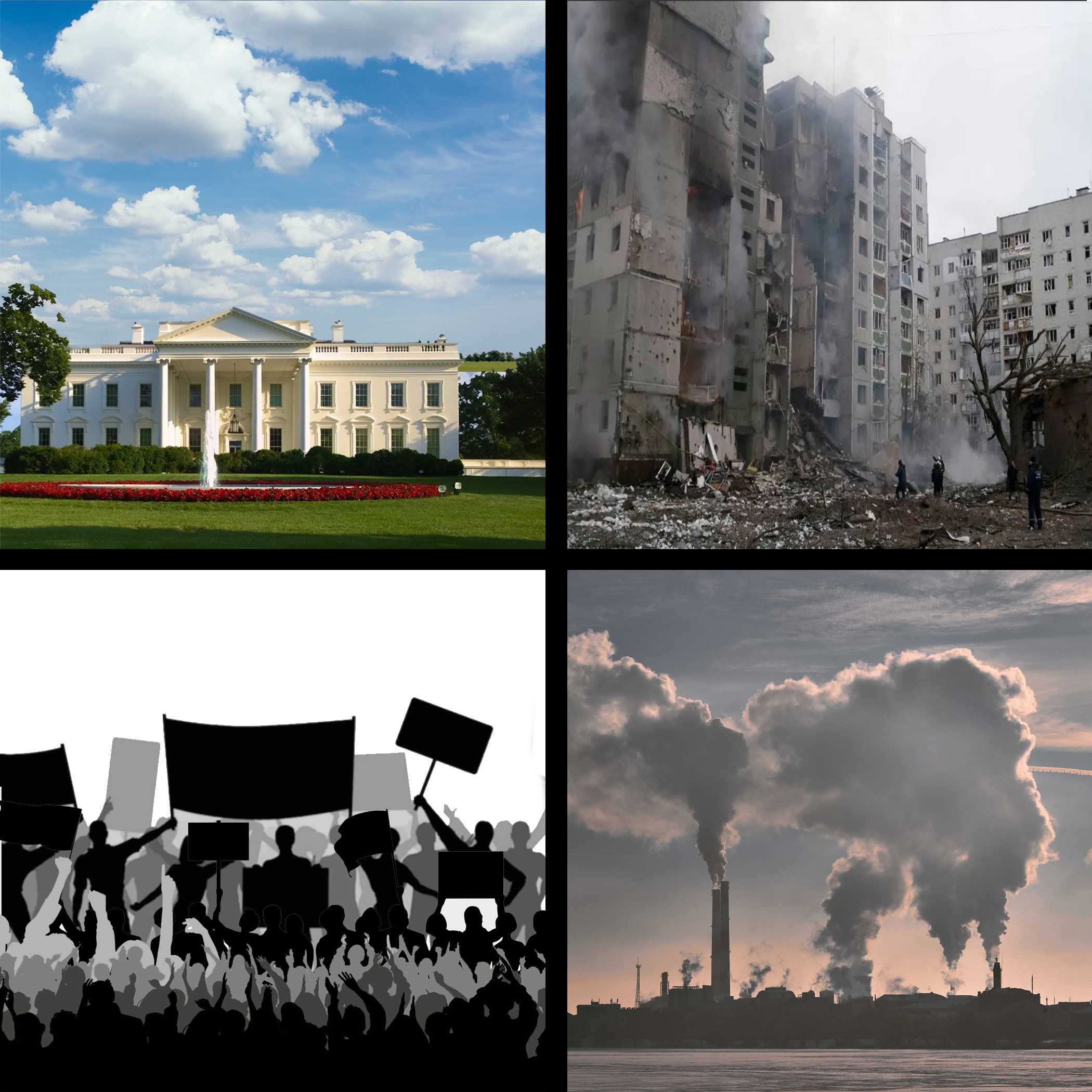
The modern news cycle is a hectic one. We are constantly inundated with news of war, atrocities, and the polarizing unfolding of the current US election. News cycles can be shocking, depressing and all too fast moving.
I was curious to know if the information overload people often receive as a result of social media and the internet combined with the unfolding of current events would have some kind of emotional effect on people. To get a sense of how it was affecting anyone at school, I used a random number generator to compile a random list of students at school and set out to interview them.
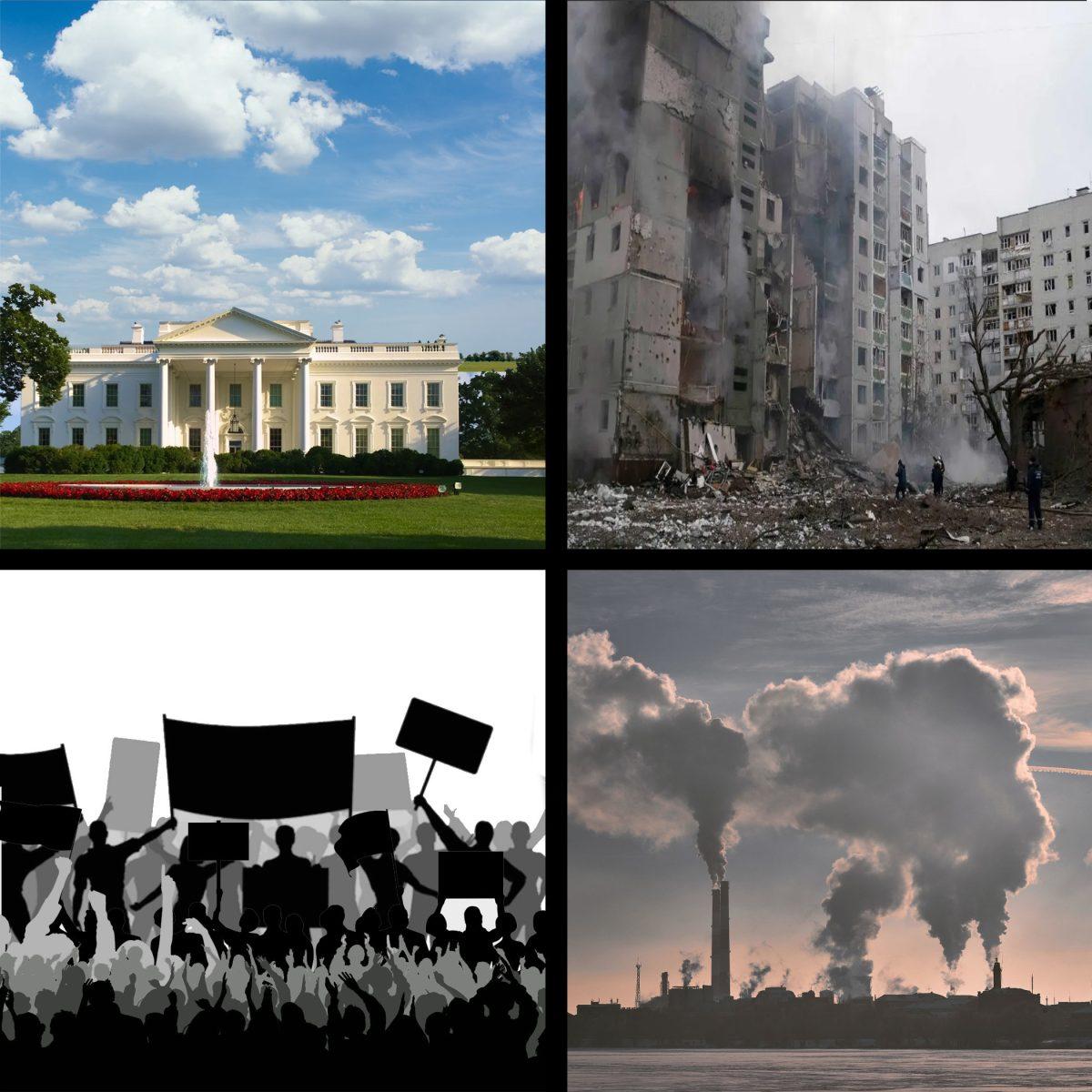
Students mentioned a range of issues that they were concerned about. The most common responses were climate change, global conflicts and upcoming presidential elections. People also mentioned reproductive rights, gun rights and safety.
Jack Barrett ‘27 spoke on how fast news cycles moved as something he was worried about.
“[I’m concerned about] how quickly we move from story to story. For example, when’s the last time you saw something about the war going on in Russia and Ukraine?” Barrett said.
Yiannis Volankis ‘25 spoke about political efficacy, and knowing that your voice matters even if it may seem like it doesn’t.
“It’s delusional to say my personal opinion about something is going to be the deciding factor,” Volanakis said. “But even if you don’t have complete faith in your opinions mattering, it’s still important to [use your voice].”
A lot of people remarked that their consumption of news didn’t leave that much of an impact on them, but that it was sometimes possible for it to emotionally impact them. Sparrow Lucca ‘28 gave her account of media leading to harmful “spiraling.”
“I’m a pretty positive person, but sometimes it can be easy to get sucked into it and spiral. But it doesn’t affect me too much,” Lucca said.
Other people felt somewhat more affected by what they witnessed. Olivia Barberi ‘25, for example, said that her news consumption has a ‘medium” effect on her.
Barrett describes the tendency of media to provoke negative emotions.
“It can be really depressing with how sad a lot of the events in the world are, and news sources prey on the fact that humans are gonna be inclined to see the negatives in the world rather than the positives,” he said. “It would be nice if there were more positive news stories that you could see every day and it’s not constantly just death, robberies and things along those lines.”
Volankis ‘25 remarked that it was very possible to feel removed from many of the stories he was exposed.
“A lot of current events seem far removed from my life and who I am,” he said. “I do consume stories that have to deal with people of color.”
It’s essential to understand how much influence people feel they have over current events. Unfortunately, many people feel removed from current events in a way that makes them feel somewhat insignificant. Sixty five percent of Americans say they often feel exhausted when thinking about politics, a Pew Research study finds. The same study describes attitudes held towards politics by Americans quite bleakly, stating: “There is widespread criticism of the three branches of government, both political parties, as well as political leaders and candidates for office.”
Many students expressed an apathetic view of their influence towards politics, such as Bria Prince ‘28.
“As one person, I don’t have that much [influence],” Prince said.
However, almost all of those interviewed stressed the importance of some amount of civil participation, even if their individual ability to contribute is relatively small.
“Realistically I don’t have much [influence]” Lucca said. “But I’m not the person to say ‘I’m not gonna not do anything or not try anything.’”
People’s responses on the effect current events had on them were somewhat varied. My initial hypothesis was that it would leave people feeling somewhat helpless, but those I interviewed reported being more unaffected by their perceived influence.
Lucca and Prince said “I don’t know if it consciously affects me” and “It doesn’t influence me that much,” respectively.
Morgan McAteer ‘27 indicated that not being able to vote plays a role.
“Having less power probably makes me less inclined to worry about stuff, maybe that will change when I turn eighteen and I can vote,” McAteer said.
But Volankis posits how lack of influence can give way to nihilism.
“Thinking that I don’t have a lot of control can lead to me being more passive about things and not taking action about things,” he said. “It can be easy to not take action if you say you don’t matter. If you put yourself in a position where you don’t matter it can be easier to trivialize things and make jokes out of them.”
Emotionally removing yourself from things you feel you have little influence over is pretty reasonable, as it avoids wasting energy on things that you think you can’t change that may also cause you some level of distress.
The central issue I aimed to address was the factors that disconnect people from activism and politics. If simply hearing about the current state of the world elicits negative emotions, and an individual doesn’t have much influence over the current political climate, why would anyone even attempt to be involved in events? Democratic processes, the polarization of politics and the sheer magnitude of catastrophes, such as war and climate change, all make individuals feel small, and so many tune out.
Although this developed apathy for current news cycles may result in better wellbeing for people, it suggests something deeply wrong with our way of addressing current events. When young people develop learned helplessness from the information they see about the world around them, it becomes easier to become desensitized and removed from things.
Clearly there is an inherent flaw in the way the media discourages civic participation and involvement in acting towards what people see as right. Moving towards any kind of sociopolitical goal requires large numbers of people, especially young people, to make small and large steps towards change.
This begins with people feeling influential and involved in the world they inhabit.