by Henry Gatto ’25
December 5, 2023
With political tensions rising across communities, many USN students want to take classes that prepare them for the real world. AP Government is a class offered by the College Board that is only a semester long. It focuses on the modern forms of government and how our laws and structures came to be.
Prior to this year, this class had been taught by Mackey Luffman, the history department chair. This year, history teacher Cameron Parsons has taken over the class. This year will mark Parsons’ eighth year of teaching and his second year at USN, and he has brought a new perspective on the course that is atypical to the majority of USN classes.
AP class curricula are typically geared towards the AP test at the end of the year. Luffman’s teaching method consisted of this AP information, as well as hypothetical and real-world examples for the government systems. It was built around having guest lectures and speakers explaining their roles working in and alongside government institutions.
Parsons has tweaked the model to teach about civic engagement and political efficacy rather than focusing on the AP test. Although he will be holding an AP “bootcamp” study session, he believes that students should be more focused on the application of the material to understand real-world issues.
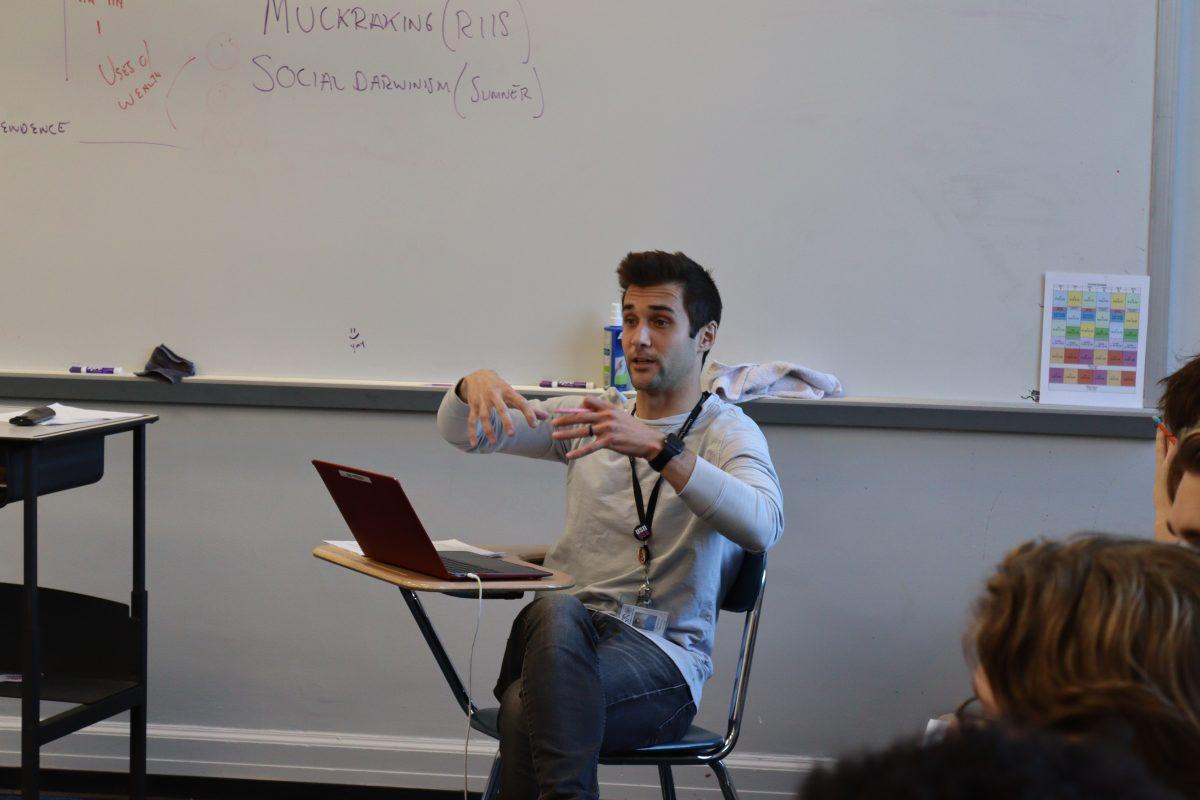
“Think of this as a senior honors seminar in government and politics. The depth of content and the pace resembles an AP course—and by proxy, a college level course.” Parsons said.
This mindset is becoming increasingly popular among USN teachers. The College Board demands that teachers meet certain content-based standards in order to prepare students for the AP exam. USN does not offer AP classes before junior year. An increasing number of colleges—notably MIT, Boston College, Tufts, and Brown—have begun to shift their focus away from enrollment in AP classes. Parsons believes that students should be curious about material beyond what’s covered on the AP exam.
His teaching model is centered around three styles of assessment: “say,” “mean,” and “matter.” “Say”-level assessments focus on retaining definitions and basic concepts. The basic principles of the US government are learned in nightly readings. Certain information, such as the names of students’ representatives and their policies, are required for students to know. Regular quizzes are given to check for surface-level knowledge.
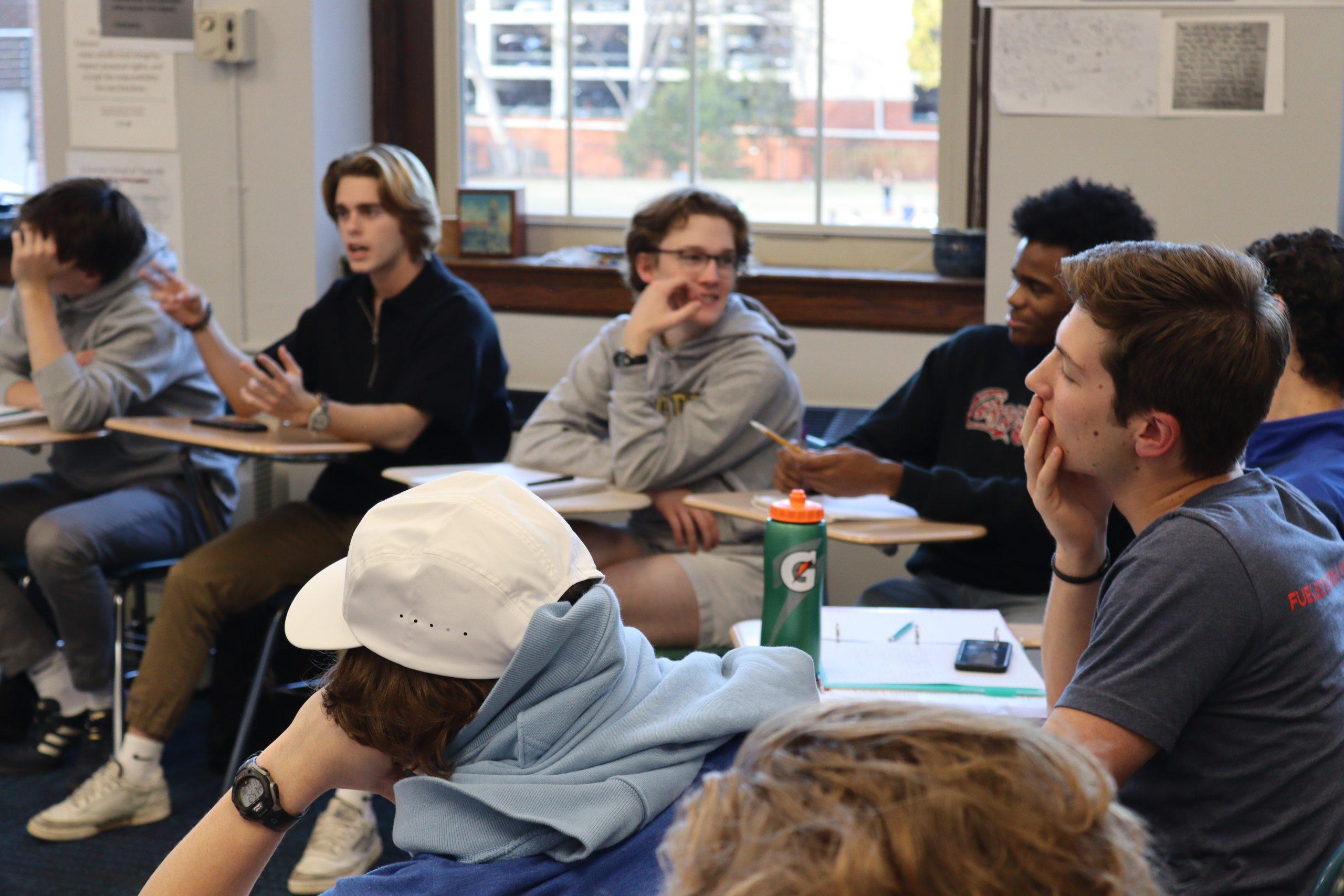
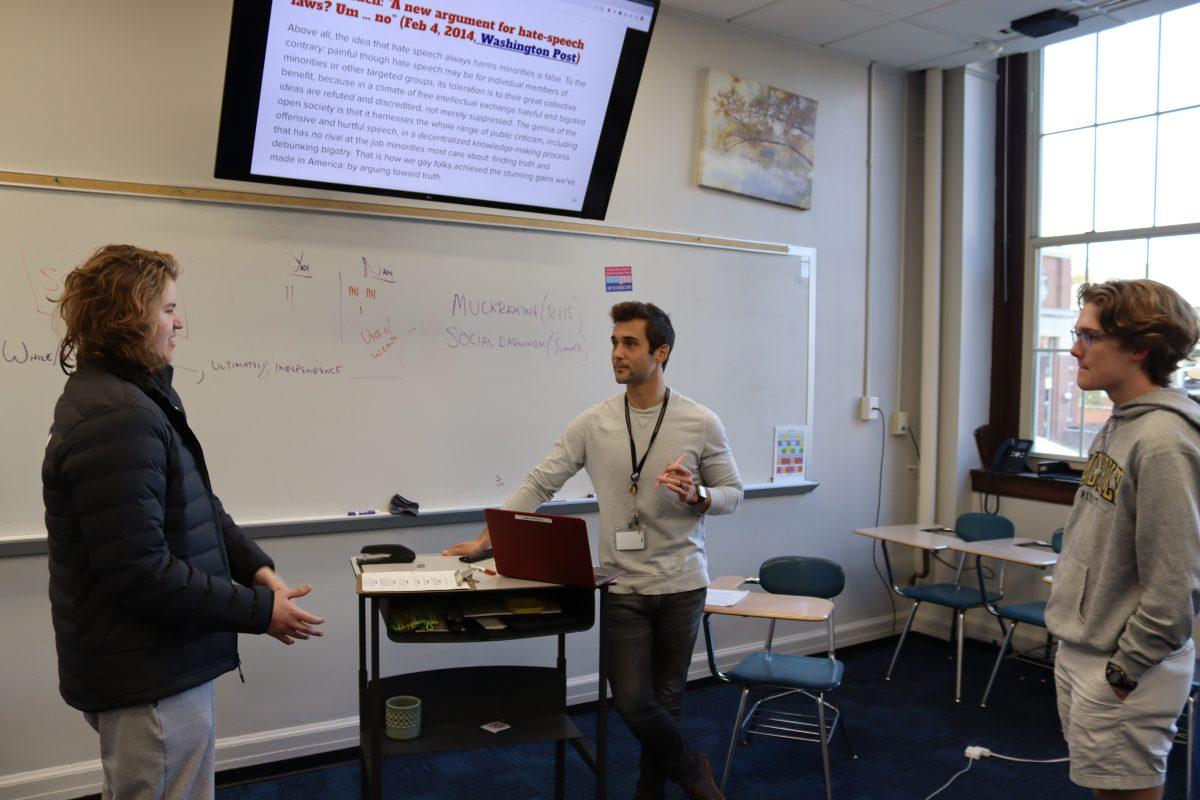
The class time is mainly focused on the impact of the U.S government on students’ lives. Students are assessed at the “mean” level based on their participation in discussions on current events. Topics of previous discussions have ranged from the pros and cons of hate speech to Supreme Court cases. The debates are often elevated with outside stimuli, specifically videos and slideshows.
Because the class is composed of mostly seniors, Parsons recognizes the importance of soft deadlines. Soft deadlines allow students to manage their own assignments and projects while keeping in mind their outside of school schedule. If senior class loads are overbearing in a particular week or students have an important sports game, AP Government students can turn in projects earlier or later.
The switch to soft deadlines fits Parsons’ educational goals. To prepare students for the outside world, the soft deadline mimics a college environment.
The incorporation of “matter”-level assessments is one of the biggest changes Parsons made to the class. The projects in this level are centered around students directly engaging with their government at the local, state, and national level. Students have attended Metro Council meetings, made short documentaries to educate the student body, and organized lunch-and-learns with civic and political figures.
Besides the events planned for the whole class, projects are a large part of the course. Students can choose their own adventure from a wide range of project types. Students have already created pieces in a variety of media types—articles, posters, slides, and videos—to educate their peers on the same content.
“The projects are my favorite part of the class…a couple weeks ago, I made a short film about federal representation and local representation. I got to show it in assembly, and I got to show it to Senator Heidi Campbell, [who] actually ended up structuring a conversation [with us] around it,” Gidgie Bass ‘24 said. “It’s super impactful for me, as someone who wants to go to film school, to be able to work on that skill in AP Government.”
Parsons wants to use the course to promote activism among younger generations, particularly his Gen Z students. Frequent class discussions around real world issues create an environment focused on the future, while simultaneously allowing students to absorb information from the past as context.
“The issue is my generation [millennials] and your generation [Gen Z] believe that they don’t have an ability to influence the government in any capacity…we need to shake this idea,” Parsons said. “I think there’s this growing sense that things are incredibly broken…so it’s up to new voters to participate.”
The AP exam does not address topics Parsons has covered, such as the importance of younger voters or the Palestinian-Israeli conflict. The changes made to the course allow students to discuss more practical information while still learning the fundamentals of the US government. The new course model fits with USN’s philosophy towards the purpose of education: it prepares students for the real world by giving them freedom and knowledge.