Iliana Béhague-Mentzel ’25
December 2, 2021
In mid-September, the Wall Street Journal published the “Facebook files”; this article provided the world an insight into the dark side of Facebook and social media.
The “Facebook files” is a Wall Street Journal investigation and contains a collection of 16 main ideas. Each of these bullet points have hyperlinks that include even more information about each topic.
Facebook founder and CEO Mark Zuckerburg has said in the past, “Facebook allows its users to speak on equal footing.” However, in the investigation, it was found that the elites are allowed to bypass this.
The second bullet point is extremely concerning, stating that “Facebook knows Instagram is toxic for many teen girls.”
Facebook is always downplaying how harmful social media is, and constantly is not allowing lawyers to look at their research about how social media affects mental health.
The company Facebook owns several other media platforms, the main ones being Instagram and WhatsApp. They are also trying to buy Snapchat and TikTok.
It’s interesting to think about how badly they want those two main social media platforms, especially because they are probably the two main social media platforms for teens. Facebook offered 3 billion dollars to the CEO of Snapchat, a huge sum of money that indicates how much Facebook wants Snapchat.
Head of Instagram Adam Mosseri said of younger teenagers and tweens, “they are a valuable but untapped audience.”
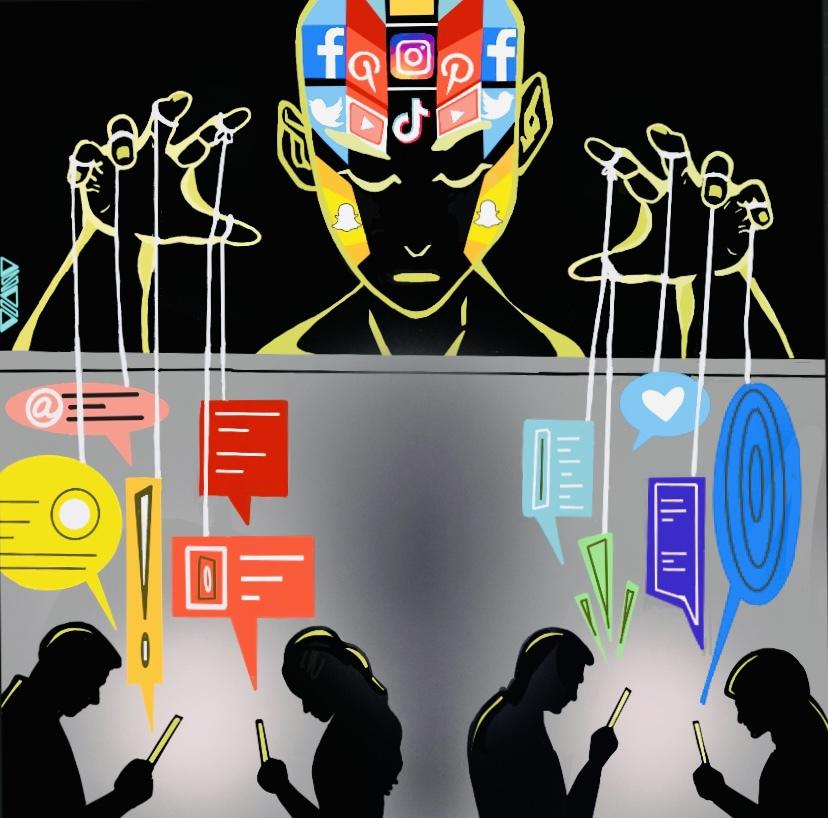
All of these documents support evidence that social media is designed to be addicting. Tristan Harris, a former design ethicist at Google and current president of the Center for Humane Technology, even compares social media to casinos.
Many reports have come out saying that social media replicates gambling methods to create “psychological” cravings. Phone users are manipulated to the point where even when they aren’t on their phone or the Internet, they are still thinking about it subconsciously.
This affects many things, such as the amount of time you can concentrate, the quality of that concentration, and other areas of life.
Harris commented, “the pull-to-refresh and infinite scrolling mechanism on our news feeds are unnervingly similar to a slot machine.”
These methods also activate the same brain mechanisms as cocaine; users start experiencing “phantom” notification buzzing. The main brain mechanism both cocaine and social media stimulate is the prefrontal cortex.
The prefrontal cortex is where the dopamine is located, and social media and drugs stimulate this area higher than normal so that when one isn’t on social media or taking drugs, one is less happy.
Social media is similar to taking a casino, something highly addictive and in some states banned, and putting it on your phone, something accessible 24/7. Then imagine 5th graders getting their first phone 10 years before their brain development has stabilized.
The percent of children ages 8 through 12 with their own phone is 41%, double what it was in 2015.
These numbers keep on increasing. Soon we will have a society where only a few don’t have social media, and mental health problems are skyrocketing.
This dilemma is difficult to figure out, and there are so many factors that contribute to it other than these factors. On one hand, phones allow us to communicate with people, but on the other hand, there are so many dangers to social media being so accessible. This data we finally have access to shows how vulnerable we, especially teen girls, are to social media.