by Carmen Gaskin ’25
April 2025
With the advent of CGI, animation algorithms in video games have continued to move forward, with improvements in graphical fidelity, expanded maps, and new ways to structure gameplay arising each day.
Trailblazers such as the 2010’s box-office success Tangled, which showcased cutting-edge animation techniques with Rapunzel’s golden, tower-length locks. Viewers can also recall Merida’s bouncy, ginger ringlets in Brave from 2012, defining the way we view dynamic hair movement on screen.
However, for decades afro-textured hair animation has lagged behind the artistic advancements of straight, euro-centric hairstyles in the arts and media industry.
In “We Need To Black Hair in Video Games,” a 2023 video essay released by Kinda Funny Games host and producer Blessing Adeoye Jr. he underscores the limited nature of Black hairstyles in video games – even as development takes great strides in other technological areas.
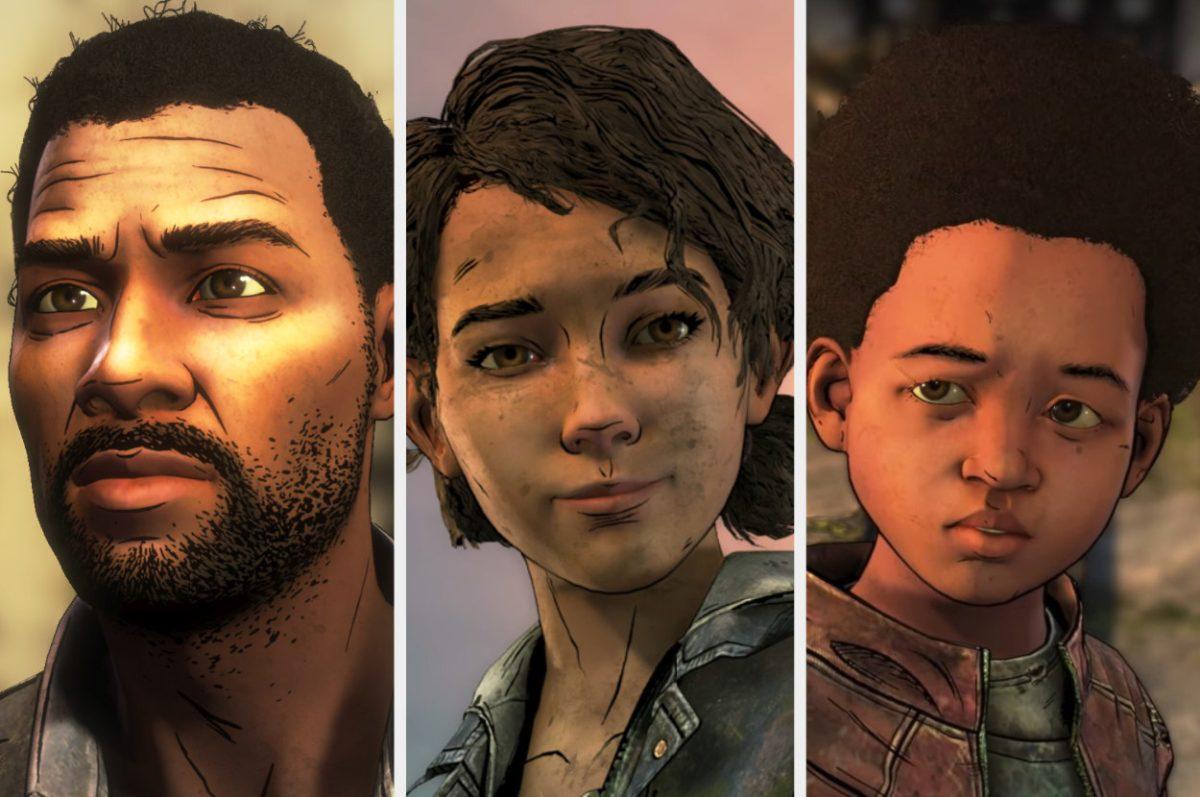
Adeoye highlights the prevalence of afros and cornrows in Black character designs. “Kudos to game devs for actually including cornrows, a hairstyle that can be dated back over 3,000 years to sub-Saharan Africa” he says. “My one question though, is who is this dude with cornrows that every single video game developer seemingly knows?”
Renderings of Black characters in video games, animated television shows, and movies have continued to inaccurately represent the range of Black hairstyles found within the Black diaspora, be it the kinks in their strands, or the springs in their curls.
After all, it wasn’t until 2021 that Disney’s studio delivered a representation of Black hair that had visible texture with the release of the company’s Academy Award winning film Encanto.
Despite these shortcomings, in February, researchers developed algorithms to depict coily Black hair in computer graphics, a huge step towards culturally inclusive depictions of Black characters.
To address these disparities, Theodore Kim, a professor of computer science at Yale, and A.M. Darke, an associate professor of performance, play, and design at the University of California at Santa Cruz, designed an algorithm to simulate Afro-textured hair, the first and only of its kind.
In their study of the algorithm, titled “Curly-Cue: Geometric Methods for Highly Coiled Hair,” lies intricate geometric preliminaries, hair interpolations, strand synthesis equations, co-authored by two of Kim’s doctoral students, Haomiao Wu and Alvin Shi, and released online in October.
The study was officially published and presented at the Siggraph Asia Conference in Tokyo, Japan, one of the world’s most prestigious computer graphics conferences, in December.
The algorithm design took a year to develop, although Kim, Darke, and their team spent nearly four years researching, establishing, and constructing an entirely new system of physics animation software called HOBAK, designed to illustrate computer science graphics as accurately as possible. While Kim and his team demonstrated generating Black hair with particular computer science phenomena is certainly possible, research into the mathematical formulas of multiple Black hairstyles proved more difficult than previously thought.
“Making the three hairstyles in the paper [a tapered Afro, a long Afro, and a fade] was very challenging; just barely out of the realm of the impossible. There’s still lots of room for improvement,” Kim said.
But what does a mathematical algorithm have to do with hair animation? A lot, it turns out.
Animated characters in our favorite television series, movies, and video games are created with a combination of mathematics, and, how Kim interprets it, “artistic invention.”
Hair follicles are simulated using physical equations computed by software engineers, creating a base animation for artists to “re-comb” the hairs that are not accurately calculated.
Kim and Darke have simultaneously implemented three different animation methods for animating Afro-textured hair: phase-locking, period-skipping, and switchbacks, all of which simulate specific aspects of kinky, coiled hair textures.
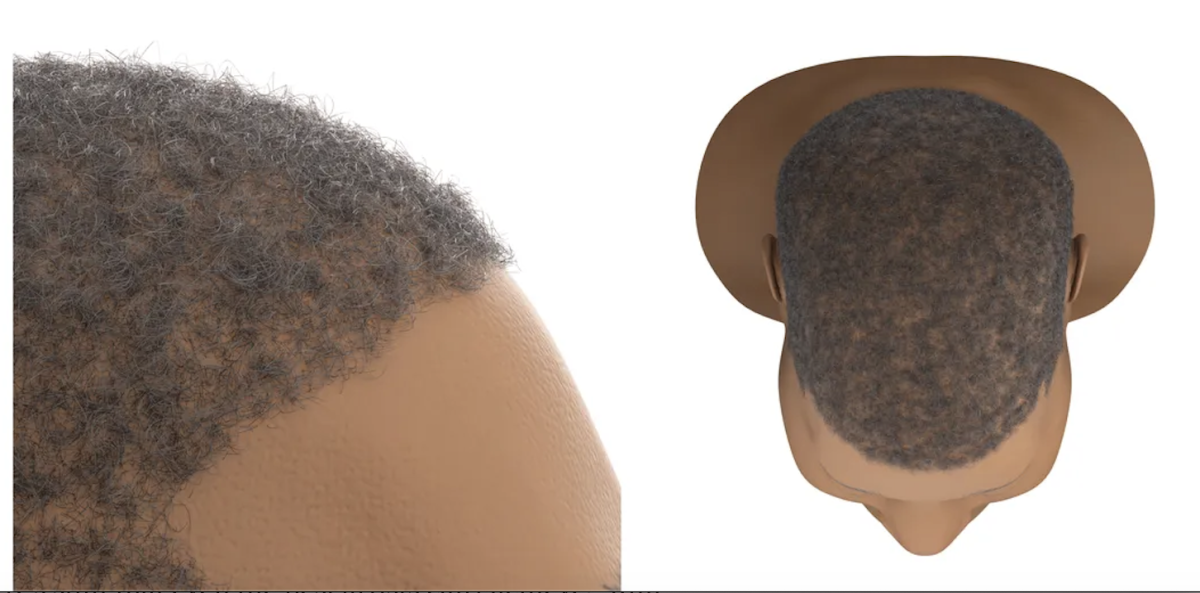
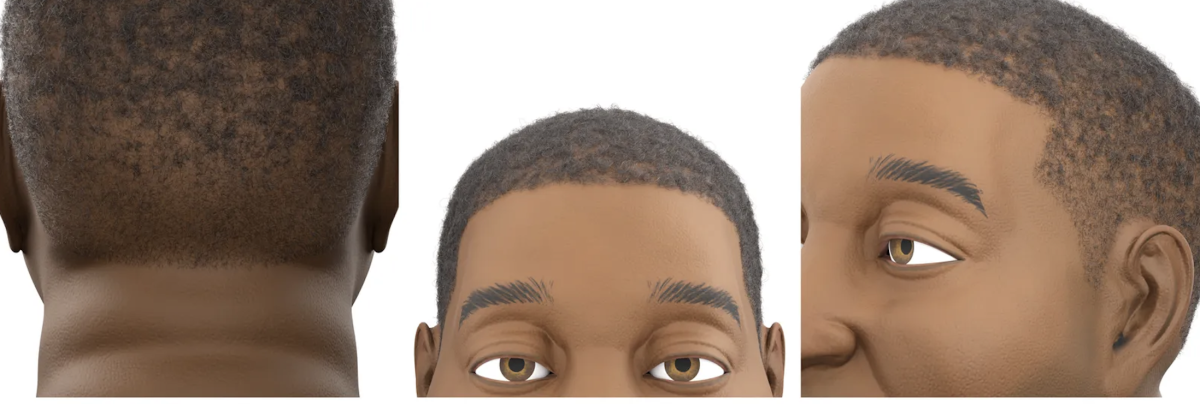
The phase-locking method simulates the matrix of hair that exists closer to the root before individual follicles coil into a curl off the scalp.
In other words: it’s the spongy Afro layer closest to the scalp.
Period skipping simulates what Darke refers to as the “frizz factor.” These hairs that stray from the curl formation create a less defined curl pattern, a unique behavior that she says is critical to capturing the subtle distinctions of Afro-textured hair.
Switchbacks represent a curl’s sudden change in direction. Different from period-skipping, in which stray curls are calculated to grow right above the scalp, switchbacks are overall shifts in a curl’s direction. If a curl is spiraling one direction, and creates a sudden inversion or dip, software engineers would label the pattern a switchback.
In previous research, these unique breaks were known as “helical perversions.” However, Darke and Kim wanted its new name to avoid any negative connotations.
While the algorithm is a welcome advancement into the world of hair simulation development, consumers of media often question the cause of technological delays in African-American video game representation.
“There are technical constraints to consider, but I’ve always argued that the biggest challenge is a lack of cultural literacy,” says Darke.
The research that first informed Darke and Kim of the world’s need for cultural competency began in 2020, when the pair founded the Open Source Afro Hair Library (OSAHL), a free 3D model database resource for Black hairstyles and textures, created by Black artists.
Darke’s work on OSAHL generated a great deal of excitement on social media, as his work was showcased in collaborations with Dove Beauty’s Code My Crown campaign, a free PDF guide for game developers containing detailed descriptions on how to style Black hair basics.
These campaigns point towards one common trend in modern day media: cultural unawareness has shown to be exacerbated by a lack of Black representation among art and animation industries.
A 2021 survey revealed that only five percent of participants in a variety of roles across the gaming industry identify as Black.
This lack of diversity within sectors employed to ensure the artistic quality and prevalence of Black characters we see in our media dwindles the urgency in which they are developed and perfected.
Kim’s solution is a layered one, emphasizing the need for diverse artists, engineers, and promising to value Afro-textured hair as much as straight hair.
With the help of new outlooks on math, and physical equations that force animators to abandon straight hair as the default, systematic barriers within animation can begin to be dismantled. As for when we can expect to see the results of Kim and Darke’s new algorithm in TV, games, films, and other animations, the short answer is not tomorrow.
Hair algorithms are often integrated into movies before video games, as images only need to be computed once, then digitally manipulated into the desired positions for the character. In gaming, an animator must compute each frame scratch from scratch. Historically speaking, animation studios require up to five to ten years to integrate algorithmic codes into their production software.
But, many creators believe these challenges are worth the wait. “It’s an entire spectrum and a realm, and there’s so much untapped cool stuff happening,” Adeoye Jr. argues.
When artists prioritize Black features, Black culture, and Black representation for all the boys and girls watching, playing, or designing at home, it opens the door to an inclusive learning environment for everyone.
It doesn’t hurt the confidence of a 17-year old girl who desires to design her own, accurate Sims-4 character, either.