by Margot Ross ’24
March 4, 2024
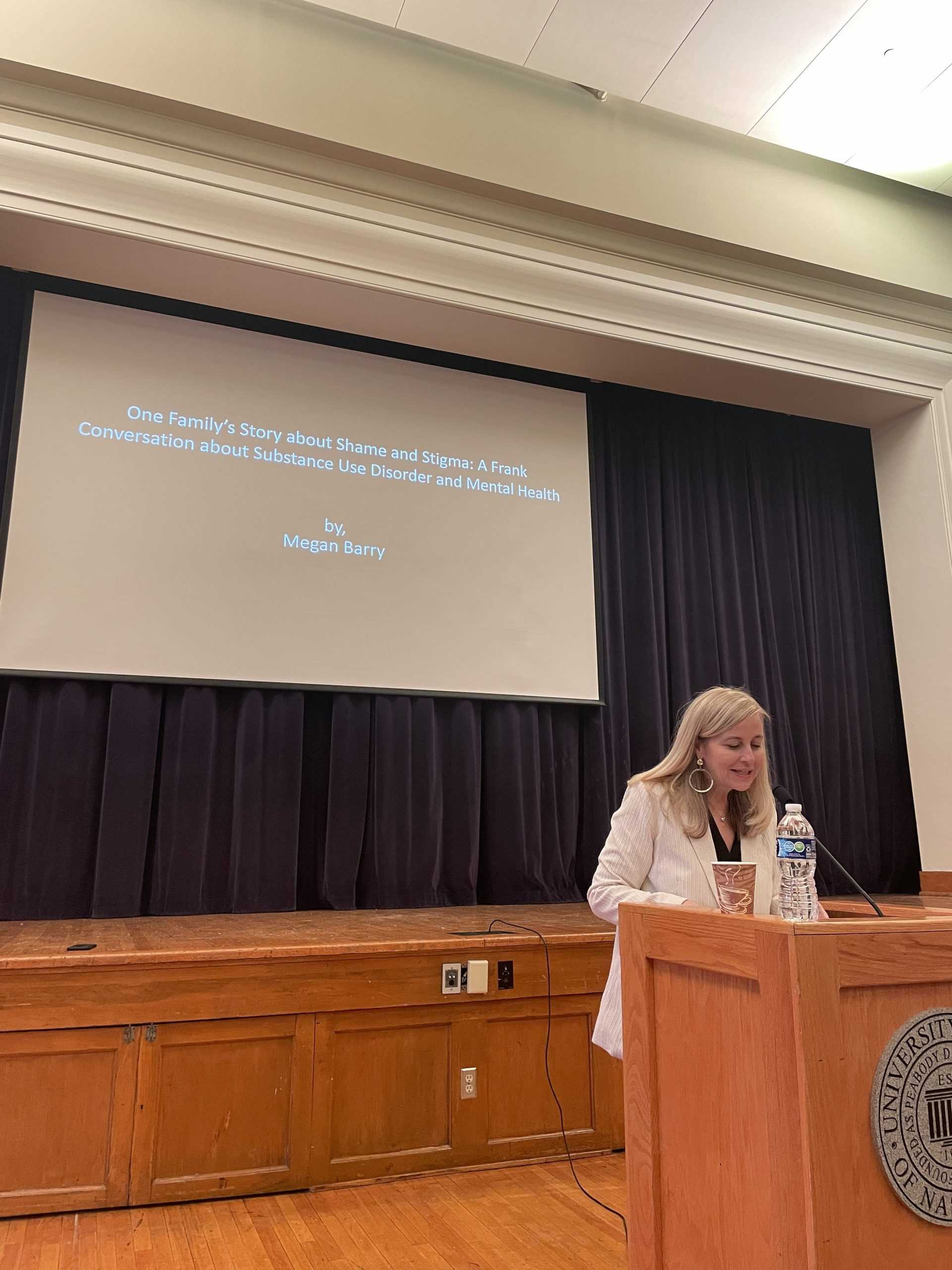
On February 7, USN high school students ventured out to community organizations across Nashville for a day of intentional service learning as a part of annual Community Action day programming. Before traveling to their sites, however, former mayor of Nasvhille Megan Barry gave remarks to the student body regarding Substance Use Disorder.
Barry also spoke about her personal journey with Substance Use Disorder; her son, Max (who graduated from USN in 2013) tragically passed away in July of 2017 as the result of a drug overdose.

At the time that Barry’s role as the keynote Community Action Day speaker was announced, some students were unaware of that facet of Barry’s life. A speaker statement released in an email by the Community Action Day co-chairs (Assuada Radford ‘25, Binyam Dunne ‘26, Nick Venable ‘24, and Gidgie Bass ‘24) prior to Barry’s talk read:
“Most of us know Ms. Barry as Nashville’s former mayor who stepped down from office…what you may not know…is that she is also a USN mother who lost her only son, Max ‘13, to an opioid overdose in 2017. In the years since Max’s death she has turned her grief into advocacy, tirelessly urging leaders in cities across the country to fight the stigma surrounding substance abuse.”
Barry began her address by highlighting statistics that showed the global prevalence of Substance Use Disorder. However, Barry did not hesitate to open up to the USN student body about deeply personal experiences.
“I did not make it through my grief because I was somehow prepared for what happened to me, or because in some way things weren’t as bad as they seemed,” Barry said. “I survived because of something I did not know: there is real power in having had your worst day.”
Barry then went on to talk about the progression of her son Max’s struggle with Substance Use Disorder. During an anecdote about a family hospital visit, she recounted how the stigma surrounding Substance Use Disorders had prevented her son from asking for adequate treatment.
“Max was immediately taken back into a room…because he was 21 at the time, he refused to sign the health forms that would have allowed me to…talk about what was going on with the doctor. Max’s shame and guilt was the most dangerous part of that disease that day,” Barry said.
That same pervasive stigma catalyzed Barry’s advocacy efforts just after she left office.
“I didn’t want us to further Max’s shame and stigma by not being honest about how he died,” Barry said. “I had an opportunity to tell how Max died very publicly, to try to let other families know that, this is something that happens to lots of people and that they shouldn’t feel alone.”