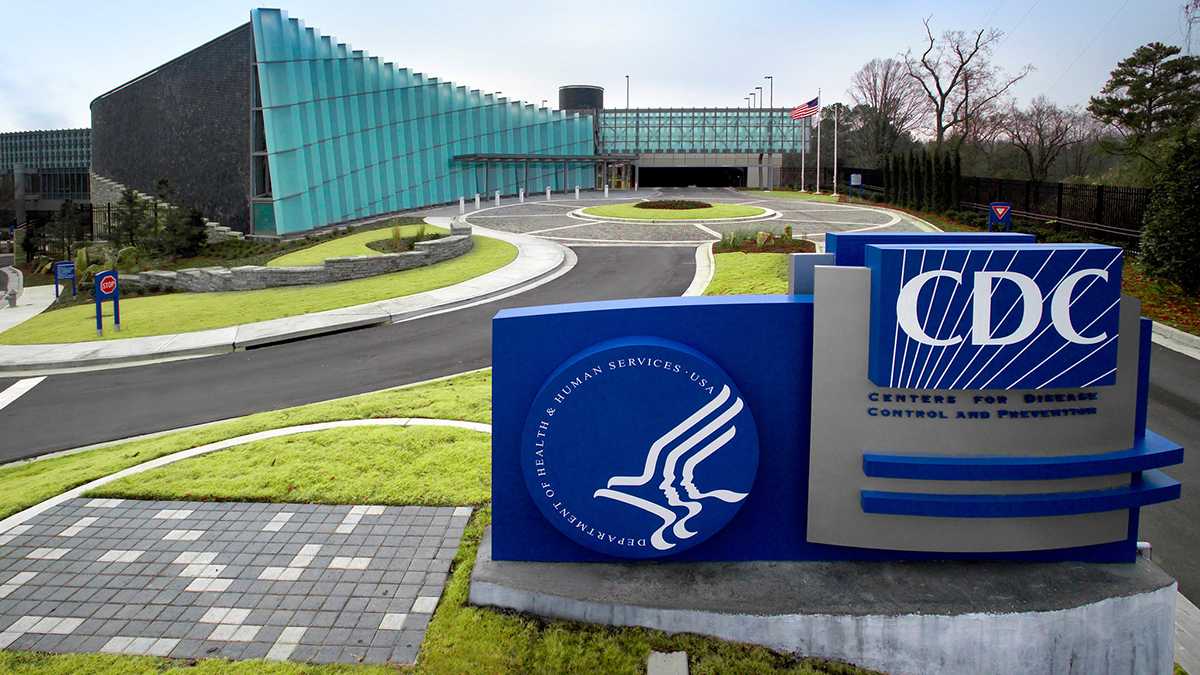
Since Robert F. Kennedy Jr. became head of the Department of Health and Human Services in February, vaccines and public health have become entangled in the political debates and divisions of America.
Prior to RFK Jr.’s nomination, the Advisory Committee on Immunization Practices, or ACIP, had historically been the Food and Drug Administration’s trusted source of vaccine guidance.
Using aggregated and varied data, selected members of the ACIP – ranging from medical and public health experts, federal liaisons, and representatives from professional health organizations – give their recommendations on who should receive vaccines, what age groups are most impacted, what side effects certain vaccines could potentially come with, and so on.
Dr. Helen Kiepp Talbot, a professor of medicine and health policy in the division of Infectious Diseases at Vanderbilt University, was a past member of the ACIP within the Centers for Disease Control and Prevention (CDC). In 2019, Talbot was appointed to this position after being nominated for research she had contributed to the vaccine field. Her seven-year term was scheduled to end in June of 2026.

Having been a member of the ACIP for years, Talbot says that making vaccine recommendations is a long and tenuous process.
“The [ACIP] work group goes through a process…called PICO (Population, Intervention, Comparison, Outcome framework) [where] they go through all the data and grade it, which means they talk about the quality of the papers, the evidence, the way the study was done,” she said. “They then go through [questions], like is this disease really an issue? Is it important? Where’s the burden of the disease? What would the vaccine do? What harms, what benefits?”
However, the reputation surrounding the ACIP changed drastically in 2025 with the selection of RFK Jr. as the head of the HHS.
In June, Talbot – along with the rest of her ACIP work group – was terminated by RFK Jr. Members of the group were alerted of this sudden action by the Wall Street Journal, and it wasn’t until later that day that they received a message from him directly. The email was short and ambiguous. No rationale was given to them for their sudden dismissal.
“We got a two-line email that said ‘thank you for your service, [you’re] terminated immediately’…He says it’s because we were conflicted.”
Talbot said she thinks “the reality is [that] it’s because we’re pro-vaccine. And I think there’s a misconception that if we’re pro-vaccine, we’ll vote yes for every vaccine for everybody. And that’s not the case.”
The ACIP has always strived to make decisions based on extensive research – not politics. However, RFK Jr. believed the ACIP members were politically biased, leading him to tell First World Health Care in early June that the mass firing was a “clean sweep” in order to “restore public trust in vaccines.”
This move by the Trump-appointed head of the HHS was premeditated. According to many CDC officials, the move – with the goal of destroying political stigma surrounding medical advice – only exacerbated what it was fighting against. Some public health officials remarked that his action seemed to undermine decades of scientific research and knowledge in a cloaked gesture of bias.

It was during the Trump Administration in 2020 that the CDC was first made a politicized target. In the beginning of that year, Talbot remembers the Secretariat of the ACIP at the time, Dr. Nancy Messonnier, talking during a press conference prior to the February ACIP meeting. This was at the start of COVID-19, and Messonnier was informing the press of the expected changes to come.
Messonnier warned that lives would change dramatically from the initial spread of the virus, and explained why that was the case. This news caused a sudden stock market fall, resulting in President Trump forbidding the CDC from talking at press conferences, effectively causing a divide between the CDC and the public.
Without a direct line of communication, Talbot says “the CDC got blamed for a lot of things that they weren’t actually part of. The CDC members who actually worked on COVID-19 and presented publicly at the ACIP meetings – their lives were threatened.”
RFK Jr’s actions against these very same ACIP members were because of their supposed political bias.
Fast forward to September 2025 – only three months after the firing of the ACIP board members – and the politicization of medicine has only increased with the actions taken by both RFK Jr. and President Trump.
On Thursday, September 22, President Trump spoke at a White House press conference, in which he announced his belief that Tylenol, specifically the active ingredient acetaminophen, taken during pregnancy, is linked to neurological conditions such as ADHD and autism, as well as danger and sickness for both the mother and the child.
The president told White House correspondents that pregnant women should only take the medicine “sparingly” in absolutely necessary conditions. He urged women to “tough it out,” and “fight like hell not to take it.”
Talbot sees many problems in this bold declaration by President Trump. The main issue, for Talbot, is that “it is not scientifically proven,” and will have significant consequences. Additionally, since Tylenol is the only safe painkiller for pregnant women, many women may now experience much higher levels of pain now during pregnancy.
“Many women who took Tylenol while pregnant will feel unnecessary guilt. Also, this means that a lot of women will have pain and suffering, because [Tylenol] is the only thing to use during pregnancy,” said Talbot.
In general, President Trump’s opinions and actions towards the CDC and medicine in general have been striking and ignorant compared to previous White House administrations. In press conferences throughout the year, he has consistently expressed the unfounded belief that childhood immunization processes “load up” children with too many vaccines and cause sickness from the start, a claim that lacks any evidence.
The blending of politics and national health recommendations is worrisome, and the harmful side effects are already visible. The biggest example of this is the measles outbreak in West Texas that began earlier this year. Talbot links the newly arising anti-vaccine stigma with this outbreak.
“There’s a skepticism that [vaccines] don’t work. People think that they’re harmful, and so they’ve quit giving them to their children,” Talbot said. “So now we’ve seen a resurgence of measles. We’ve had three US citizens die. [Before this year] we haven’t had anyone die of measles since 1990.”
When politics infringe on medical advice, decades of science are undermined. Additionally, recent funding cuts have impacted research facilities across the country, including the Emerging Infections Program (EIP) that Talbot leads. Without the monitoring of rising viruses and diseases, Americans’ health is put at risk.
Talbot remembers the ACIP and CDC from years ago, both of which are completely different from today’s.
“I think the ACIP used to be a very good source for scientific information, but I would not rely on that now. They don’t go through a rigorous scientific process [anymore]…A lot of what is decided is based on personal belief and not science.”
Many other leaders in and out of the medical field across the United States have come to this same conclusion, causing states such as New York and Pennsylvania to create the Northeast Public Health Collaborative in September. They did this to protect the approval and distribution of life-saving vaccines.
New York Governor, Kathy Hochul, summed up their causes for this action, saying that “by standing with our partners across the Northeast, we are ensuring that New Yorkers have the protection and the information they need to stay safe and healthy.”
Talbot says actions like this are “phenomenal…and [that] all the medical societies are working very hard to give vaccine recommendations they think are appropriate.”