by Jackie Seale ’27
May 2024
The bus driver shortage, a phenomenon occurring nationwide and resulting in less effective transportation for students, continues to have a negative impact on the trips that students and faculty need.
The bus driver shortage is the decreasing number of school bus drivers in districts across the U.S. It has gotten much worse in the past few years, especially after the COVID-19 pandemic.
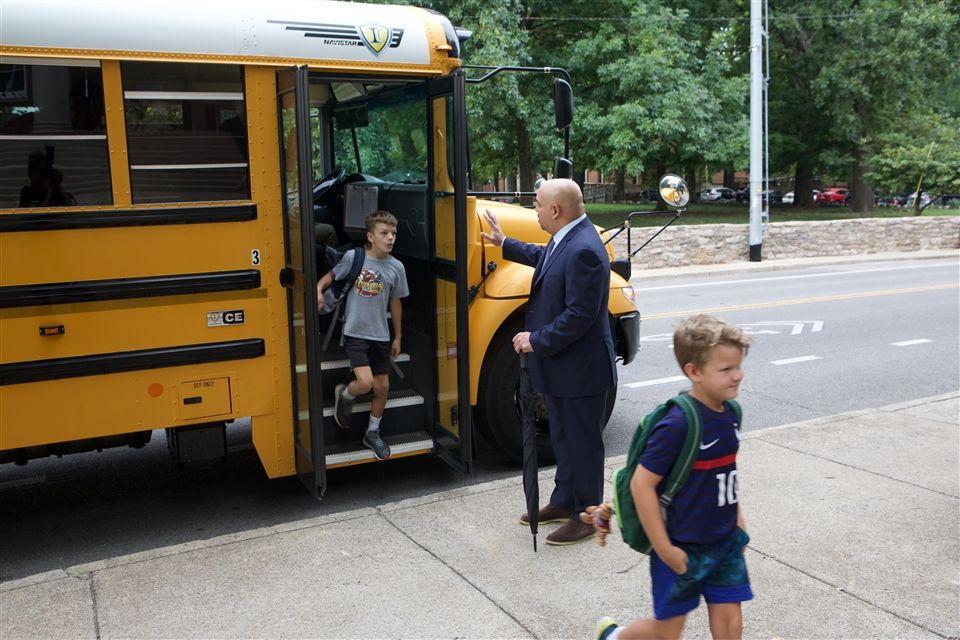
School bus drivers are a necessity for the school to function. Besides bringing roughly hundreds of students to school almost every morning, the USN buses transport students and faculty to and from field trips, sports practices, games and meets, competitions, tournaments, and more – just like thousands of educational institutions across the U.S.
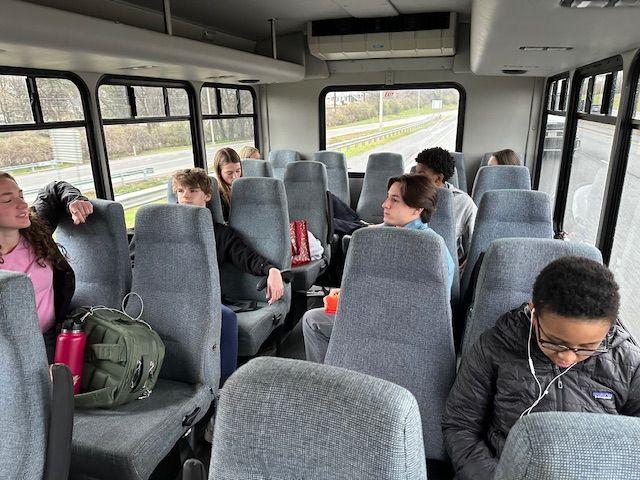
Although this high demand for transportation should ideally be met with a sufficient number of drivers, it hasn’t in recent years. The fact that people aren’t very drawn to the job has heavily impacted both students’ ability to get where they need to be and the bus drivers’ ability to take them there.
USN bus driver Amy Rivera says that the shortage in bus drivers has increased the job’s workload.
“[The shortage] means a lot of extra hours,” said Rivera, “It means being spread thin. You have to be in two places at one time because there’s so many students, and we want everybody to be able to go where they need to go.”
When, suddenly, a school has a smaller number of drivers, it makes the job that much harder for the drivers who are still working. On top of that, searching for a new bus driver will most likely take a long time because of the small number of prospective drivers in the area.
Not only does the shortage affect bus drivers themselves, but it also affects students and the community. History teacher and Youth In Government advisor Mackey Luffman saw this firsthand in April.
“What happened to us at Youth In Government is that the way the schedule was set up, the Youth in Government students didn’t have to miss classes on Thursday if we had had the bus driver supply that we have had in the past. But, because we were short on drivers, the transportation people said ‘we can only take you at this time.’ So not only did the YIG students miss an entire class period that they didn’t have to, they actually missed basically a class and a half not for any reason involving the conference… so that was kind of frustrating,” Luffman said.
“Other teachers and other coaches who would like to travel on a timetable that puts students in classes first can’t do it anymore,” he added.
One specific bus failure occurred during the cross country season last fall. On Friday, September 9, the cross country team set out on their way to Chickasaw, Alabama for an overnight meet. One seemingly reliable bus drove the team for the six hours to get there.
On the return trip on September 10, after a stop at Buc-ee’s and less than an hour out of Nashville, the bus slowed to a crawl on the side of the interstate.
Anxious to get home and tired from the long day, the team questioned why the bus was hardly moving and blocking traffic. Eventually the bus driver pulled over to the side of the road and it was announced that the bus had broken down.
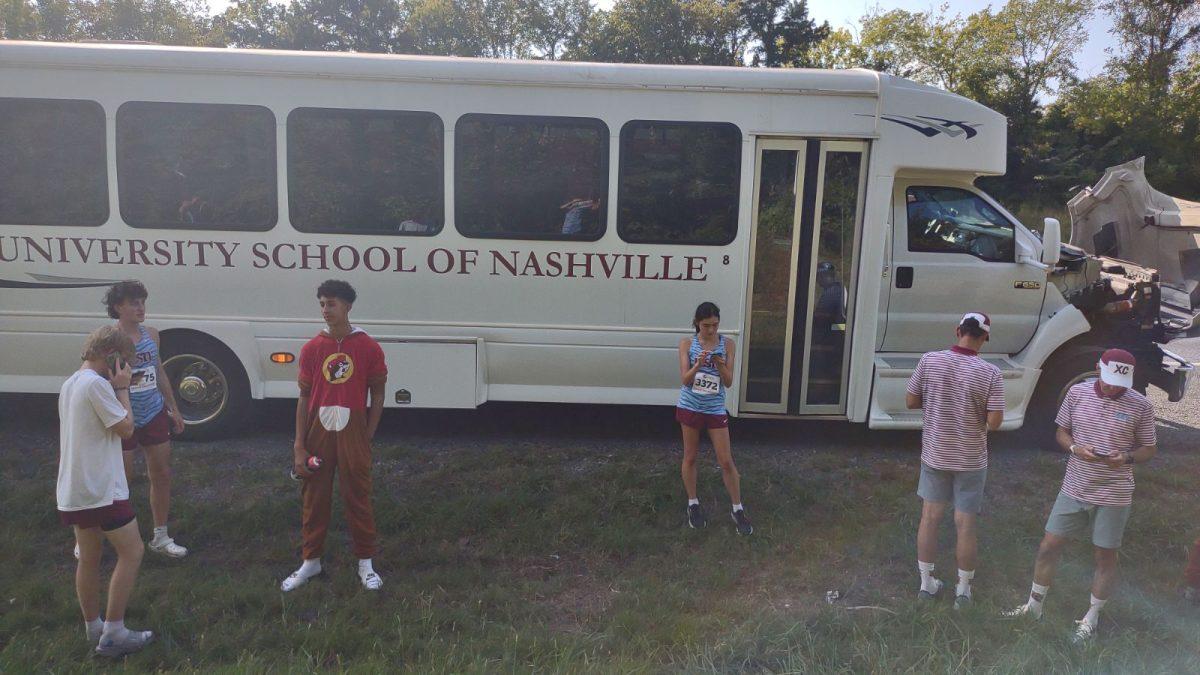
After waiting over an hour in the blazing sun, another bus came to get the team. Everyone made it home safe and sound. But with a bus full of students coming to a stop on a major interstate and the time it took to find a bus driver who was available on a Saturday afternoon, this example of a transportation problem needs to be fixed for the long-run.
Another impact of the bus driver shortage are challenges with regular trips to and from to the USN River Campus this spring.
Essentially, most of the sports that regularly hold practice at the River Campus finish at 5:30 or 6:00 in the evening. Normally, there are two buses to bring students back to school at each of these times. However, on days when a lot of other middle or high school teams require buses (to away games, meets, tournaments), there will only be one bus at 6:00 PM.
This isn’t a huge deal, but delays or gaps in the communication of schedule changes causes frustration among students.
Of course, the bus drivers are doing their best, if not more, to facilitate the needs of school programs.
“Definitely I have picked up extra hours, extra runs. It’s a lot of going somewhere, dropping off, coming back, picking up another group, taking them somewhere. Just a lot of backwards and forth, which I’m not gonna complain about,” said Rivera.
Almost every sport has an away game or meet, a tournament, and/or a competition at some point in their season. Buses are required for everyone to be able to attend these things. So what can be done about the shortage? What would entice people to become a bus driver?
Raising the pay of the bus driver position probably would improve its allure. However, the other issue (of bus drivers putting in too much time) has a simple fix: if there are more bus drivers the work and hours would be divided more evenly so that each driver works a more reasonable number of hours.
Luffman expands on the number of obstacles bus drivers have to go through to be hired.
“Buses are hard to drive,” he said. “Getting a CDL is harder than a normal driver’s license. You have to pass a background check, and there are a number of other things that make it harder to become specifically a school bus driver.”
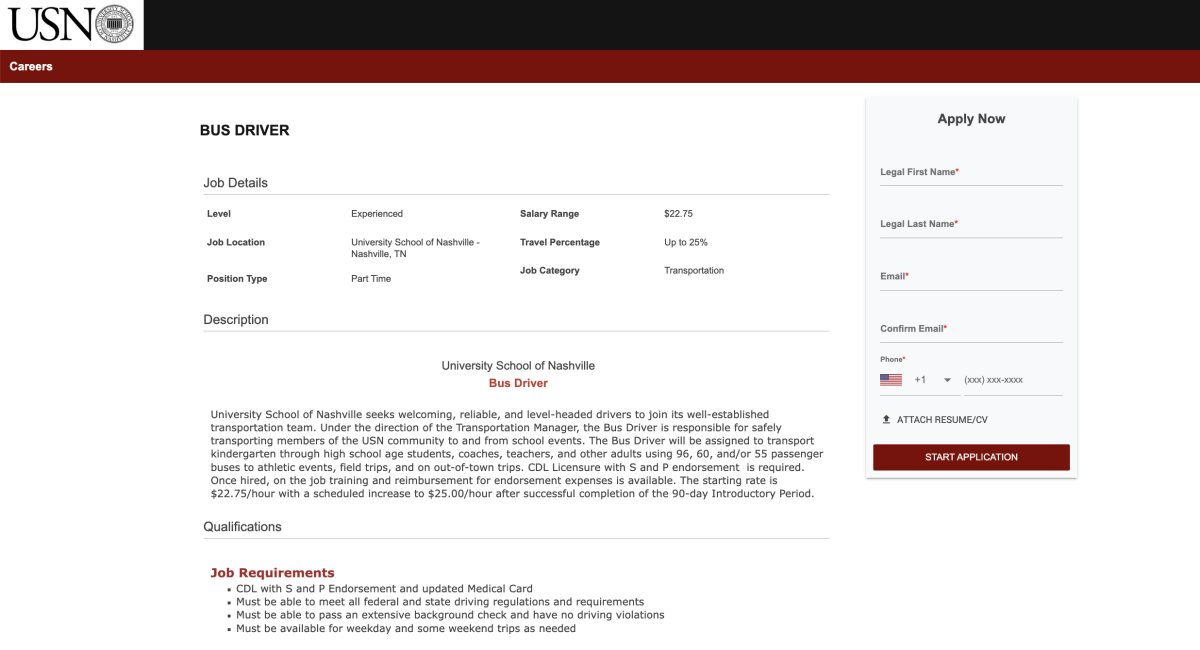
In order to get hired, Angie Moore, USN’s director of transportation, says that applicants have to get a Passenger and School (P&S) endorsement, and have their Commercial Driver’s License (CDL), and pass a background check. Weekend hours are often part of the job, especially during spring sports seasons.
Rivera thinks most aspects of the job, at least at USN, are at the right level.
“I think that the training and the hours are good where they’re at. I think that they would be able to entice more people if the pay was raised just a tad bit. It would invite more people in, but as far as training and things like that, I think we’ve got that pretty much under control,” Rivera said.
Luffman believes that the people who could pitch in to drive buses might already be in the building.
“There may be some other people who work at the school who may be able to add bus driver to their job description, and if the school is willing to finance us going through that process I’m sure there are a number of people who would be happy to do that. Otherwise, we’ve got to just get word out into the community that we have this opportunity to work for a great school, and to make it worth their while,” he said.
So then, you might ask, why does USN – among many other schools – not have enough bus drivers? Rivera thinks this might be part of a cultural shift as work-from-home jobs became more normalized during the pandemic.
“I think a lot of it is that people are just getting tired of driving,” Rivera said. “I think that more people are looking for jobs [where they can] stay at home or where they can just be stationary in an office. Just being on the go constantly can be a lot sometimes. I think that’s the majority of it, to be honest.”
The bus driver position is such a vital role in the community, and the current bus drivers are dedicated to what they do.
“I started driving back in 2007, and honestly I did it because I needed the job,” Rivera explains, “I started working at Metro, and I just fell in love with it. I’ve been doing it ever since. I just love being able to interact with [the kids] daily. They just mean a lot to me, and being able to provide them a service, you know, something that they need means a lot to me. I really enjoy it.”
Moore agrees with Rivera.
“I just love being a bus driver… I just love the kids. I’m the first thing they see before they get to school,” she said.