by Sophie Oliver ’26
September 26, 2023
Changes to the USN dress code, which were made in the spring of 2022, were recently communicated to the student body. Although multiple student groups were involved in making the changes, some students believe that the changes could be communicated more effectively.
While revising the dress code, Assistant Head of High School Nicole Jules’ first priority was changing the language used to discuss attire. In the previous iteration of the High School Handbook, the dress code was written in accordance with the belief that “the high school should be considered a ‘workplace’ where a certain level of decorum…is expected.” Both Jules and the students she worked with to update the dress code agreed that school should in no way feel like a traditional “workplace” environment, and the language of the High School Handbook was changed accordingly.
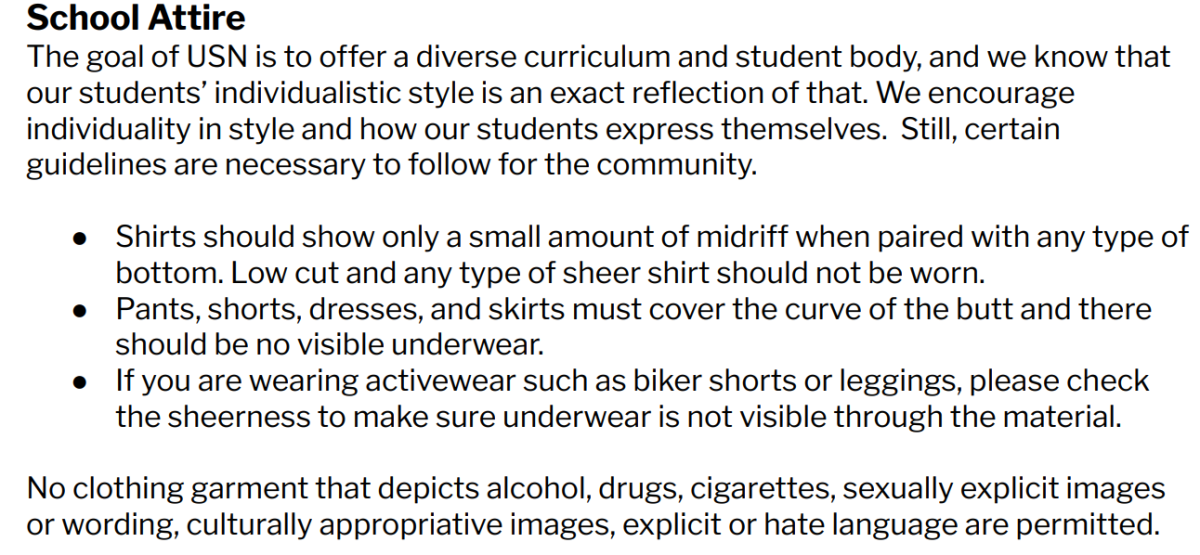
Now, the introduction to the dress code reads, “The goal of USN is to offer a diverse curriculum and student body, and we know that our students’ individualistic style is an exact reflection of that. We encourage individuality in style and how our students express themselves. Still, certain guidelines are necessary to follow for the community.”
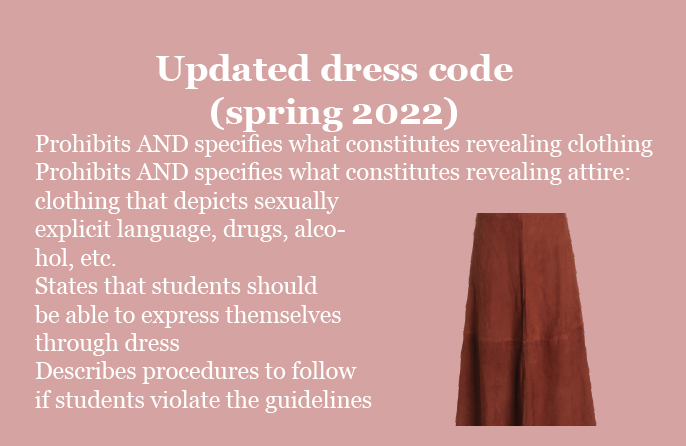
While the two versions of the handbook differ in language, their substance—specifically, the guidelines about dress—are similar. Both versions of the handbook stipulate that students cannot wear pants that display underwear, attire that is too revealing, or attire that is offensive in a school setting. In the updated handbook, “offensive attire” is defined as clothing that depicts sexually explicit language or images, drugs, alcohol, culturally appropriative images, and hate language.
In the updated handbook, language regarding what constitutes overly “revealing” clothing is much more specific. The specificity of the language allows students to better understand why their attire might not potentially adhere to school standards.
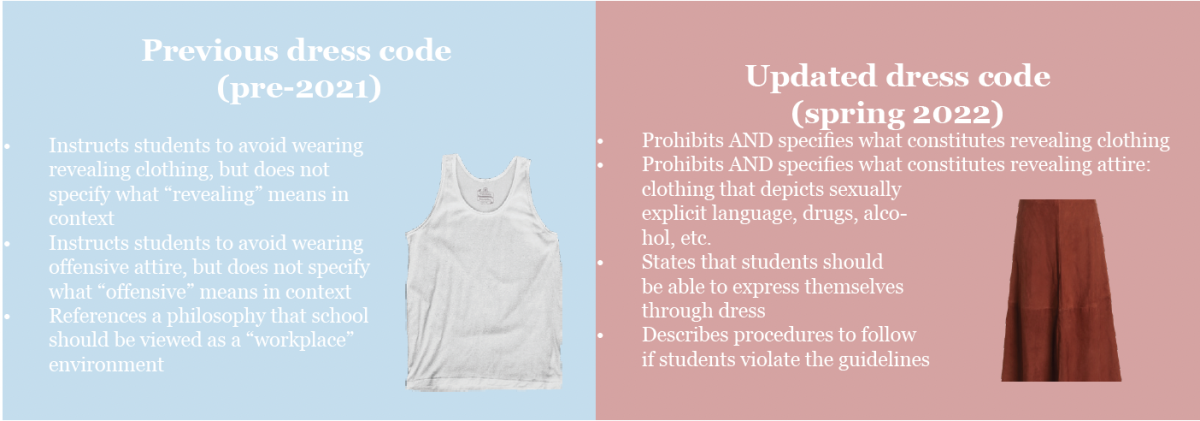
“Shirts should show only a small amount of midriff when paired with any type of bottom. Low cut and any type of sheer shirt should not be worn,” and, “Pants, shorts, dresses, and skirts must cover the curve of the butt and there should be no visible underwear.”
The old handbook specified that “underwear should not be worn on the ‘outside’ [of bottoms]” and “there should be no holes in the clothes worn to school.” Instead of going into detail about midriffs and short shorts like the new handbook does, it simply instructed students not to wear “revealing” clothing.”
The current iteration of the handbook also outlines procedures to follow when students violate the dress code guidelines. The pre-2021 handbook made no mention of this.
“[A teacher or administrator] should speak to the student individually and discretely, point out the specific violation matter-of-factly, and give them an opportunity to change or adjust,” the current handbook says.
The new handbook also invites a conversation to follow.
“If the student believes that they are indeed wearing appropriate school attire, the student can speak with the Assistant Head of High School for Student Affairs or Head of High School who will help them to resolve their concern,” it continues.
Jules has noticed that since USN is a community that allows students to express themselves through the way they dress, many students consider the way they dress to be a “free for all.”
“Folks need to understand the balance of having freedoms but also having some guidelines,” Jules said.
She says that she mentioned the dress code to students on August 24 in a Community Time meeting not to announce that she had made additions to it this year, but rather to remind them of the changes that had already been made. Jules believed the reminder was merited because the dress code was not followed by some students last year.
Some students were asked if they take the dress code into consideration when getting ready in the morning. Many said that they do not think about the dress code because their personal clothing choices don’t warrant it.
Darcy Dove ‘26, though, was dress-coded at the beginning of last school year. She was walking with her friends when it happened, and was frustrated by the public nature of how she had been made aware.
“I understand and agree with the school’s dress code, but I wished I would have been pulled aside[to have a private conversation],” Dove said.
Jules thinks that some students might not adhere to the dress code because modifications to the handbook were not properly communicated; to address the issue, she has decided to remind students of dress code expectations throughout the year.
“I think we need to do more sessions like that [discussing the handbook at assembly] over the course of the year, talk about big ideas from the handbook, so that people can understand the expectations,” Jules said.
The new dress code was updated in January 2022 explaining the new expectations for the students’ attire. The goals for the new requirements are to allow students to express themselves while maintaining the balance of freedom and guidelines. For administrators such as Jules, periodic reminders of community expectations–such as the dress code–are meant to help students consider our clothing choices, and whether we want to present them to the teachers and younger students at a K-12 school.