The opinions expressed here are strictly those of the writer and do not reflect the views of University School of Nashville or the Peabody Press.
On April 16, the Nashville Predators played their final game of the 2025-26 season, a 5-3 loss to the Anaheim Ducks. It also marked the end of a slide that saw the team finish the regular season with a 1-3 record over their last four games, dashing any playoff aspirations.
For the second straight year and for the third time in the last four years, the Predators have failed to qualify for the postseason. It is also the first time that the team has missed the playoffs in consecutive seasons in the last 12 years. Though not surprising, this year’s lack of team success is indicative of a new trend for the Predators: the team’s nucleus is aging.
To understand how they got to this point, one has to look back to the summer of 2024. Coming off an end-of-season surge and a first-round exit at the hands of the upstart Vancouver Canucks, general manager Barry Trotz entered the off-season looking to add a number of pieces in order to truly compete in an increasingly competitive Western Conference. Over the first few hours of free agency that summer, Trotz walked away with three of the top players available, signing them to contracts worth a combined $108.5 million. Those three players were Steven Stamkos, Jonathan Marchessault, and Brady Skjei. All of them were over 30 when they signed.
Entering the 2024-25 season, media outlets and fans alike had sky-high expectations for the team. For the first time in franchise history, the Predators had loaded up on star talent in the offseason. In the minds of many, the question was no longer whether this team could make the playoffs, but whether they had what it took to win a Stanley Cup.
Promptly, the Predators disappointed, looking utterly discombobulated as they started the year with a 0-5 record. Over the next few months, the team continued to struggle, and the shiny new additions from the summer prior looked hapless on the ice. Stamkos, Marchessault, and Skjei alike posted their worst scoring seasons in years. The team did not gel. It was obvious. The increasingly evident struggles led to the team finishing the year with a record of 30-44-8, good for second-worst in franchise history.

(Cody Farr)
Last summer, there was yet another roster shakeup; however, it was more minor, mostly aimed at opening up space for the plethora of young talent that the Predators had waiting in the wings. Also, for the first time since 2013, the franchise landed a top-five pick in the draft, taking Canadian center Brady Martin.
Entering this most recent season, two things needed to happen for the Predators to find success: firstly, the team’s younger players had to show significant progress in their development, and, secondly, the team’s older stars had to return to a productive form. Both those things happened, just they occurred a smidge too late.
The Predators opened up the season hot, going 2-0-1 across their first three games and looking solid in the process.
That early success proved to be a mirage. Come Thanksgiving, the Predators were sitting at 6-12-4 and at the bottom of the league’s standings, having won just two of their prior 13 games. Only one of those wins had come on North American soil, as the team had traveled to Stockholm, Sweden, to play two games against the Pittsburgh Penguins as part of the NHL’s Global Series, winning one. Once again, the older players were disappointing. Stamkos had barely scored, Marchessault had been in and out of the lineup, and Skjei’s defensive play was utterly abysmal. With the rest of the lineup also struggling, the on-ice product was miserable.
After an 8-3 loss to the Florida Panthers on November 24, General Manager Barry Trotz took to the media with one message for the players: “I need more.”
That message characterized the rest of the Predators’ season. Suddenly, Stamkos found his scoring touch, young star Luke Evangelista stepped into his own, and alternate captain Ryan O’Reilly started to get on a roll. Within six weeks, the Predators found themselves in the midst of an 11-5 stretch, turning their season around.
The following few months, however, proved to be tumultuous for the team. Three-game win streaks were immediately followed by three-game slides. The team seemed directionless, even though it was right on the playoff line, which led Barry Trotz to sell off assets at the March 6 trade deadline.
The final month of the regular season proved to be no different for the Predators. Inconsistent play was commonplace. However, after rattling off a season-high five-game win streak at the tail end of March, the Predators were sitting inside the playoff line. Yet the team still squandered that opportunity, going 4-6-1 over their final 11 games. The team was gassed. Having one of the highest average roster ages in the NHL was finally catching up to them. Every game, the Predators just looked a step slower than their opponents. For a team long known for the speed of its play, this development raises concerns and poses problems they have historically avoided.
The final nail in the coffin came on April 13, when a 3-2 loss to the San Jose Sharks eliminated the Predators from playoff contention. It was the first time the Sharks had beaten the Predators in their previous 16 meetings.
One cannot help but wonder how the Predators’ season might have been different had they just started off a little stronger. In the end, it was their abysmal start that dug them into an insurmountable hole. Even a solid final 60 games of the season still left the Predators two wins short of a playoff spot.
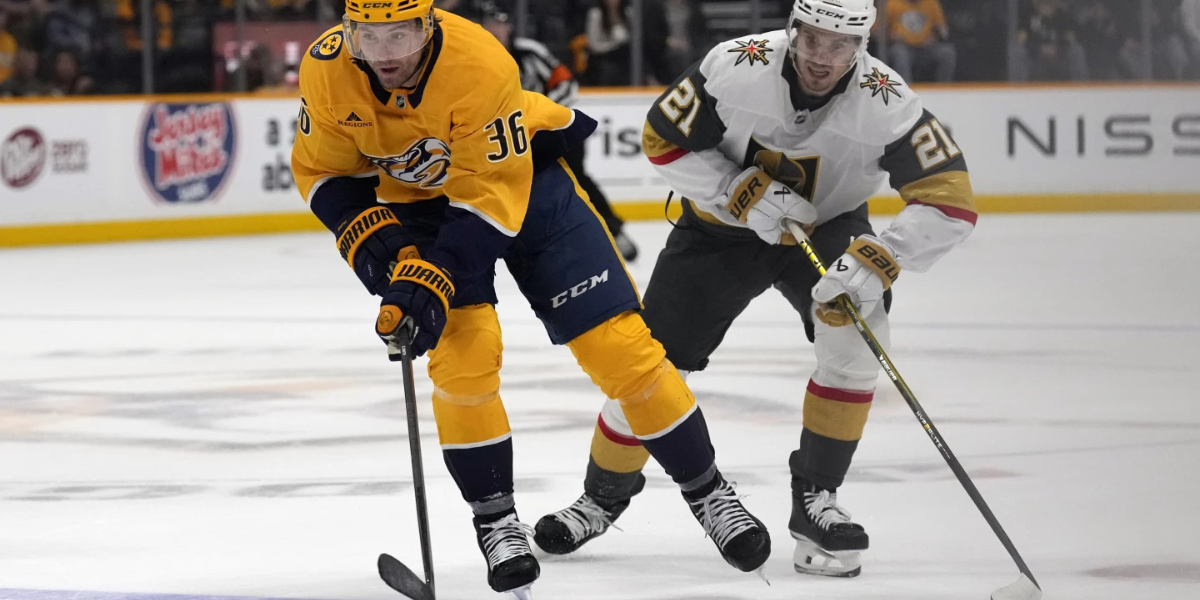
Individual success was still abundant this year. O’Reilly and Filip Forsberg both finished the season with over 70 points – a momentous achievement. Rookie Matt Wood has one of the best freshman seasons in team history, posting 17 goals and 13 assists across 71 games. The 24-year-old Evangelista enjoyed a breakout season, posting career highs in both assists and points while posting outstanding defensive analytics. Much-maligned Stamkos ended up posting an electric 42-goal season, which ranked among the top three all-time scoring seasons for the team.
Down the stretch, rookies like Ryan Ufko, Reid Schaefer, Joakim Kemell, and Cole O’Hara provided meaningful contributions to the team.
Despite that, the Predators fell short of their goal: a playoff berth.
“We should be a little pissed off that we’re not playing hockey right now,” two-time Stanley Cup winner Stamkos said in his season exit interview.
His mission moving forward is clear: bring the Nashville Predators back to the playoffs.
“I came here with playoff aspirations, right? So, we’ve failed the last two years,” Stamkos later added.
With the team in a state of flux following Barry Trotz’s February 2 announcement that he was stepping down as general manager and with a core that grows older by the day, only time will tell if Stamkos’ hope bears any real semblance of feasibility.