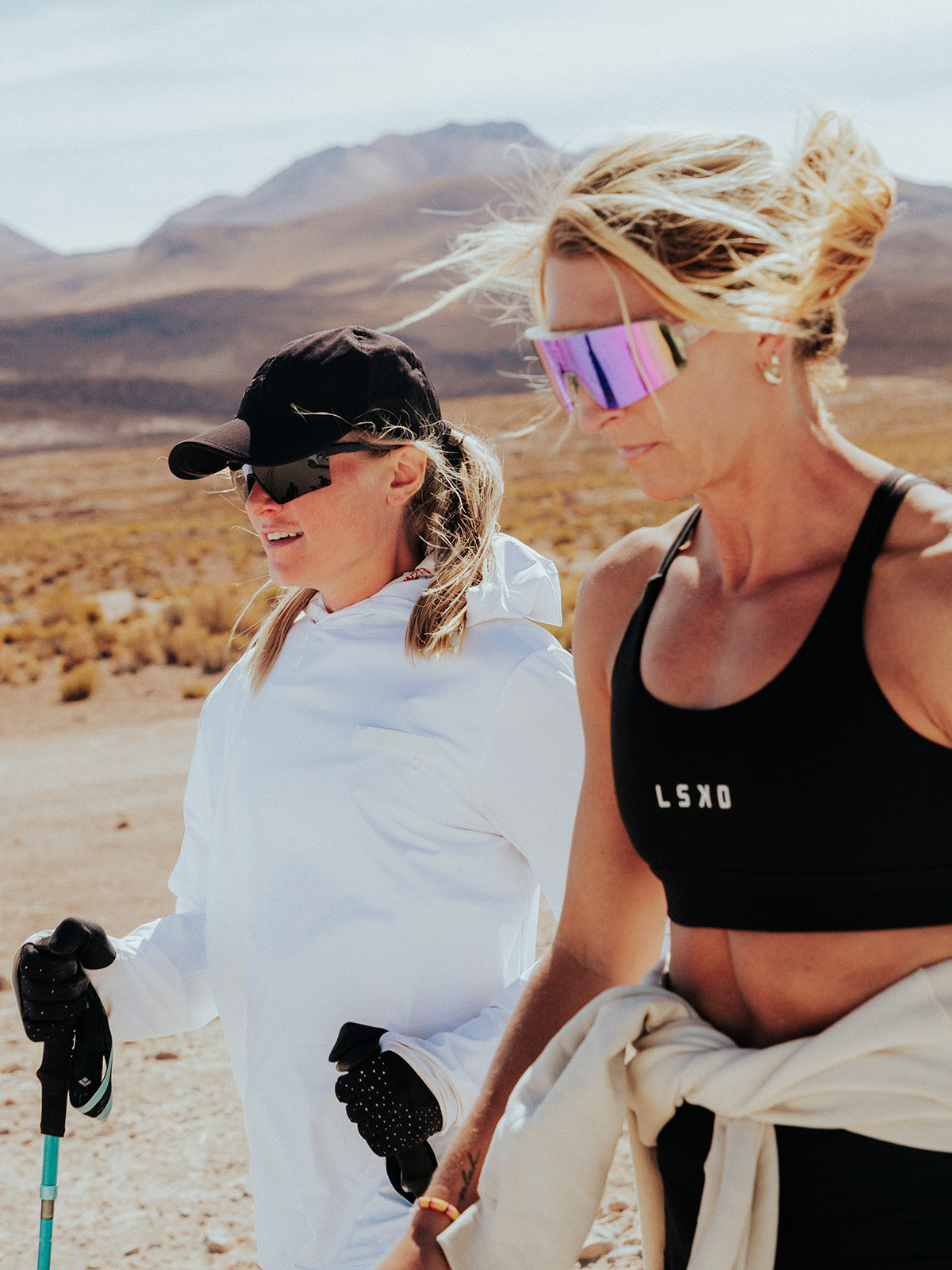
High end athletes. The extreme climate of the Chilean desert. Military bases. Lots and lots of mashed potatoes.
Early in the morning on November 24, 2025, USN Coach, PE teacher, and runner Lindsey Bachman kicked off The Speed Project’s 310-mile non-stop ultra-marathon alongside trainer, runner, and friend, Allie Gibbons. Over the course of six days and in attempts to gain a course record, Gibbons, Bachman, and the rest of the crew endured the myriad challenges of the Atacama desert in Chile, South America.
The Speed Project is a collection of ultra-running events founded by Nils Arend & Blue Benadum, who, in 2013, were interested in testing how fast runners could get from Los Angeles to Las Vegas. To their surprise, many runners showed up to try their hand at the distance. Once the event gained more publicity, the founders decided to turn it into an official race. There have been TSPs annually each year since then, with races in France and Atacama being added later. The TSPs are structured around a “choose your own adventure” mindset, with no official route, spectators, or even entry forms. Bachman compares the TSP Atacama to Tennessee’s Barkley Marathon, another highly secretive and challenging race that pushes people to complete 130 miles in under 60 hours.
“There’s no website. You can’t just go and sign up for it,” Bachman said. “You’ve got to have a story and a purpose and a journey, plus, like, be really fit and be able to do it.”
TSP’s official slogan is “No Spectators,” showing both the isolation felt by runners as well as the community that is built during these races. Over the years, the race has thrived on word of mouth and private invitations to then apply to compete, which is how Bachman found herself in Chile over Thanksgiving break.
Although Gibbons and her fiancé, Sam Atherton, have previously competed in the three other TSP’s as part of a relay team — Los Angeles to Los Vegas, France, and Atacama — this was Bachman’s first time running in a race this extreme. Bachman had introduced Gibbons to Atherton a few years ago when Gibbons was looking to join the running community. Bachman had no idea that down the road she would be asked to run alongside her two friends in a dangerous race in Chile, but was along for the ride regardless.
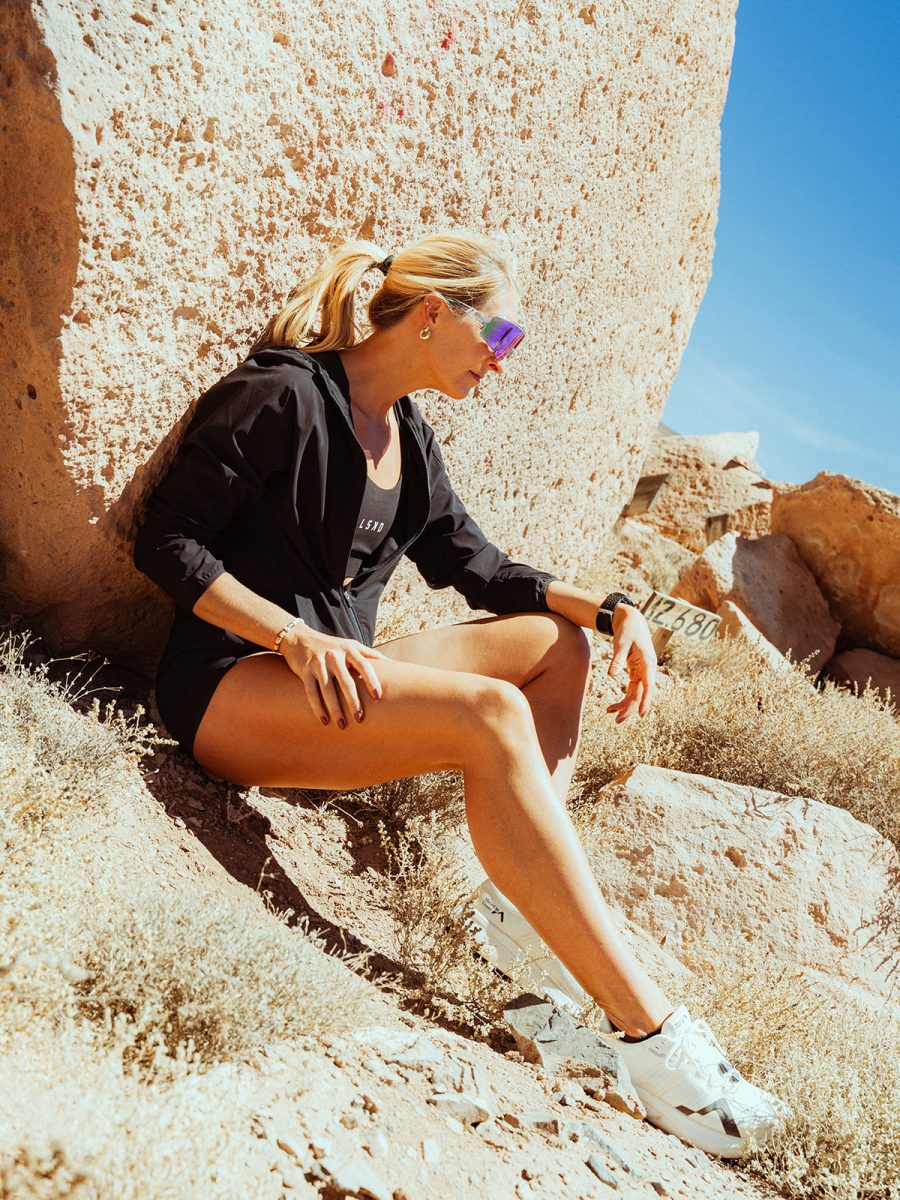
Gibbons’ reasons for applying, being accepted to, and running in the race changed over the short period of time leading up to the start date.
“Initially, [Gibbons] really wanted to go after the course record, but after she got accepted, she found that she was pregnant, and so her story and journey ended up becoming a lot different than we originally thought, and it was more about just proving what the female body can do,” Bachman said.
Not only was Gibbons the first female finisher in the over- 300 mile race through rough terrain and extreme conditions; she also did it while in her third trimester of pregnancy, which speaks volumes to what the female body is capable of. Gibbons’ website and Instagram page are filled with inspiration for not just female runners, but athletes everywhere. One quote stands out: “For every first, there was a soul brave enough to try.” In competing in Atacama solo, Gibbons proved that the boundaries of human capabilities can be much greater than we think, and that pushing beyond those expectations is vital to discovering who you are.
Bachman was initially asked to be a part of this race because Gibbons knew she could “log the miles and bring the best vibes.” Gibbons’ team knows her for being positive, energetic, and always going with the flow, as well as loving to log many, many miles. So, Bachman joined the crew, with her semi-official title being “The Queen”, according to Gibbon’s Instagram.
“It was perfect,” Bachman said. “I mean that literally is my favorite movie. I don’t race on my own… I get super hyped about supporting other people. So that was my role: to run and keep Allie sane and safe and happy.”
Additionally, Bachman compares her experience supporting Allie to that of when she coaches the USN girls’ cross-country team.
“I literally was on the ground with her and I would tell stories, sing songs, whatever I do on long runs with [the USN] girls,” she said.
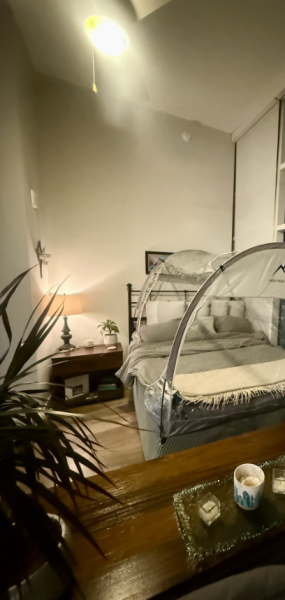
Bachman didn’t change her daily training routine drastically leading up to the race. However, one of the major differences between running in Nashville and running in Chile is a much higher altitude, so Bachman used an altitude tent where she would sleep for the next few months. This tent simulated the high-altitude environment in Chile by reducing the oxygen concentration in the air. She found the tent to be useful in helping her acclimate to altitude.
On the training Bachman remained committed to performing well alongside Allie in Atacama. Typically, Bachman runs between 80-100 miles per week. She didn’t have a direct plan on increasing that mileage until this past summer, when she began to develop the fear that she wouldn’t be capable of that performance simply because she had never run 300 miles at one time before. She wasn’t expecting to run the entire 300 miles because Atherton would also help pace Gibbons, but even 150 miles in four days sounded frightening. There was a point in summer where she completed 140 miles in the span of four days in order to see what a longer distance would feel like.
“It felt terrible, and so I didn’t do that ever again,” Bachman joked.
After realizing that mimicking the race mileage might not be an option, she started running 12-15 miles a day, with back-to-back 20-milers on the weekend to test her capability pushing through fatigue. Bachman notes that she ran all of this at a much faster pace than they would be running in Atacama, so she felt confident with her training heading into the race.
“I just needed to be strong, healthy, and not hate running,” she said.
As far as the flights to and from Chile went, Bachman described her experiences as long, but fun, and she adds that, “They just kept feeding me the whole time! I snoozed, and every time I woke up, they were feeding me again!” With no delays, Bachman was able to make contact with Allie and Sam that Saturday afternoon. Of course, her pre-race fears were as real as anyone’s.
She recalls, “I was most apprehensive about not dealing with the altitude well and going so long without sleep. Those were two factors that I hadn’t conquered yet.” She also notes, “I’m pretty religious about my sleep,” and the reality of going six days without good rest exceeded her expectation of three to four days. Her other concern involved the fact that she would be running at a 14,500 ft elevation in Chile; she hadn’t made it above 11,200ft in the altitude tent without her monitors reaching dangerous levels, so she understood the risk of feeling bad while running.
However, in the end, neither of these things were an issue, and she trusted the team and their plan and knew that there were a lot of people praying for their safety.
Prior to the race, she had joked with the cross-country team, “If I don’t come back, it’ll be a good way to go,” showing how she truly believed that it was one of coolest things she could be a part of. “No fear or anxiety came close to the excitement I had over the adventure there,” she says.
There was one moment during the race when the team felt some real fear, and it came late on the second night. Bachman recalls approaching a remote 50-mile stretch that competitors had been explicitly warned not to enter after dark. Located close to the border, the area was known for what race officials referred to as “Land Pirates,” armed groups that travel in unmarked military-style vehicles and target anyone passing through.
“They told us in the race meeting that in the last month, five vehicles had been raided,” Bachman explained. “Then they explained what that really meant – that, in the last month, multiple people’s lives were taken.”
When the team reached a police checkpoint around 3:00 P.M., they were faced with a difficult decision: stay put until morning or push forward, knowing that it would get dark soon. While others chose to stop, Gibbons was adamant about continuing.
“I did not come here to sleep. I’m here to race,” Gibbons said.
With confirmation from a nearby military outpost that they were being monitored by cameras positioned along the mountain peaks, the team decided to move forward. “I was probably 50/50 on my confidence,” Bachman admits. “I felt like, wow, these are our lives.”
Fortunately, they reached the outpost safely and rested briefly before continuing.
“That was the most precarious part of the trip,” Bachman said. “That was where I had some real fear.”
Bachman had many stories to tell, including encounters with locals and the other teams.
“Everybody was just so kind and friendly,” she said. “ It felt like a very distinct contrast between here, where nobody seemed really worried about time, and they would stop and they really wanted to hear about how you’re doing,” and she continues, “Then the other people we would encounter were crew vehicles from the other participants, and that’s the really neat thing about TSP too — even when we would see other teams, or when the relay team started coming by us, nobody was that focused on the time and the finish line, that they wouldn’t stop and be like, how are you doing? Everybody stopped to cheer each other on, and that was really neat to just remind us again, like, this isn’t like your typical road race. This is a lot more about the journey and the people.”
One specific local encounter stood out to Bachman: when her team saw a group of locals driving a produce truck, who then stopped to inquire as well as offer the team giant carrots.
Bachman says, “That was a real highlight, and for a while, we just hiked with all these carrots in our pockets.”
Other than carrots, the team survived mainly on powdered mashed potatoes, noodles and marinara sauce, Tostitos chips, Oreos, and sour gummies.
Bachman’s role as Gibbons’ supporter remained consistent throughout the final miles of the race. When fatigue set in and rumors of cheating among other competitors spread in the last 20 miles, Bachman helped Gibbons refocus on the purpose of her run, reminding her that the race was about her journey. As the course descended toward the finish, the pace quickened, and Bachman stayed beside her, offering encouragement and keeping the energy high.
“Don’t look back behind your shoulder. Look forward. This is where we’re going,” Bachman repeated. “You’re doing something so awesome. Nobody can take that away from you, no matter what anybody else does,” she told her as they pushed through the final stretch.
“I think that in the last 10 miles, I cried the whole time. It was incredible,” Bachman said.
The physical toll of the Atacama was undeniable. Bachman returned home with severe sun damage to her eyes, chapped lips, and lingering exhaustion, but she also returned stronger, nearly setting a personal record on a run just days later. Despite being invited to return and run TSP solo next year, Bachman has decided against returning, with Atacama providing clarity for something she already knew about herself.
“I am happiest when I am supporting other people that are really all-in,” she said. “When I see somebody else so dedicated and driven, I love supporting them in that. Watching people find their purpose and calling and then getting to be part of that [is] literally my happiest place. I had the best time of my life out there.”