On Monday, July 28, The Boring Company (TBC), owned by Elon Musk, announced the construction of a privately owned tunnel running from downtown Nashville to the Nashville International Airport.
Known as the Music City Loop, this tunnel will be funded entirely by TBC. The project has gathered a fair bit of controversy, with its efficiency as a transit system, TBC’s knowledge of Nashville’s geology, and TBC’s experience with tunneling all being called into question.
The Music City Loop is not the first Loop TBC has constructed. The Las Vegas Convention Center Loop, which connects several hotels to the convention center in Las Vegas, has been in operation since 2021. It is mostly used for major conventions. TBC was fined $112,000 by Nevada OSHA in early 2024 for mistreatment of their workers during the construction of the tunnel in 2019, many of whom received severe chemical burns while working.
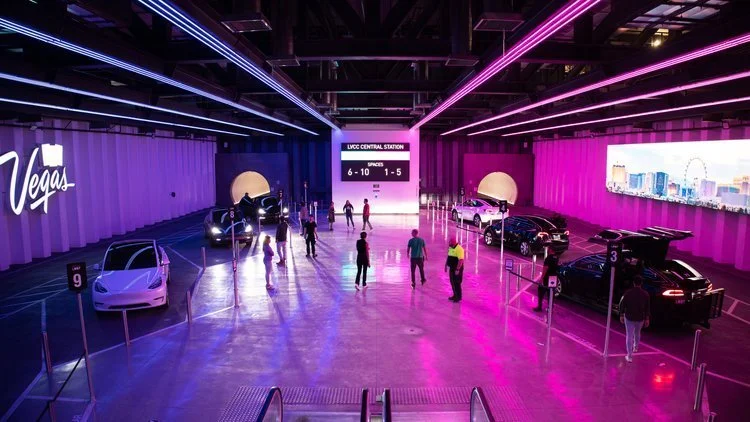
While TBC has received approval from the City of Las Vegas to build 68 more miles of tunnel in Vegas, with 104 stations on the route, construction has not begun on the majority of it. The only completed sections total about two miles in length, only a fifth of the Music City Loop, which is estimated to be 10 miles long.
Though pricing data hasn’t been revealed for the Music City Loop, it has been made available for some of the incomplete routes in Vegas. The highest fare listed is $12 for an 8 mile trip, so riders might be able to expect something similar here in Nashville.

The main purpose of the Nashville tunnel here will likely be ferrying passengers to and from the airport.
However, Nashville residents already have options to get to the airport without driving their own car. One such option is rideshare services like Uber. While most rideshares have highly variable pricing, a rough estimate based on prices at several different times of day has Uber’s cheapest option costing at least $20. Riding in the Music City Loop could represent significant cost savings over taking a rideshare.
However, Uber isn’t the only option. Nashville’s public transit system, WeGo, has Line 18, a route that goes directly to the airport from the Elizabeth Duff Transit Center, WeGo’s central station. WeGo estimates that line 18 takes 35-45 minutes to get to the airport, or just 20 on an express bus. And, like all other WeGo lines, it costs $2 to ride.
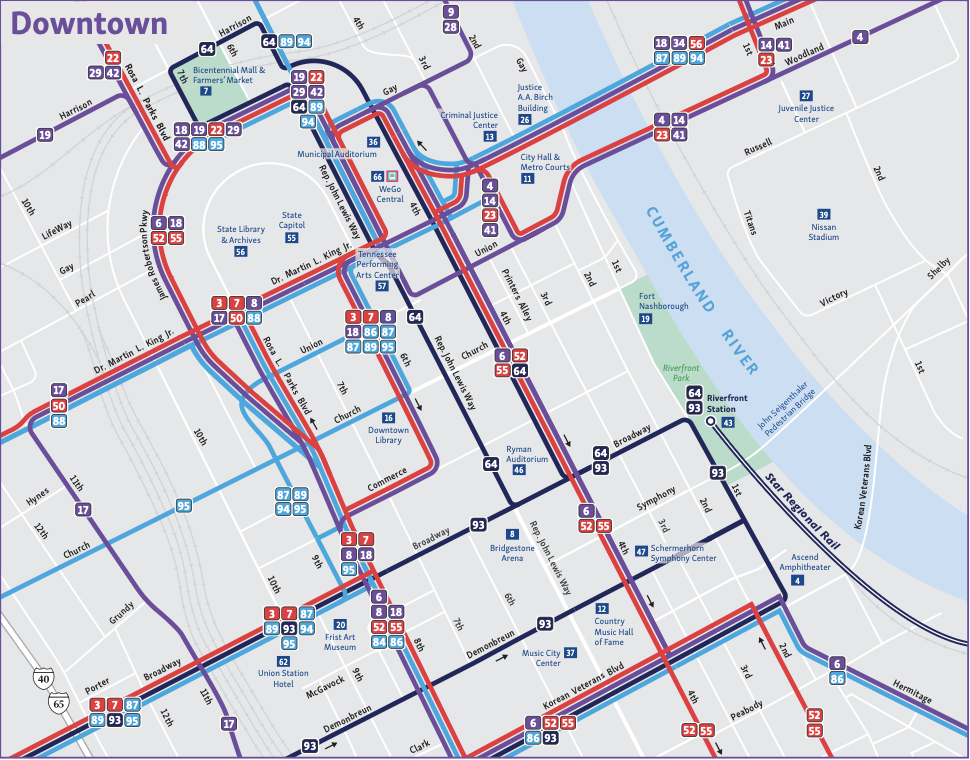
The Music City Loop estimates that a full ride will take 9 minutes on the planned route. Comparing these two estimates, WeGo takes two to four times as long, but will likely be at least one sixth of the cost.
The Loop will also be limited to a single route that will be hard to expand in ways that WeGo is not.
In the constructed tunnel, passengers would ride in Tesla Model X and Model Ys, which have a capacity of 6 and 5, respectively. Loop drivers would be hired and trained by TBC and be responsible for driving passengers from stop to stop.
The standard WeGo bus seats around 30 people, though many have more space. WeGo drivers must have a certified Commercial Driver’s License, and they’re hired and managed in accordance with state and city regulations.
Passengers on the Music City Loop would be able to get off at one of several stations, most of which have yet to be determined, but all of which will be located on a single route going from downtown to the airport. Adding more tunnels, necessary to add more stops, would be a costly and time-consuming process; TBC estimates that the earliest possible completion date for the Loop is in 2027.
The WeGo network extends all throughout Nashville, with 27 different local lines that take passengers all over the city. And, because WeGo relies on already-present roads, adding routes doesn’t take anything near the specialized boring equipment employed by TBC.
WeGo is also regulated by the city of Nashville, while current plans for the Loop will not require any approval from either Mayor Freddie O’Connell or the Nashville Department of Transportation. Because current plans have the Loop extending only under state-owned roadways, the project might only need approval from state-level organizations like the Tennessee Department of Transportation, as well as some small city boards like the Metro Nashville Airport Authority and the Nashville Convention Center Authority.
Regardless of the Loop’s cost, efficiency, or legality, Nashville’s geology might make tunneling particularly difficult, and maybe even dangerous.
“The stuff in the Nashville basin is all 450 million-year-old Ordovician limestones and shales, and they are pretty consistently found in the Nashville basin, which would go everywhere from West Meade to USN to the airport, [as well as] north and south,” said USN geology teacher Steve Smail.
According to Smail, Nashville’s underground landscape is actually a special type of formation with some interesting, and perhaps dangerous, properties.
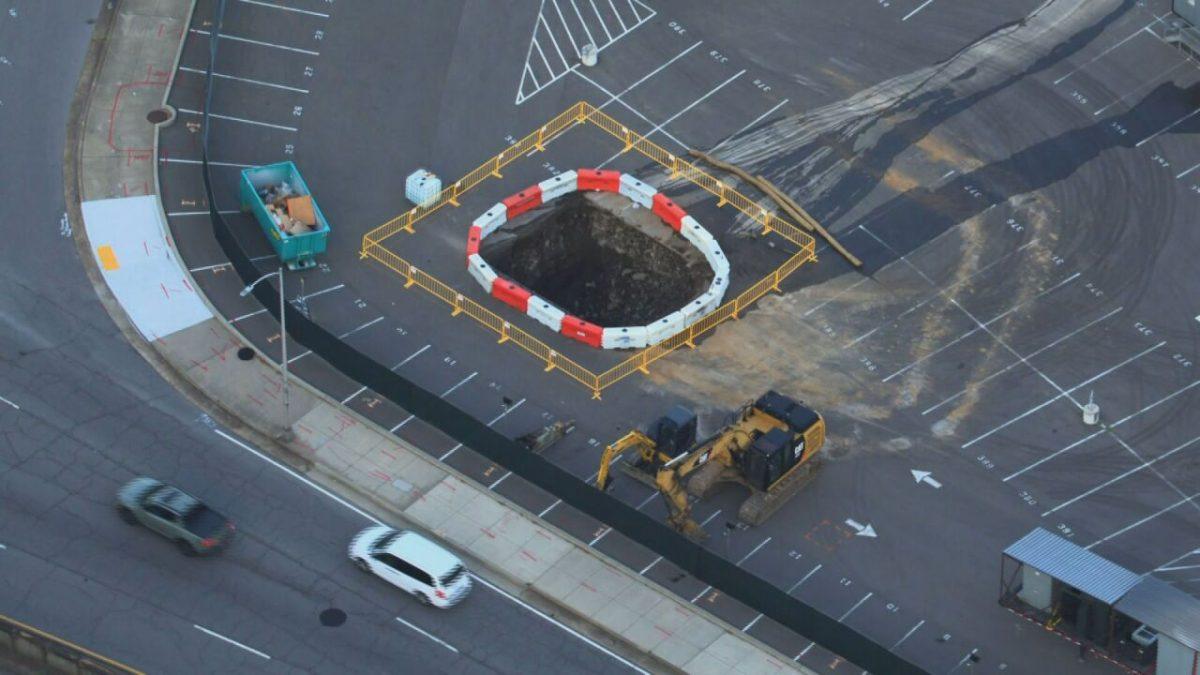
“Limestone areas that get a lot of water precipitation are often what are called karst areas,” said Mr. Smail. “Karst is a German word that means ‘cave-forming geology’. Limestones are really susceptible to caves because our rainwater is naturally just a little bit acidic . . . The water, as it flows through [the limestone], starts to dissolve it . . . So you don’t just get sinkholes, you get sinkholes connected to passageways, which lead into small and large caves.”
Further increasing potential dangers, a tunneling project of this magnitude has never really been done in Nashville, so we don’t really know a lot about how the local geology would react.
“What has Nashville done for tunnel systems up to this point?” asked Smail. “Basically nothing compared to other cities. So this is a little bit of an experiment. The experiment is whether The Boring Company has the technology to deal with what I would call a consistent geology, [because] we know what kind of rocks are there, but in localized places, it’s very unpredictable.”
“They’ve never done this anywhere else. Would Nashville be the place to do your biggest first experiment?” said Smail. “I’m no engineer, but as a geologist, I would probably emphatically answer no.”