by Carmen Gaskin ’25
May 2025
Two bills barring state and local governments, school districts, and public colleges from integrating diversity, equity, and inclusion offices and considering race, ethnicity, sex, or age in employment decisions will go to Gov. Bill Lee for his signature.
Following President Trump’s crackdown on DEI programs in schools, and amendments made to the Civil Rights Act of 1964, permitting contractors from having segregated facilities and discriminatory employment practices, cuts to DEI have made their way to Tennessee.
The “Dismantling DEI Departments Act” and the “Dismantle DEI in Employment Act” are meant to align Tennessee with the priorities of the Trump administration, according to Tennessee Senate Majority Leader Jack Johnson, a Franklin Republican and the senate sponsor of both bills.
On April 17, the Republican supermajority’s passage of the bills came over the staunch opposition of their Democratic colleagues – many of whom are minorities, who recounted their personal experiences facing hiring discrimination.
Johnson and House sponsor, Clarksville Republican Rep. Aron Maberry, said diversity is beneficial but DEI is a form of discrimination and “enforces ideological viewpoints” in spaces created to foster political neutrality. Each bill aims to prioritize merit, eligibility for positions, skill, and competency over the choosing of candidates due to race in employment decisions, and diversity will “happen naturally through fair hiring practices.”
“The big problem in DEI is equity. We all know diversity, we all love including people. Equity is not equality, and it’s not about treating people fairly or ensuring equal opportunity…equity in the context of DEI is essentially that everybody gets the same outcome,” Maberry said.
Sen. Raumesh Akbari, a Memphis Democrat, identifies the hypocrisy in individuals who believe they live in a post-racial society.
“Because, quite frankly, as much as we aspire for the ideals of Dr. [Martin Luther] King, where people are not judged by the color of their skin but by the content of their character, that is not the case,” Akbari said.
Other House and Senate members addressed the controversies presented in Maberry’s reforms to hiring practices.
Sen. London Lamar, a Memphis Democrat, said DEI initiatives are meant to address groups of people who are fully qualified but have been excluded from access to resources and jobs.
“You can’t even be considered for these jobs if you don’t meet the basic criteria,” Lamar said. “So the idea that people are being chosen based on their race or their gender is false.”
Others referenced the growing fear of minorities in government agencies and work sectors, as addressed by Trump. An example of this includes the firing of Black Air Force General CQ Brown Jr. as chair of the joint chiefs of staff on February 21.
“This bill is racist, it’s sexist, it’s ableist,” said State Rep. Gloria Johnson (D-Knoxville). “Are you all so terrified of people that don’t look like you and believe like you?”
Other than the few limited remarks made by Democratic representatives in their efforts to amend the legislation, very few words were spoken on the Tennessee House floor about the bill itself.
Shortly after the last amendment was presented, State Rep. Chris Todd made a controversial procedural move that ended debate on the amendments and bill entirely, forcing an immediate vote from House and Senate members. “I move to previous question on the amendment and bill,” Rep. Todd said on the House floor.
Decisions to cut debate short lead many Democratic members to showcase varying reactions. However, many speak to the elimination of the opportunities to represent their constituents’ lived experiences through testimonies, or even the opportunity to share their own stories.
“Many of us were denied the opportunity to even speak and represent our people,” Memphis Democratic Caucus Leader Rep. Karen Camper said Tuesday. “Not only were we silenced, but really it almost felt like (we were dismissed. It was a lot of laughter and smugness, as if our lived experience of discrimination and injustice in this country were nothing more than some political talking points.”
Others remained confused at the supermajority’s inability to defend the provisions of its own bill.
“They bring this garbage before us, and then they’re ashamed to even defend it,” said Rep. Mckenzie, referencing the lack of proper debate.
Sponsors of the bill defended the lack of appropriate procedural moves.
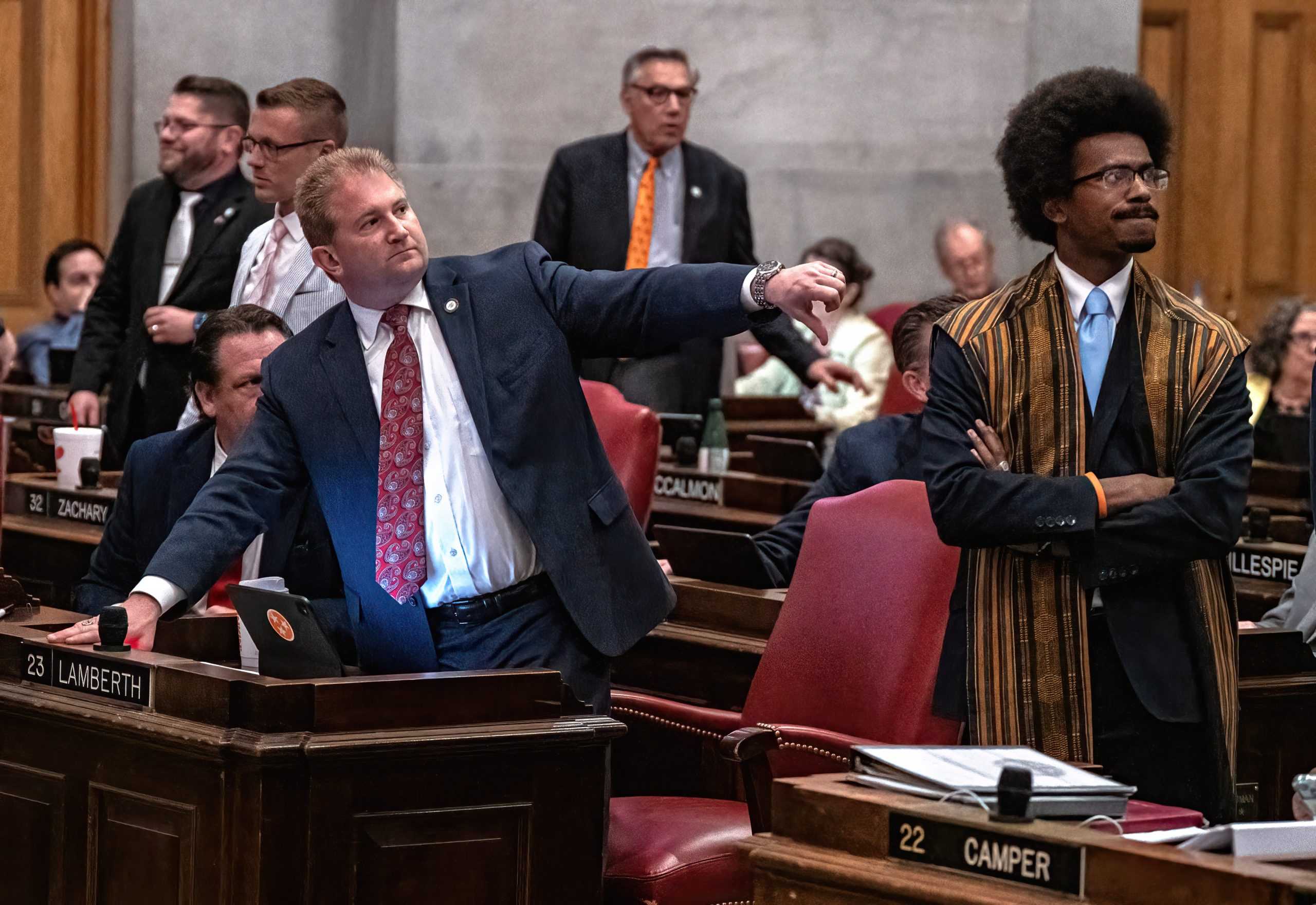
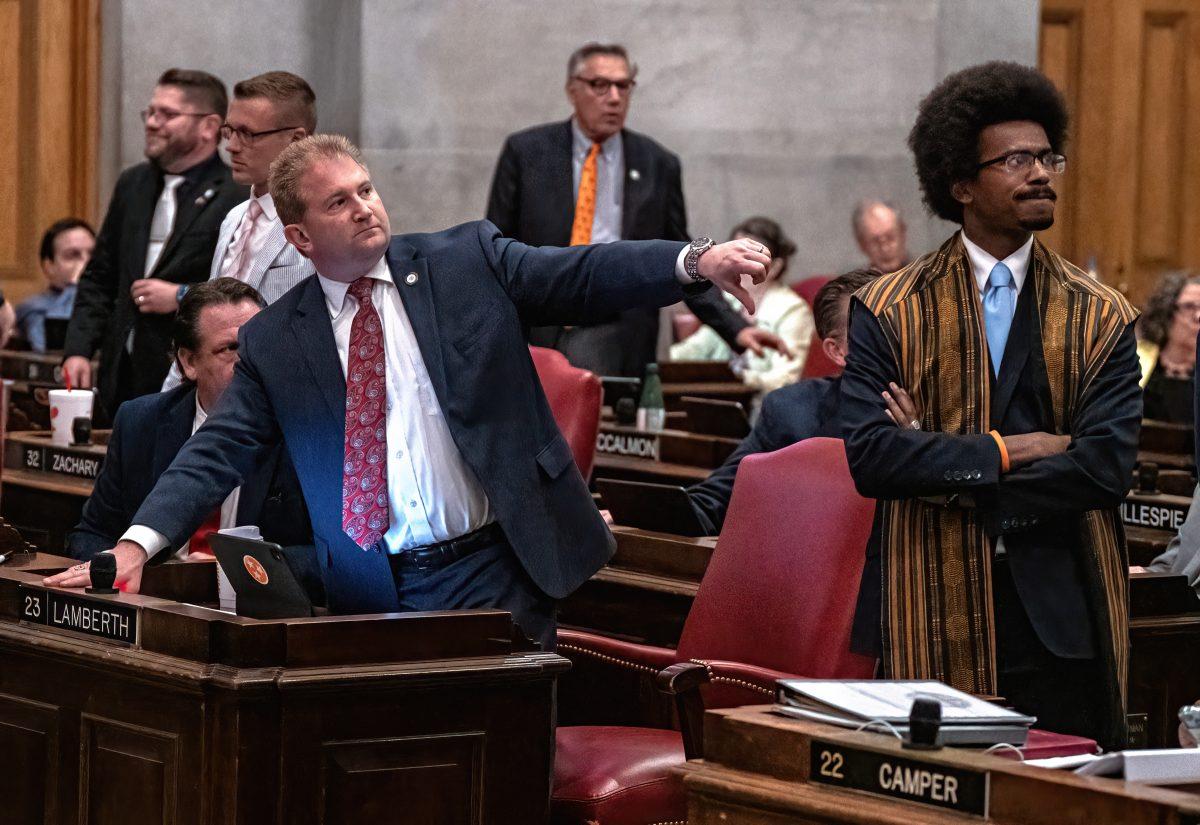
“When we want to debate, they just fling insults, and hold up signs and that kind of stuff,” said Republican Rep. William Lamberth, who also serves as House Majority Leader. “I think members sometimes get sick of that and they just go ahead and call the question.”
Lawmakers also reserved time during news conferences to voice arguments in favor of the bill that they refused to make on the House floor.
“If D.E.I. stood for Diversity, Excellence and Inclusion, it would be perfectly fine. But it stands for Diversity, Equity and Inclusion, which is a communist, socialist principle that is racist at its very core,” said Lamberth. “Leave all the rest of the junk out of it and just say look, are you good at what you do? If you are great, we want to hire you and move forward together and be successful.”
Democrats quickly challenged the portrayal of DEI as communist rhetoric.. “For him to say it’s communist, it’s just, he’s shifting the blame again trying to take the eyes of him. For us to be even here talking about this is just ridiculous,” said State Democratic Rep. Vincent Dixie.
What the Legislation Says
The “Dismantling DEI Departments Act” prohibits state and local governments, public institutions of higher education, and governor-appointed boards and agencies from using a “discriminatory preference in an effort to increase diversity, equity, or inclusion or maintain an office, division, or department for such purposes.”
The legislation also scrubs Tennessee Code of provisions that encourage support of women and minority-owned businesses and goals for including individuals of color on appointed boards.
The act exempts demographic-based outreach for medically proven reasons in public health, medical research, or disease prevention programs, in addition to “lawful and neutral outreach programs that ensure equal access to state services or contracting” as long as there is no demographic–based “preferential treatment.”
In the wake of a state-wide healthcare practitioner shortage, the closure of medical facilities in rural communities, and disparities in obtaining Medicaid, marginalized populations may be left in the dark entirely.
Entities can also submit written notice to the state comptroller requesting an exemption if complying with the act would cause the loss of federal funding.
Johnson and Maberry ensured that neither bill will affect existing state laws or programs that support people with disabilities.
The “Dismantle DEI in Employment Act” contains the same exemption request process for instances that would jeopardize federal funding for the state.
Rep. Harold Love, Jr., a Nashville Democrat, said the legislation has implications beyond the printed word. Love voiced what he described as a “chilling effect:” people who are hiring may reconsider selecting minorities for roles even if they are qualified, because they don’t want to be perceived as breaking these laws.
Rejected Amendments
The Senate rejected an amendment proposed by Nashville Democratic Sen. Jeff Yarbro that would prohibit hiring on the basis of familial relationships, past or present political pursuits, campaign involvement, service as an elected official, monetary contributions, and referrals by elected officials, political appointees or campaign representatives that were not based on merit.
Johnson said those issues had already been addressed by two pieces of legislation regarding state government employment. In rejecting the amendment, the legislature declined to extend these rules to local governments and educational institutions throughout the state.
Yarbro would later voice concerns on the regression of our state’s efforts to foster an inclusionary environment in schools and state offices first established following notable events during the Civil Rights movement.
This includes the Nashville sit-ins, and formation of the Nashville Student Movement, composed of students from Nashville’s four historically Black colleges.
“Using this political cudgel that’s been developed in the last three or four years as a rationale to go back in time and repeal progress that was made in the 70s, 80s and 90s? We shouldn’t do that,” Yarbro said.