The opinions expressed here are strictly those of the writer and do not reflect the views of University School of Nashville or the Peabody Press.
In the summer of 2008, children worldwide fell in love with Po and the Furious Five when Kung Fu Panda was released in theatres. Based on the giant panda, Po became famous for his passion for food and his catchphrase “skadoosh” (used to emphasize an extraordinary and unpredictable action).
Although the Kung Fu Panda franchise appears to be a simple children’s franchise, the story of the unlikely hero gives all the children who watch it the hope of achieving their dreams. Many other complex themes and life lessons are addressed throughout the first three movies, such as deforestation, family identity crisis, and animal cruelty. Not to mention the star-studded cast of voice actors like Jack Black, Angelina Jolie, and Jackie Chan, as well as renowned crew members such as Charlie Kaufman, writer of Being John Malkovich (1999), and Eternal Sunshine of the Spotless Mind (2004). For these reasons, Kung Fu Panda is regarded by some as one of the best-animated franchises of all time.
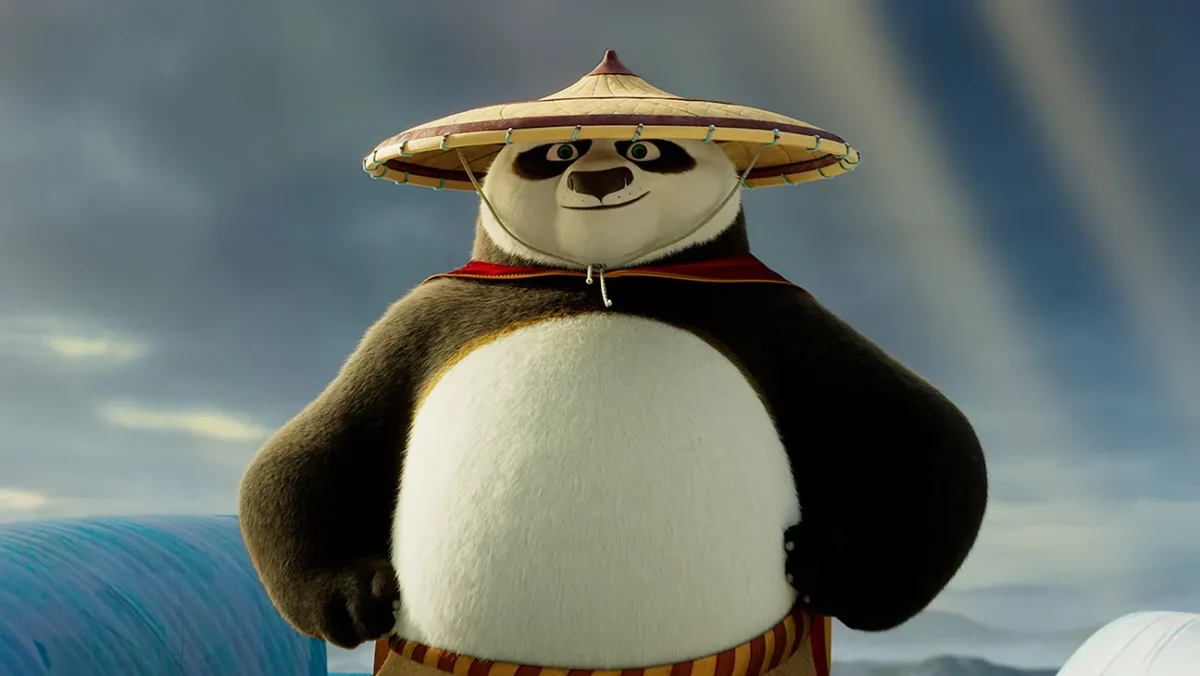
In the original Kung Fu Panda, Po is nothing but a noodle salesman who dreams of becoming a kung fu master. However, this goal seems unachievable due to Po’s enormous size and clumsiness. One day, by what appears to be fate, Grand Master Oogway chooses Po as the new “Dragon Warrior.”
This gift from the universe was not the end of Po’s Journey. Throughout his Kung Fu training, he faces abuse from the Furious five-members and Master Shifu, but he continues to persevere, serving as a great example for young viewers.
The film is a classic David vs. Goliath story. Po defeats the infamous Tai Lung in battle, cementing his rightful claim to the title of Dragon Warrior.
Not only do the numerous valuable lessons conveyed through this film make it attractive to parents looking for a fun watch for their kids, but the hilarious jokes and enjoyable action sequences caused it to stick with many Generation Z members throughout their lives.
Three years later, in 2011, Dreamworks released the much-anticipated sequel, Kung Fu Panda 2.
Kung Fu Panda 2 was exceptionally well received; some consider it superior to the original. One characteristic that allowed this movie to succeed was that Dreamworks realized that its original audience had grown up, so the movie needed to grow with them. This can be seen through the heavy subjects the movie attempts to address.
The film follows Po on his journey for revenge against the peacock, Shen, who carried out the massacre of the pandas. This attack led to the extermination of almost all the Pandas and the destruction of Po’s home village. This massacre draws obvious parallels to the endangerment of pandas due to deforestation. The film also calls attention to claims of maltreatment of pandas in captivity, claims that have now led to China taking back pandas from overseas zoos.
Despite Po’s overwhelming hatred toward Shen, he remains calm and achieves inner peace. Through this newfound power, he is able to channel the strength of Shen’s powerful cannon. As the cannon fires at Po, he catches the cannonballs with ease and shoots them back toward the cannon to destroy the weapon. As Po and Shen stand face to face, Po offers mercy to Shen, but Shen rejects this offer, and eventually, his uncontrollable anger results in his own death. In one of the most epic final scenes, Dreamworks shows the audience that violence is not always the answer.
The third movie, released in 2016, continues this trend of confronting complex topics. As Po learns that some of his relatives have survived, he struggles to find a balance between his true panda family and his adopted goose dad. Kung Fu Panda 3 ends with a perfect and happy ending, making it the ideal finale for the franchise.
Then, one day in October, I sat in my reclining theater chair to watch Five Nights at Freddy’s. After I had gotten settled, I heard a familiar voice, and sure enough, I saw the famous panda on my screen.
As the trailer progressed, I had some hope for the movie. However, I remembered a common theme within Hollywood: continuations released many years later, such as The Godfather Part III and Mean Girls 2, almost always disappoint.
In the months leading up to March (when Kung Fu Panda 4 was released), I tried my best to avoid seeing any information about the cast, the plot, or anything that would have me making up opinions before actually seeing the movie. Before I knew it, th- e movie was released, and I bought my tickets.
A few friends and I arrived at Regal Green Hills. We purchased our snacks and found our seats. I was not prepared for the horrendous film that I was about to watch.
The fall-off from previous installments was also apparent, as many original cast members had moved on, and Jack Black was one of the only remaining. Angelina Jolie (Tigress), Jackie Chan (Monkey), Lucy Liu (Viper), David Cross (Crane), and Seth Rogen (Mantis) did not voice act in the movie, and the renowned Furious Five had been dismantled entirely. While I respect Dreamworks’ decision not to try and recast these legendary characters, the movie did not feel the same without them.
Due to this loss of cast members, the writers had to start with a relatively clean slate and struggled to make the audience care about any of the new characters.
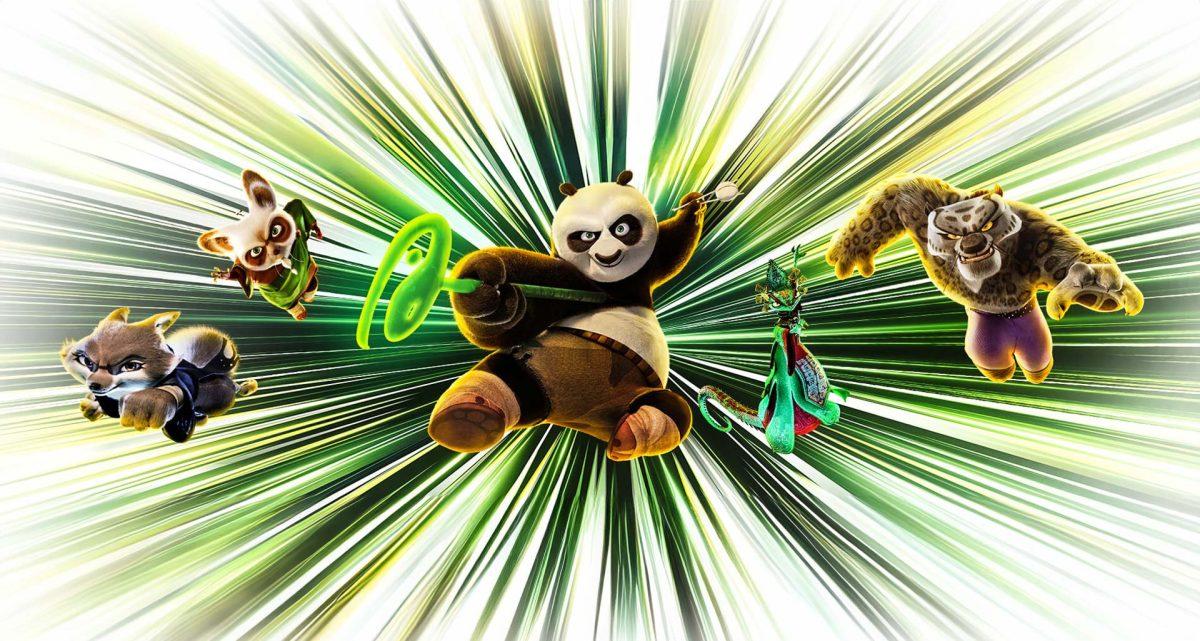
One of the new main characters, Zhen, voiced by Awkwafina, felt like a weird addition to me. Zhen looked to fill the void left by the Furious Five. However, her character archetype of a thief turned good was extremely basic and unoriginal. I also felt her character’s exposition was awkward and rushed, causing me never to form a bond with Zhen.
One of the only things I actually enjoyed about this movie was the main villain, The Chameleon. Her unique ability to transform into different creatures was nothing like anything the franchise had ever seen. However, her character is ruined entirely, as at the end of the movie, Zhen is able to defeat her with almost no effort, resulting in one of the most anti-climactic final battles of all time.
Obviously, high school students are not the target audience for this film. However, what made the first three so good despite the growing age of the audience is that they progressed with the audience’s age, and this movie simply did not cater to the franchise’s main fans. There was no reason to make this movie if Dreamworks was not going to try to make a movie for the old fans.
It’s time for studios to stop making useless sequels and come up with original ideas.
I give Kung Fu Panda 4 a 4/10.