The genre of alternative music has produced numerous significant albums over the years allowing for artists to create their own styles of music without following pop music trends.
It seems like the genre has always been a thing, but what does it mean? What defines this category besides the lack of a definition?
Alternative’ has always been a vague descriptor, like the word ‘indie,’ used to refer to music that, put simply, does not fit in a category.
2019 was a defining year for the alternative genre, with several main hits. Alternative rock was well established already before that time of massive change, with the likes of Radiohead’s “Kid A” being released in the year 2000 and the Arctic Monkeys’ “AM” released in 2013.
‘One notable album from 2019 is Billie Eilish’s “When We All Fall Asleep Where do we Go?” The singer’s debut album brought a fresh sound to the pop sphere, taking those synths reserved for usually upbeat and melodious songs and lowering their keys, commonly to minor keys.
Tyler, The Creator’s “IGOR” was also a landmark record when it was released the same year. On first listen, the album sounded to his fans like nothing they had heard before. The whole album brought a new meaning to love with heavy synths and emotional vocals.
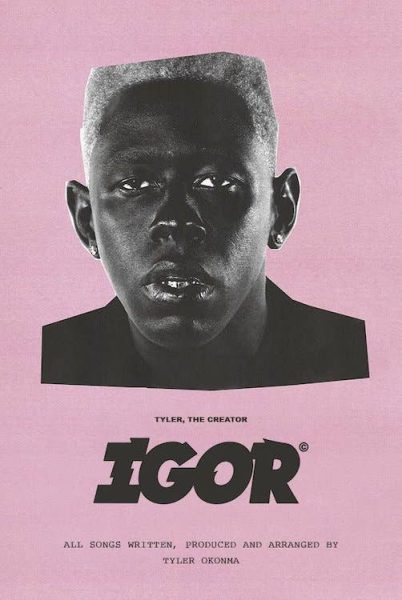
The album seems minimalistic at first listen, but it has much deeper meaning behind the words and sounds. Such as how in the album, Tyler The Creator begins his opening song, “Igor’s Theme,” with the same sound he ends on in, “Are We Still Friends?,” the album’s closing track. The sound is meant to convey how he views love as repeating and continuing, with Tyler never repeating the same emotions and experiences as he goes through modern love.
This new style of hiding themes within production brought variation with both mellow and heavy hitting synths, representing Tyler’s changing emotions in the process of love.
These new sounds were due to the emergence of synths being used in modern music with production level becoming increasingly prominent in music. Synths are sounds produced by a synthesizer which is an electronic machine that allows for much more diversity in what sounds artists and producers can create. Artists were able to generate and manufacture entirely new sounds for their music, alongside speeding up and slowing down music, as well as altering and tweaking preexisting sounds and instruments.
During the COVID- 19 pandemic, more and more artists began to experiment with their music, releasing albums that changed their sounds. Digital music also became popularized, with independent artists democratizing the music publishing world quickly.
Artists from anywhere began releasing music more than ever with new artists emerging seemingly every day.
TikTok’s rise in popularity in 2019 allowed catchy hooks and chorus’ to take over the music industry with artists hoping to go viral with their songs. The culture of the music industry had changed immensely with this. Artists could now create fanbases on social media without traditional record labels, allowing artists who had a fan base liking their music to be successful, regardless of their label or genre.
New influxes of artists and the popularization of independent music brought loads of musical experimentation to platforms.
With all these artists and great albums, alternative became…popular? Today, we have songs topping charts worldwide and yet they are somehow alternative to popular music…?
The answer may be explained by the fact that ‘alternative’ has never truly been the alternative to popular music; rather it is the emerging voices within it.
Songs like Lola Young’s “Messy” and albums like “Brat” from Charli XCX aren’t songs or albums for one hit wonders. They are forming new stars bringing new elements to the music we listen to today.
Overall, the alternative genre seems to try defining the undefinable in a weird way. The artists that fall under it do still fit into categories of their own in a number of ways, from Billie Eilish’s pop, to Tyler the Creator’s rap, all the way to Steve Lacy’s blending of R&B and Soul with Jazz.
In the end, alternative may just be a term that defines musical experimentation.