by Lucia Gellert ’27, Guest Writer
April 2025
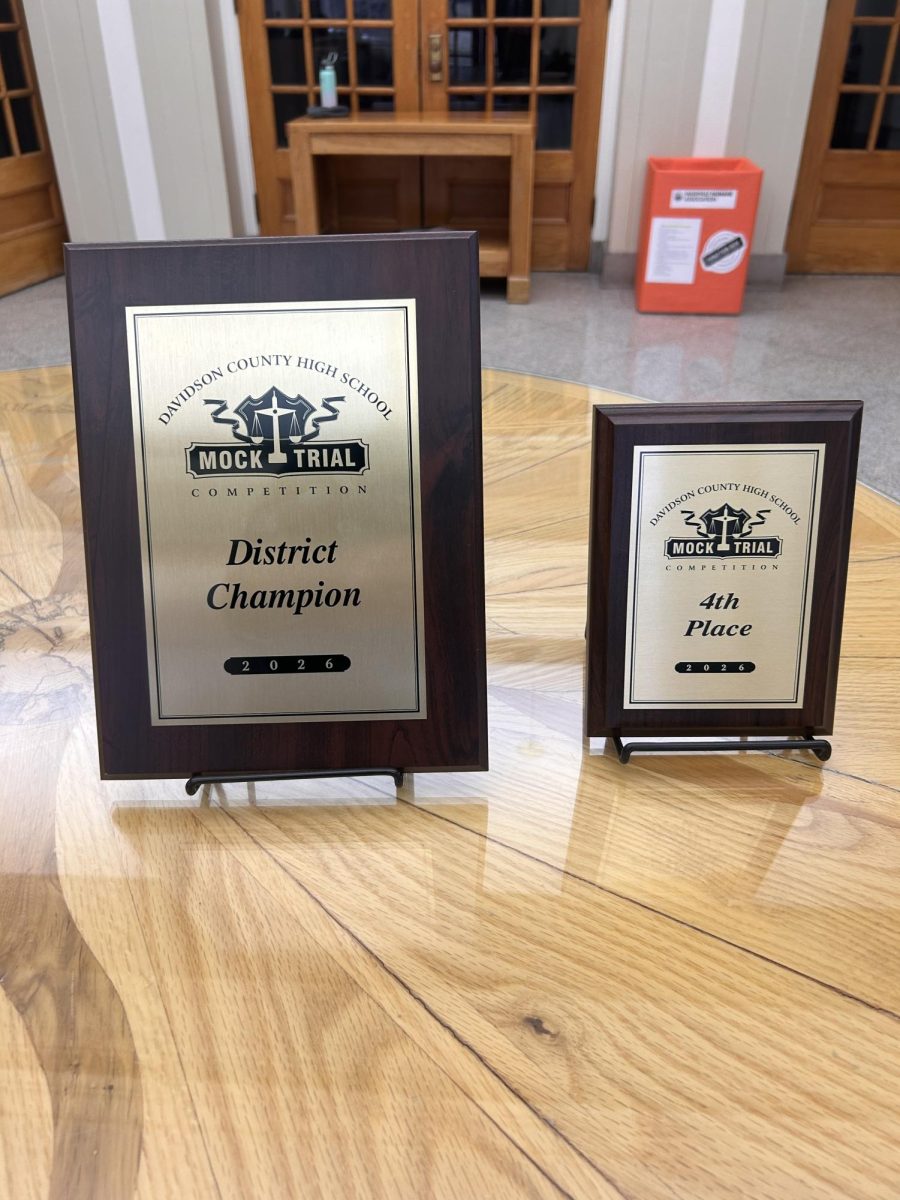
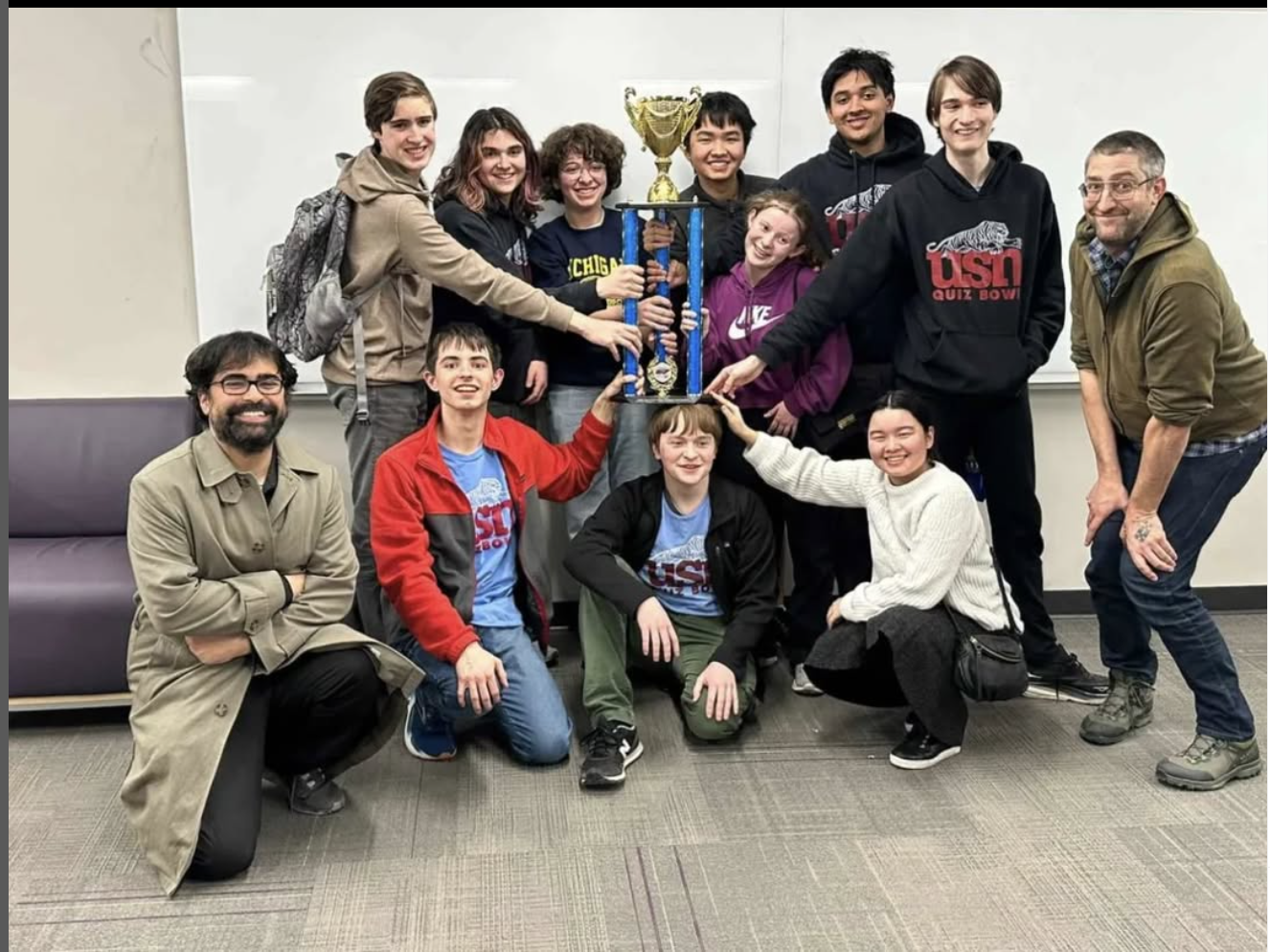
When the final buzz of the game sounded throughout the lecture hall at Tennessee Tech on march 1, USN’s A team claimed victory over their opponent in a first-of-three finals game of the Tennessee State Quiz Bowl Competition.
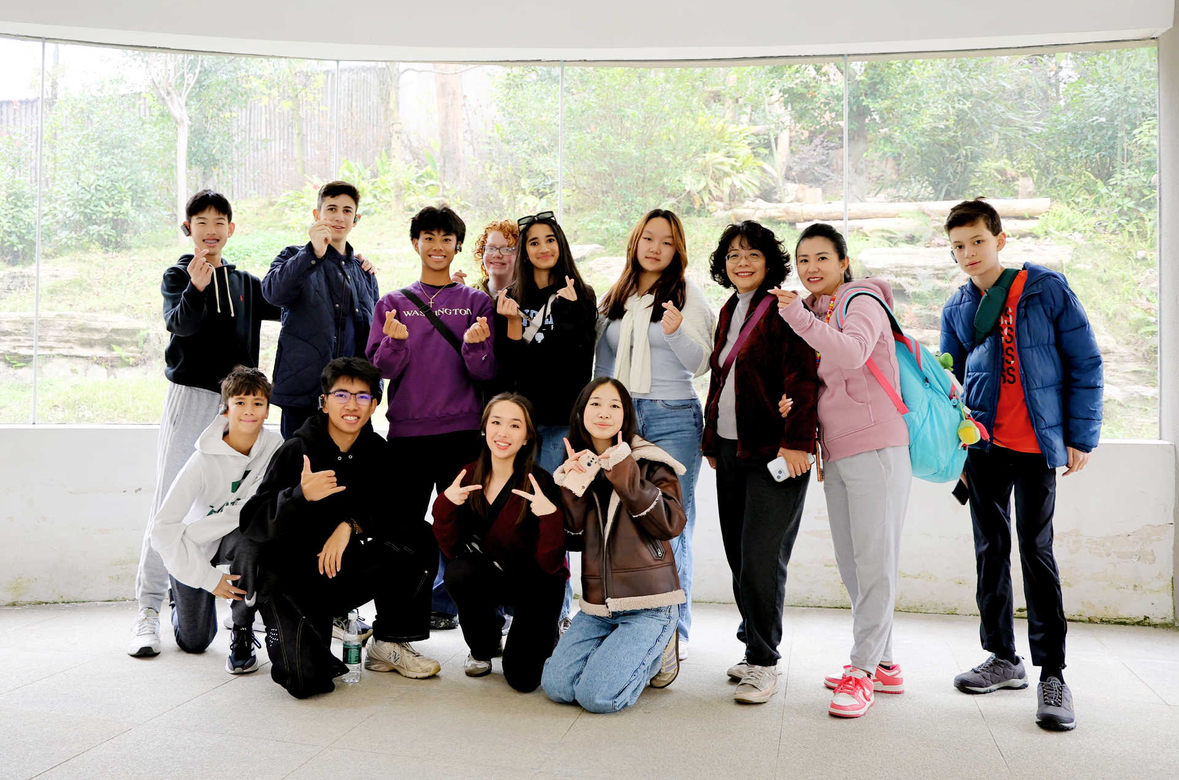
For the past two years, USN has been crowned the state champion. Looking to defend their title, they returned on March 1 to play against teams from all over Tennessee — but this time with a twist. Due to tournament rules, schools were only allowed to bring one team. However, both USN’s A and B teams had proven themselves to be some of the best in the state. After much deliberation (though mostly about which mythological figure to name their scheme after) the team hatched a plan to bring 10 students instead of the usual 4, from both the A and B teams.
And so, the team launched Operation Kalki, named for the apocalyptic 10th avatar of the Hindu preserver god Vishnu, for the 10 players that would attend the competition, using a spreadsheet to carefully balance playing time.
For any other school, the strategy might be risky. But in USN’s case, it paid off, leading the team to advance into the finals undefeated. After nearly nine hours of play, the competition was whittled down to two schools: Gallatin High School and USN.
Throughout the day, USN’s B team proved its might. As Gallatin’s best players took their seats for the second round, USN’s A team took their own seats…in the audience. In a bold move that one coach called a “hell of a flex,” the B team took the seats facing their opposition and the match began.
The game started close. But during the second half, the B team pulled ahead, and before the round was even finished, USN’s B team had secured their victory, and place in history as the first B team in the state competition’s history to have won it all.
While many people may have a passing understanding of Quiz Bowl from Evan Giles ‘26’s announcements, from friends talking about it in the halls, or even from participating in Richard Rosenthal’s middle school program, the actual nature of the game itself is much more complex than one might think.
While trivia games have been around for thousands of years, what is now known as “Quiz Bowl” only began in the 1940s. The game’s format has continually evolved to foster a more competitive and intellectually rigorous environment, testing players’ knowledge, teamwork, and skills. Modern Quiz Bowl is to Jeopardy as chess is to tic-tac-toe. While television game shows like Jeopardy or Who Wants to Be a Millionaire? test one-off random facts by relying on wordplay and one-liners, Quiz Bowl rewards deeper understanding. Teams are presented with longer questions and compete to buzz in early before all the clues are given. The result is a high-stakes test of both team’s stamina, depth of knowledge, teamwork, and strategy.
The arms race in quiz bowl–which includes learning facts both in, out, and beyond the content taught in graduate school curricula–is dizzying. For example, consider this sample question written by Penelope Graham ‘25:
“This disease is screened for using the immunoreactive trypsinogen test. After chronic pancreatitis, this disease is the second most common cause of exocrine pancreatic insufficiency. People with this disease are often colonized with Burkholderia and Pseudomonas. Heterozygotes of this disease have increased resistance to cholera. This disease is often caused by the deletion of F508 in a particular ion transporter. The sweat chloride test diagnoses this disease. Clubbed fingers are common in people with this autosomal recessive disease, which is treated using percussive vests to clear the airways. For 10 points, name this genetic disease that causes mucus buildup in the lungs.”
The answer: cystic fibrosis, or CF.
While most high school students with some biology experience would likely be able to answer the question by the end of the question, members of the Quiz Bowl team learn for depth. The first two or three clues are generally only found in medical board exams, although they have filtered down to high school Quiz Bowl thanks to repeated questions on the topic.
A modern tournament consists of many rounds throughout the day, during which two teams of four players compete against each other to score the most points. Players buzz in to answer toss-ups individually, like the question above, then collaborate to answer a three-part bonus, in which they receive points for each part answered correctly. Players are also awarded for their breadth of knowledge with extra points for early buzzes, but penalized for interrupting a question with a wrong answer.
A well-rounded team is balanced, has deep knowledge in a variety of subjects, and works together like a well-oiled machine. Games are typically fast paced, and like anyone who’s played any kind of sport can understand, it can be both an exhilarating and exhausting experience for both players and spectators alike.
Not all of the excitement, however, happens at competitions. Practices at USN are led by coach Dr. Eric Mukherjee, a practicing dermatologist at VUMC, scientist, and former collegiate Quiz Bowl national champion. His expertise, in addition to his teaching skills and lively personality, make him an asset to the team. USN is lucky to have him; after all, not every school basketball team gets coached by Steve Kerr.
If one managed to stumble their way into faculty sponsor Wilson Hubbell’s room from on a Monday or Thursday evening or magically popped onto the team Zoom from on a Sunday night, they might find themselves witness to any multitude of exchanges, such as:
“What’s the Ives-Stilwell experiment again?” Daniel Guo ‘25 asks, about an hour into practice.
Mukherjee responds immediately.
“The Ives-Stilwell experiment used canal rays to show that the transverse Doppler effect is real. And remember the transverse Doppler effect isn’t like the normal Doppler effect. It happens due to time dilation. So you have to listen – it could be a clue for Doppler, time dilation, or special relativity.” He adds hand gestures for emphasis.
Later in the practice, Mukherjee exclaims, “What do you mean your teacher is telling you there are only three complexes in the electron transport chain?!” His voice echoes into the hallway.
Soon after, Dr. Mukherjee creates a meme, based on the Star Trek: The Next Generation episode “Chain of Command,” showing Captain Picard emphasizing “THERE ARE FOUR COMPLEXES.”

Both of these instances are typical occurrences at a USN Quiz Bowl practice. Ultimately, meme-able antics aside, such practices are great for player growth, allowing for experimentation, learning, and team building.
In addition to playing and hosting multiple tournaments a year, USN is also one of the few teams to write their own tournaments. In the 2023-2024 year, the team wrote “Planetfall,” a set of questions played at over 20 sites in the US and UK, by over 300 teams. The tournament was 75,000 words long and represented nine months of collective effort, corralled by Mukherjee’s extensive writing experience and USN’s boundless enthusiasm.
Quiz Bowl uniquely allows participation in many ways – playing, hosting, writing – and USN engages in all of them.
One particularly talented team member, Ophelia Cherry-Pulay ‘25, was even selected as an editor for ACF Fall, a tournament played by hundreds of colleges in the US, Canada, and the UK.
Obviously, the practice, studying, and determination pays off. USN’s A team is currently ranked 18th nationally. The USN B team is 48th, the highest-ranking B team in the nation.
At the end of April, the team typically travels to Chicago to compete at the Small School National Championship Tournament (SSNCT). In 2024, USN‘s A team placed 4th overall, and the USN B and C teams tied for 17th.
Later that season, the A team tied for 21st at the High School National Championship Tournament (HSNCT). It was the highest finish by a Tennessee team in almost a decade.
Hot off the heels of a record-breaking state championship, the team is training for this year’s fast-approaching national competitions — SSNCT, HSNCT, and the 2025 PACE National Scholastic Championship in June. The team remains focused—not just on winning, but on learning.
Quiz Bowl at USN isn’t just about trivia; it’s about curiosity, discipline, and the thrill of pushing knowledge to its limits. Whether it’s a clutch buzz on tossup 20 or a late-night study session on obscure physics, every moment builds toward something greater.
As the team heads into the final stretch of the season, they carry with them not just the hope of victory, but the quiet confidence that comes from having done the work.
Editor’s Note: the author is a member of the Quiz Bowl team.