by Asher Hirt ’25
November 2024
While rock climbing might not be a mainstream sport at USN, for students like Luc Béhague-Mentzel ‘26 and Erin Ilagan ‘26, it offers a unique challenge and a sense of accomplishment that’s hard to find elsewhere. Whether it’s the thrill of reaching a new height or the satisfaction of solving a challenging route, these climbers have found a passion in this sport.
For Ilagan ‘26, the sport is about more than just a physical challenge.
“I love the puzzle aspect of it and the way that you decide your own path and work your way through it,” she says. In climbing, this is known as “breaking the beta,” where climbers find their own solutions to a route’s challenges. For instance, if a climber is not tall enough to reach a hold others could get to, they have to figure out a way to get around that challenge.
Ilagan’s training with USN involves structured practices for two hours on Tuesdays and Thursdays where a coach from Climb Nashville comes up with the lessons.
“On Tuesdays, we have structured days where a coach from Climb Nashville will come with his set workout that will focus on a particular skill that they want us to improve, and then on Thursdays, we take the skill we learned on Tuesday and apply it to the actual climbs.”
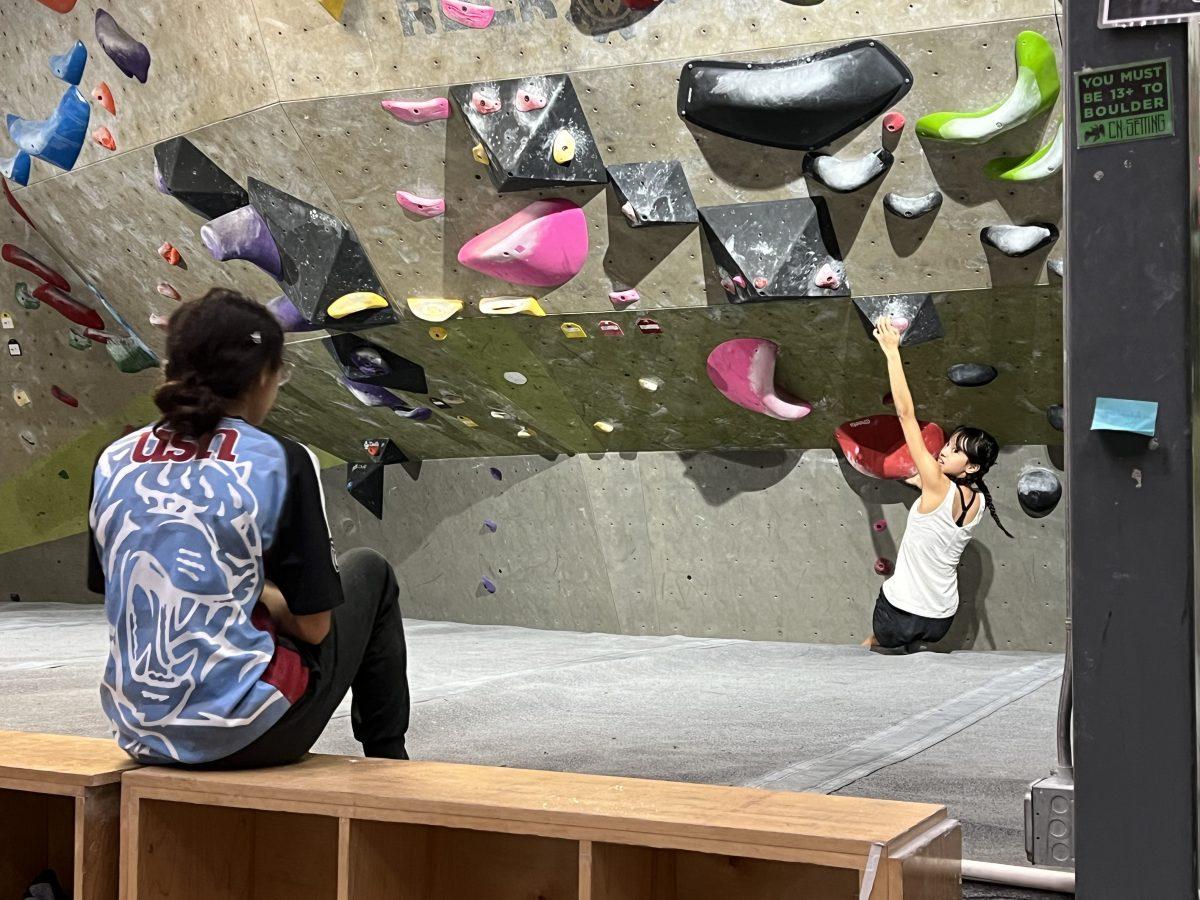
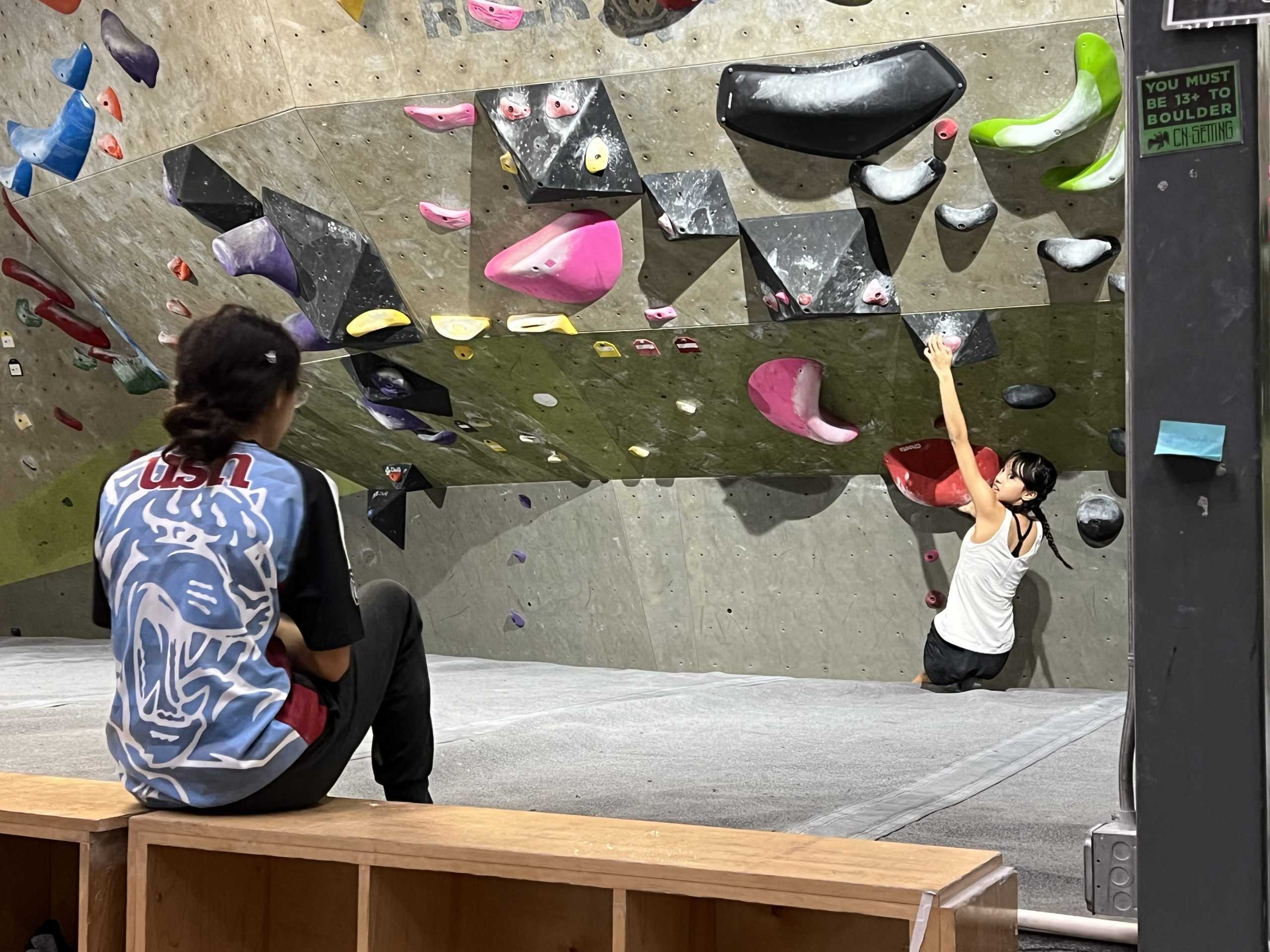
Audrey Ilagan ‘28 approaches a bouldering route while Erin Ilagan ‘26 looks on. (via Erin Ilagan ‘26)
Climbing isn’t solely about sheer competitive spirit though. Luc Béhague-Mentzel ‘26 finds solace and focus in the world of rock climbing.
“It’s a way for me to clear my mind. I enjoy the actual sport a lot, but it is mostly something I do to take my mind off things”, said Mentzel.
As a dedicated member of the Climb Nashville Competitive team, Mentzel frequently immerses himself in the world of rock climbing.
“I have practice three times a week for around two and a half hours each practice.”
Typical practices consist of around a 45 minute workout, 30 minutes of drills, and the rest of time is spent bouldering.
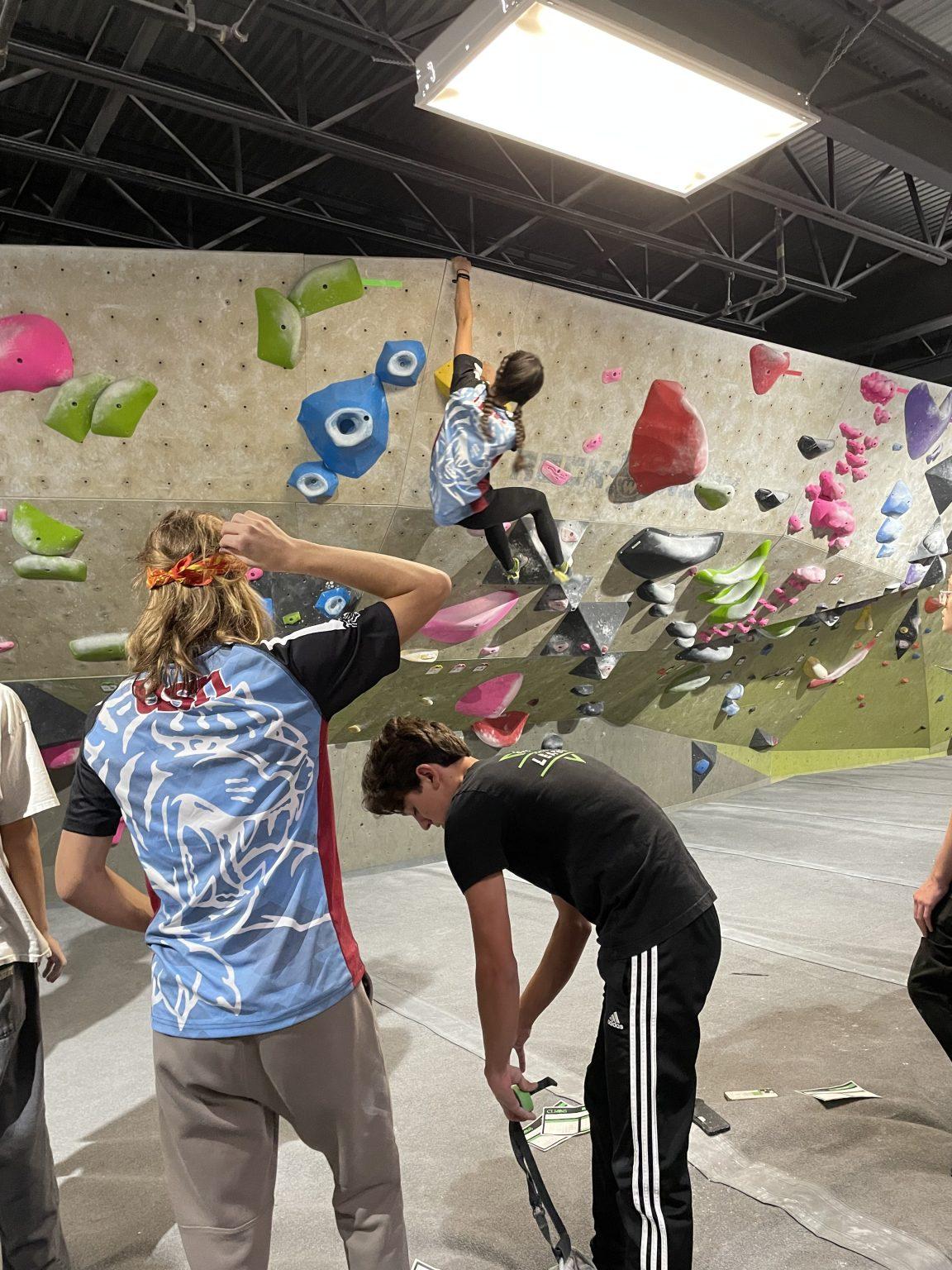
Bouldering involves climbing shorter distances without any rope that has extremely challenging routes. Walls for bouldering span around 3-5 meters high with unique configurations and holds that challenge the climber to navigate tricky sequences. The focus for bouldering is on power, technical skills, and problem-solving. Climbers are allowed multiple attempts to try and finish the climb.
“My favorite drill would be ‘hover-hands,’ which basically is when you have to climb the wall and hold your hand above the hold for three seconds before grabbing it to build endurance.”
His commitment to the sport led him to forgo joining the USN team, instead channeling his energy fully into his club team.
“I am not on the USN team because the practices are usually at the same time as my club team, so I wanted to focus on one of them and chose the club team.”
When competing, climbers typically focus on three main categories of competition. Speed climbing, Bouldering, and Lead climbing all have their unique rules that require different skill sets out of the climbers.
In speed climbing, the goal is simple–climbers race against each other to the top of a standardized wall. A ‘standardized wall’ refers to a wall that is identical in design and dimensions across all competitions. The wall is always set at 15 meters high, with a fixed incline of 95 degrees (slightly overhanging). The handholds and footholds are also the same for every competition and placed in exactly the same spots. This uniformity allows athletes to memorize the route and focus purely on speed, with no surprises or changes between competitions. It ensures that performances can be compared fairly across events since every climber faces the exact same challenge.
In lead climbing, climbers ascend a much taller wall or landscape using a rope attached to quickdraws along the route so the climbers have protection from falling down. The goal is to climb as high as possible before the time runs out. The height of the wall and the time to climb varies vastly amongst competitions. Typically, competitors are limited to around six minutes to finish a height of around 15 meters. Lead climbing tests endurance, technique, and mental strength.
USN’s interscholastic competitions emphasize the quantity and difficulty of completed climbs within a two-hour window, with each climber’s top five climbs contributing to their overall score. Climbers are scored based on the V-scale, which ranges from V0 (easiest) to V16 (Hardest) for bouldering, with deductions for falls.
USN’s climbing team does not have many people on the team and Ilagan believes more people should try climbing.
“[Climbing] is a low-stress environment, and everyone is very supportive of each other, which makes a fun community to be a part of.”
With the first competition of the season having started on October 19, it is not too late to give climbing a shot for this season.