by Bronson Schmidt ’25
October 31, 2023
The opinions expressed here are strictly those of the writer and do not reflect the views of University School of Nashville or the Peabody Press.
Nowadays, it seems like all big movies are confused and scared, flailing as they try to navigate the ever-shifting whims of an increasingly eclectic culture. They’re either trying to replicate a progressive take on Gen Z’s post-ironic humor or ignoring what’s relevant by pandering towards frightened parents who liked movies better in the 80s.
One genre that particularly suffers this disconnect is the comedy movie. With so many different senses of humor, how can one movie appeal to all of them? Many films have attempted to bridge this gap before; think of DC’s flopped superhero movies and Netflix’s Wednesday. All of them have failed—until Bottoms.
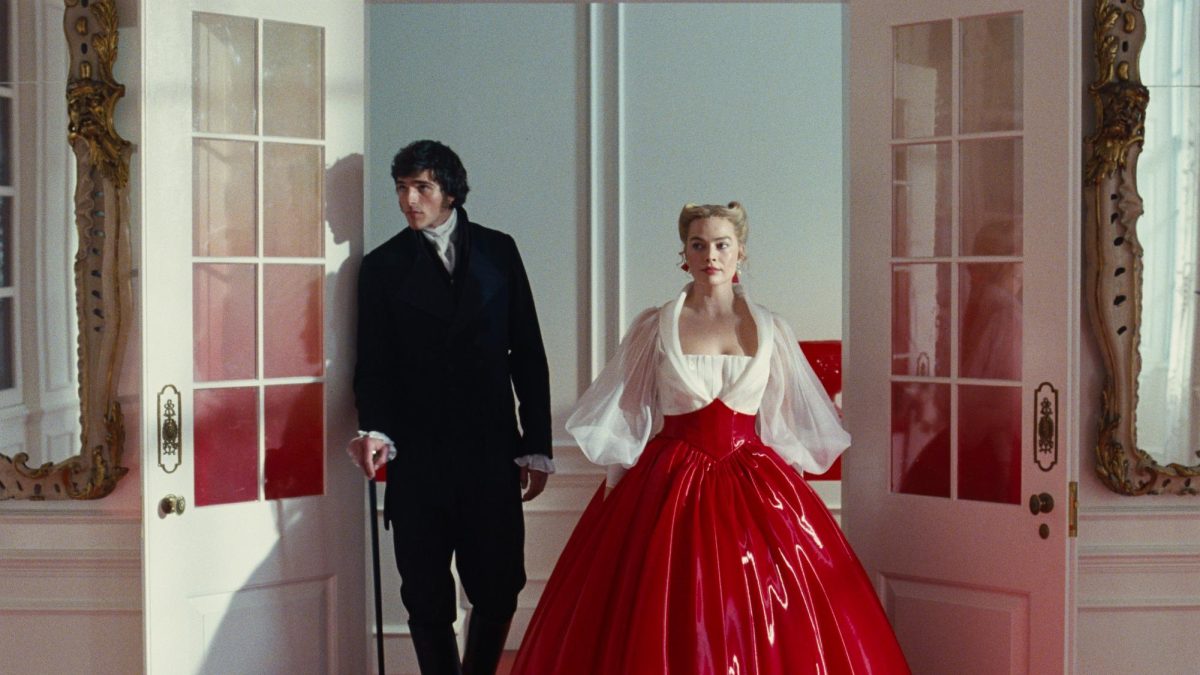
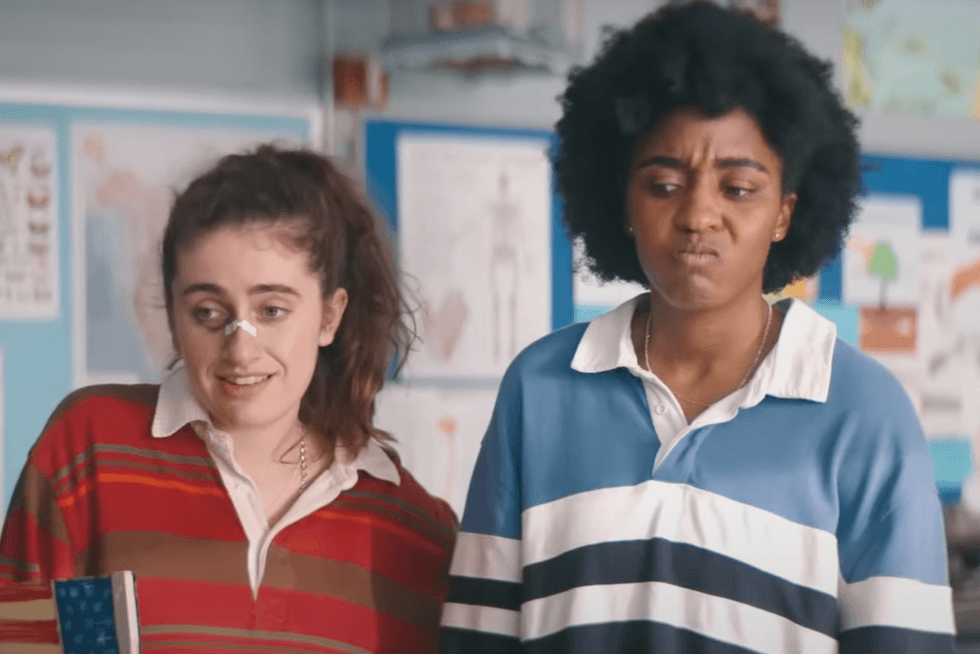
Bottoms is a comedy movie released in 2023 directed by Emma Seligman and produced by Brownstone Productions. It follows its two lead characters, PJ and Josie, as they navigate the follies of lesbian romance in a stereotypical, straight-dominated highschool by creating a fight club with questionable motives. Bottoms tackles themes of adolescence, queerness, and whimsical manslaughter. A slew of adjectives could be thrown at Bottoms—raunchy, witty, relevant, campy, self-aware—but none of them fully encapsulate the absurdity of its viewing experience.
“A lot of boring movies are coming out nowadays, and I wasn’t really bored during Bottoms. I think that’s definitely worth something,” said Cameron Boros ‘25, who recently saw Bottoms at the Belcourt Theatre.
Bottoms works as a comedy because it doesn’t cater towards Gen Z, parents, or the average movie goer—in fact, it actively spits in the face of every single person who might watch it. By making fun of everyone, Bottoms makes sure that anyone can find it funny, even at the expense of an uncomfortable experience.
I first experienced Bottoms on a late Saturday night at the Belcourt. I had heard of the movie through some ads and friends, and already had high expectations. Sarah Page-McCaw ‘24.
“I felt like I just had to go- you know, its reputation precedes it,” said Page-McCaw.
It started as a normal movie watching experience buying overpriced popcorn, Reese’s Pieces, and kombucha. When I walked into the theater itself, I was immediately privy to the variety of the audience members’ styles and ages.
Bottoms’ plot and themes lend themselves to an audience of teenagers, most of them queer and non-male. A lot of the moviegoers fit this description, but to my surprise there were a lot more adults, and a lot more guys, than I had expected. This already spoke volumes about Bottoms’ ability to twist expectations, and set up the experience as something anyone could relate to.
After the opening credits rolled, and the first scene started, I was immediately taken aback by a strange noise coming from the audience: laughter. In my personal moviegoing experience, many recently released movies hardly shake more than a forced chuckle out of an awkwardly silent audience, something I’ve seen even at Barbie’s showing. It’s these kinds of failed connections with the audience that have made seeing movies in theaters far less appealing to me in recent years.
But as the first couple scenes of Bottoms made clear, every joke seemed to hit the majority, if not all, of the theater’s audience. I personally found myself laughing more at a comedy than I have in years, just as the people in the surrounding seats were. I found myself in a theater that I was excited to be in.
Bottoms’ humor pulls no punches- it takes subjects many corporations or average viewers would consider offensive and flips them on their head. The film jabs at homophobia, and then instantly turns around and pokes fun at queerness itself. The film’s main antagonist—an all-American, pure-hearted, blue-collar star football player named Jeff—is continuously used as a scapegoat for jokes on toxic masculinity and male privilege. But in exactly the same way, the film’s protagonists are scapegoats for parodying of LGBTQ+ culture and feminist ideals.
This ping pong of picking apart every flaw in one culturally charged group—and then turning around and giving its antithesis the same treatment–-was funny and refreshing in a landscape of bland corporate attempts at progressivism.
Everyone you could imagine was put on a podium of absurdist criticism- black, white, man, women, straight, gay. No one escaped Seligman’s ruthless neverending punchlines. Yet, Bottoms is still a progressive and thought-provoking movie.
“It’s a movie with a lesbian lead cast, which is not something you see that often,” said Boros. “They did also have a Black female lead, which I really appreciated, because most movies that have that have Black lead characters [are] advertised as Black movies […] and for this one, it’s just ‘we just have a Black character in the lead.’”
Despite jabbing at its progressive cast, the movie is still, at its core, about empowering these queer female voices in an otherwise oppressive community. However, Bottoms’ success at conveying this is debatable.
For those who havent watched yet–Spoilers await…!
The movie ends in a climatic final scene where tensions between the protagonists’ high school and its rival build to a violently competitive football game. Fulfilling the movie’s unapologetic absurdity, the main cast ends up murdering the entire rivals’ football team in order to save Jeff from murder by irrigated pineapple juice. This is immediately celebrated by the shocked crowd on the bleachers, who hated the cast just hours before.
Boros had some qualms with this finale.
“I think the end of the movie […] almost contradicts itself. I don’t think it really makes much sense. I think they could have said something more important, but it feels like […] they built up to something that could be novel […] and then at the end they kind of just throw it away.” said Boros.
This is a valid point. The movie presents itself as having a valuable message regarding queer voice and feminism in a male dominated culture, yet leaves that idea completely undeveloped by prioritizing an absurdist and nonsensical ending for humor’s sake.
This is where it becomes clear that Bottoms is at the forefront of a new wave of subversive comedy. By going into Bottoms expecting comedy in the favor of some grander message (much like Barbie) the viewer can much more easily be caught off guard. This is why I, and the entire movie theater, found the abrupt ending so funny.
“I wanted to keep watching it. It’s one of those movies that gives you an adrenaline rush that [makes] you just want to keep watching. I felt like I was totally elated,” Page-McCaw said.
However, this aspect of Bottoms’ comedy inevitably will not appeal to everyone.
“I thought it was very hit or miss. Sometimes they hit what they were trying to do. Sometimes they didn’t. […] It was a little all over the place. But, you know, it was in some ways an original idea. And so at least I applaud them on that,” Boros said.
And they should be applauded; I would absolutely recommend this movie to anyone, as its mix of ruthless jabs and campy absurdism lends itself to any audience.
I give it 8/10.
Bottoms is rated R, meaning it is not suitable for certain audiences because of violence, offensive language, or sexual activity.