The opinions expressed here are strictly those of the writer and do not reflect the views of University School of Nashville or the Peabody Press.
On September 4, “Hollow Knight: Silksong”, the long-awaited sequel to indie game “Hollow Knight,” was released to all platforms for the low cost of $20.
The resulting storm of purchases temporarily crashed the payment processors for most major stores, including Steam, Nintendo eShop, and the PlayStation Store.
“Silksong” was announced in 2019, but the release date was delayed in 2023 and Team Cherry, the game’s developers, gave few updates to the game’s status. The release date was eventually announced on August 21. Its predecessor, “Hollow Knight,” was a massive success, selling 3 million copies just two years after its release and receiving universal acclaim from critics. The sequel was highly anticipated. Eight other indie games were forced to delay their release dates because they were concerned about being overshadowed.
Both games are in the “Metroidvania” genre, formed from the combination of concepts from the Metroid and Castlevania games. Most Metroidvanias are two-dimensional games with large and connected but non-linear maps that players traverse with platforming mechanics. Players start out with basic movement skills like jumping and attacking, but over the course of a game, the player will gain more advanced skills like sprinting and double-jumping. These abilities allow players to access previously locked areas, which contain their own abilities in turn, eventually leading to a final boss.
Team Cherry has implemented all of these mechanics and more. Having played most of “Silksong,” I can confidently say that they have done an amazing job making it, from the platforming to the combat to the simply vast amount of content.
Caution: spoilers ahead…
First, the general themes and plot. Hornet, previously a character and boss in Hollow Knight, is captured by mysterious forces and brought to the cursed kingdom of Pharloom. Both Pharloom and Hallownest (the kingdom where “Hollow Knight” is set) are both populated by various sentient species of bugs, all of whom take inspiration from real-world bugs. Hornet herself isn’t exactly based on a bug, but is closest to a spider.
Over the course of the game, Hornet must journey from the very bottom of the kingdom to the Citadel at the top. Along the way, she gathers abilities from the remnants of the ancient civilization of Weavers, also spider-inspired, that help you in combat. She also meets many unique bugs along the way, like merchants, pilgrims, and mapmakers.
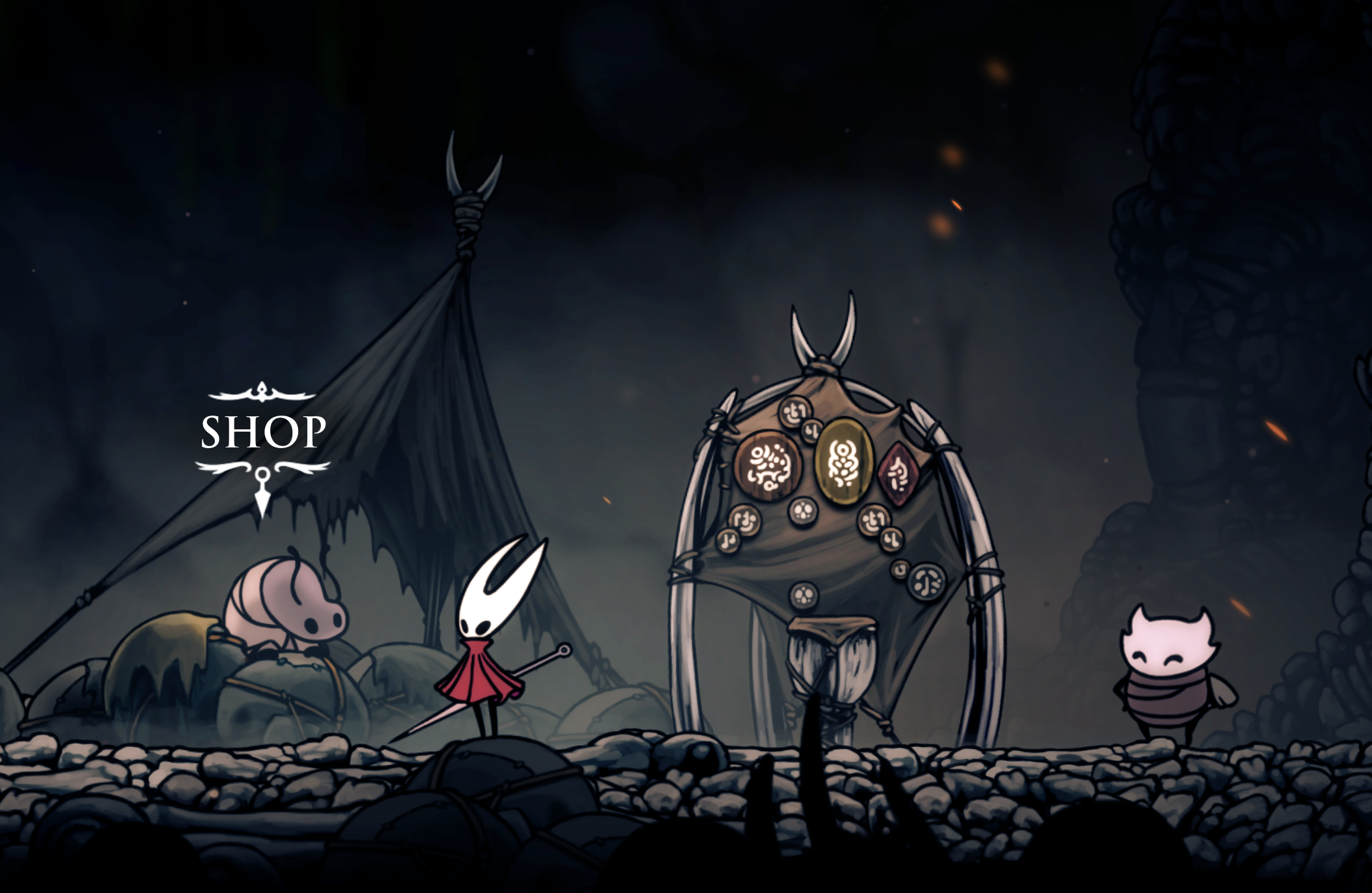
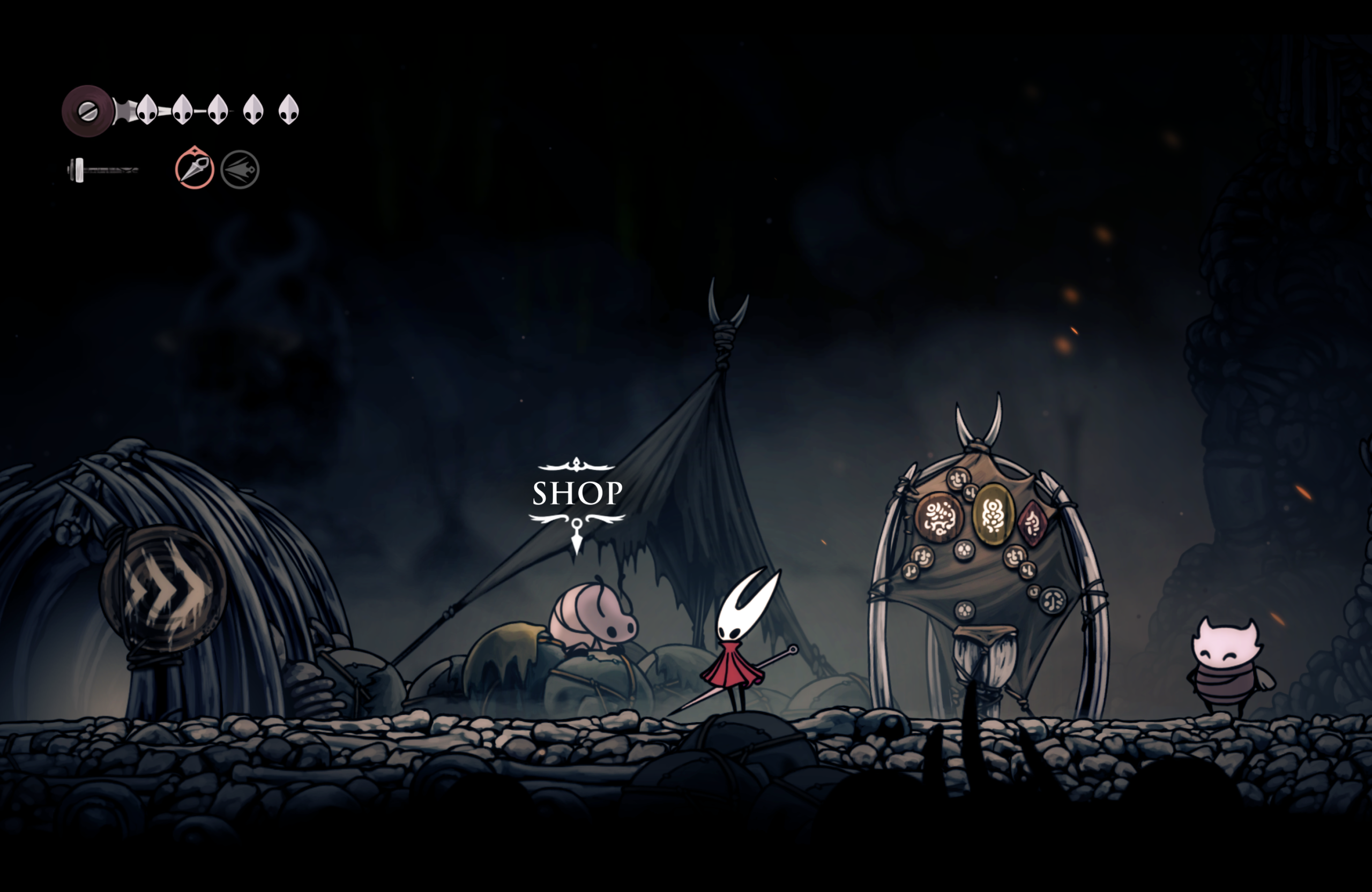
Hornet in Bone Bottom, the first settlement she encounters on her journey. (via the Peabody Press)
While the game shares many controls and mechanics with “Hollow Knight,” it also has a couple unique elements that set it apart and make it a truly wonderful game.
One of these is personality. In the first game, you play as a nonverbal, unnamed, knight; while there is dialog, it’s one-sided, with the knight listening to NPCs talk. Since Hornet does, in fact, talk and make noises in “Hollow Knight,” Team Cherry has successfully incorporated that into “Silksong.” Dialogue now also features Hornet’s unique voice, and she yells when striking enemies and cries out when taking damage. Even though vocalizations in both “Hollow Knight” and “Silksong” are just gibberish noise, the tone gives her so much more character.
The game has more of a focus on organic movement than “Hollow Knight.” While the same base controls are there, Hornet can also grab ledges, backflip, do a running jump, and eventually, use a sort of grappling hook. The animations for all of these are fluid and natural, making even the simplest jumps enjoyable. Several areas, such as the frigid Mount Fay, are just extended platforming challenges, without any major bosses or enemies.
And then there’s combat. Hornet starts out with five Masks, the game’s health system. You heal them with silk, filling up your spool by attacking enemies with your needle, and then Binding to repair three masks at once. Pretty simple, but the real fun part is how needle attacks work.
A reasonable expectation for most games would be to have simplistic attacks; Hornet could slash to the left, right, up, or down with her needle. Indeed, this is how Hollow Knight does it. But Silksong goes above and beyond with Crests. Crests determine the shape and speed of Hornet’s attacks, along with having some unique abilities. She starts out with the Hunter Crest, which is mostly simple but with a diagonal down-slash. But as you traverse Pharloom, she gains a multitude of other Crests with different options for attacks.
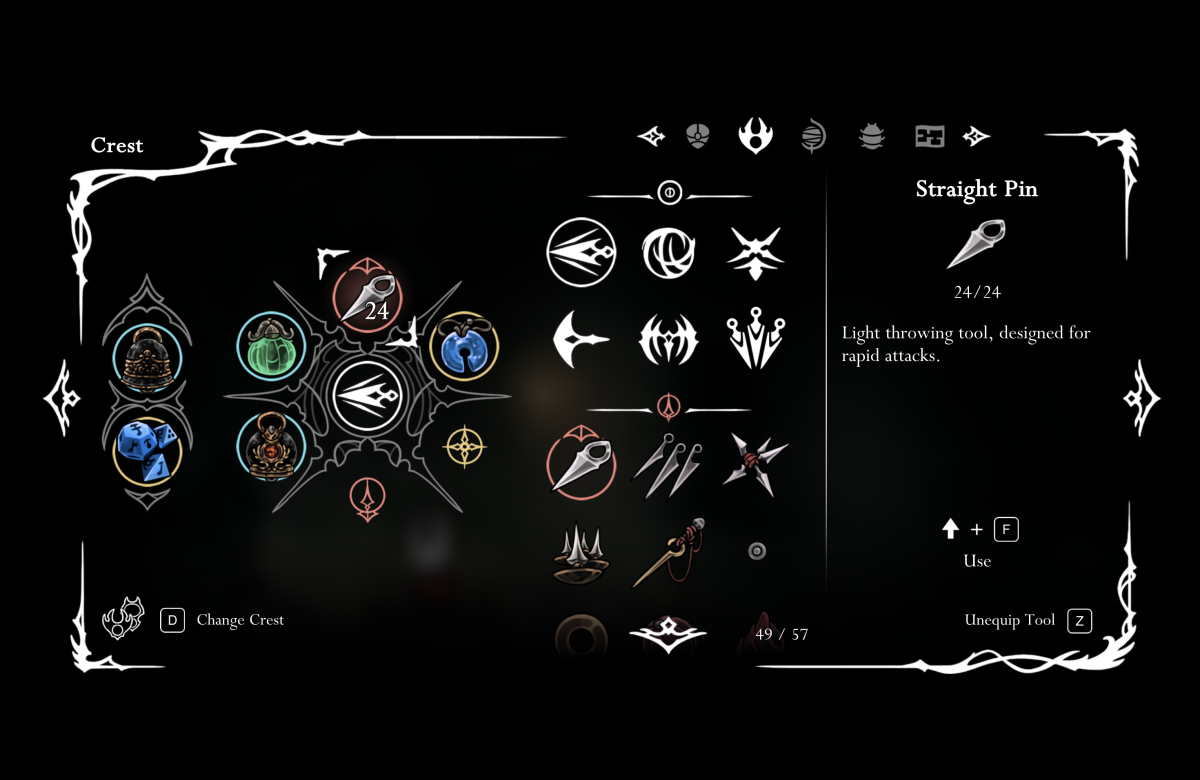
One of Hornet’s Crests, compplete with Tools and Silk Skills. (via the Peabody Press)
Crests also have slots for Tools, which give various benefits while travelling or in combat, and places for Silk Skills, unique combat maneuvers that use up a small amount of Silk. The different combinations of these allow for virtually infinite playstyle options.
The amazing combat is put to good use with the sheer variety of bosses. Not only are they all fun, they’re also all different. You can fight a boss that batters Hornet with simple, high-damage attacks, then the next one will feel like a dance once you get into its rhythm. Some seem hard, but become easy once you learn the patterns, and some seem easy, but become quite difficult once you get to a second phase. Every new boss is a completely different experience from the previous one .
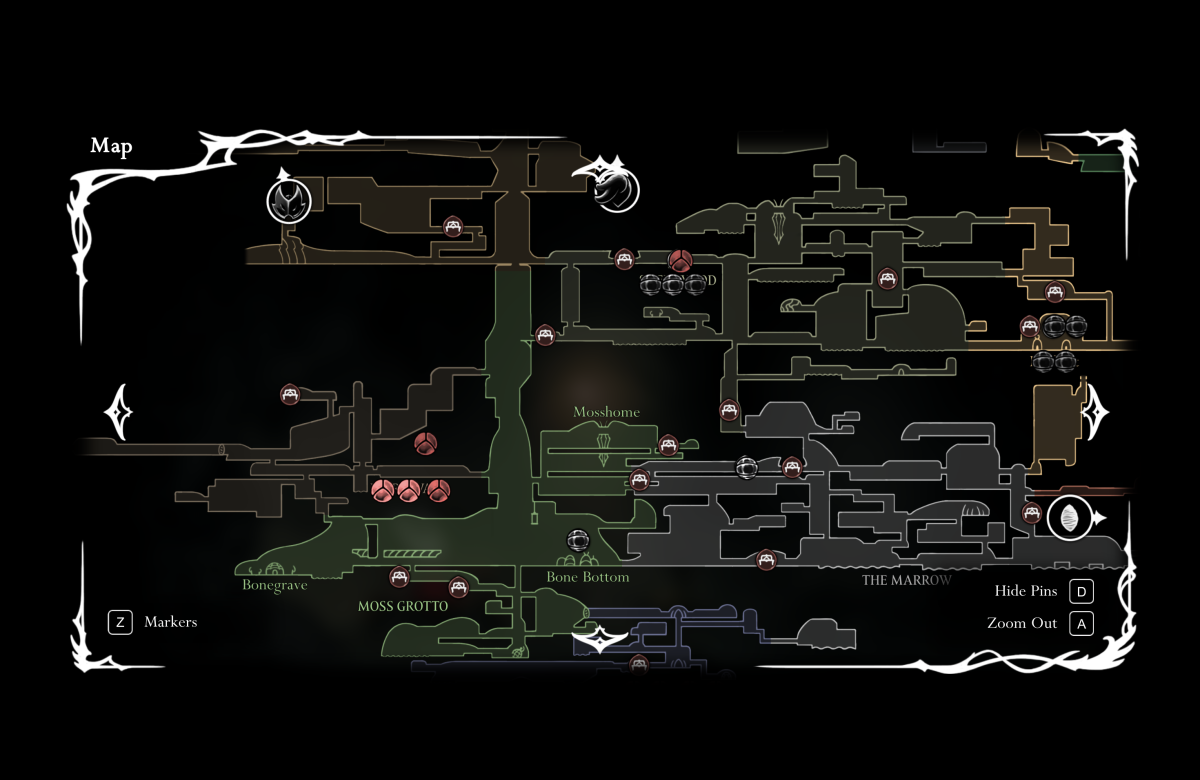
All these elements are vital to make the game what it is. But the real structure supporting the game is how much content there is. Not only are there numerous secrets hidden throughout the map behind breakable walls and secret exits, there are multiple hidden areas that are not at all necessary to beating the game! If you simply do the bare minimum and defeat the final boss, you’ll miss out on numerous characters and items; you’ll only play through Acts I and II, without even discovering the well-hidden Act III and the second ending.
That said, there are some difficult parts. Quite a few enemies and bosses, even in the early game, deal two Masks of damage instead of just one. Dying after just three hits can be frustrating, especially when you aren’t expecting the difficulty. This is balanced out somewhat by Hornet’s Bind healing three Masks at a time, but it’s still annoying.
Another issue is runbacks. “Silksong” uses benches as a save point; dying sends you back to the bench you last rested at. Many difficult boss fights have a bench located close to them, so going back to them isn’t that difficult. But when the closest bench is still far away, you often have to backtrack over areas laden with enemies. It can get repetitive going over the same area and doing the same platforming over and over again.
Finally, there’s the benches themselves. Some enemies in “Silksong” drop rosaries, which are used as a currency. Others, though, don’t drop any. Often, an area won’t contain any enemies that give rosaries. This isn’t usually a problem until you get to a bench. Most benches are locked, and you have to pay a certain amount of rosaries to use them; if you encounter one of these, you might not be able to save your game until much later.
Still, the game manages to be a thrilling, immersive experience. The environment, the enemies, the characters, the bosses, and the movement are all spectacular. The story is enthralling, and even if calling the kingdom “Pharloom” feels a bit on the nose, it’s clear that massive amounts of thought went into every aspect of the game.
Considering all these factors, and just how much fun the game is to play, I can safely say that “Hollow Knight: Silksong” deserves a 10/10.