by Coco Shepard ’27
April 2025
This article contains spoilers for the book series A Court of Thorns and Roses by Sarah J. Maas.
Romance has been one of the most popular and fastest growing genres of literature, especially in the past three years. One of the biggest supporters of this trend, ‘BookTok’, is a subcategory community of TikTok populated mostly by young women from the ages of 18-35.
Another genre, Young Adult, has been rising in popularity alongside Romance. More books are being written for younger audiences, and the broad genre of Young Adult literature is more invested in taking itself seriously, promoting books with more depth and care invested into characters, plots, and themes than past generations of readers had access to.
Once staples of the genre, tropes like the damsel in distress, white savior, and evil for the sake of evil are becoming less common or being turned on their heads in innovative ways.
Young adults can be difficult for authors to attract and write for, and it’s difficult to find the line between Young Adult and Adult. One of the default assumptions tends to be the ages of the characters. Young Adult books often feature protagonists that go through relatable struggles that mirror those of the readers, like growing up or defining your unique identity. These books can be cornerstone media to high school and college age readers who are going through developmental phases of their lives and can be influential to how they mature and even what they expect from their futures.
However, recent releases in the Young Adult genre have been less concerned with the cultivation of inspiration and good character in teenagers. Instead, there are many books that contain explicit sexual content and abusive and toxic relationships glorified as romance, often without proper warnings or the message that these relationships are unhealthy, all seemingly for the sake of shock value. The messages this trend can send to young readers, the majority of which are female when it comes to romance, can be potentially dangerous.
A Court of Thorns and Roses (ACOTAR) by Sarah J. Maas was released in 2015 and spiraled to virality online in 2024. ACOTAR is the first in a series that is not yet complete, spanning four full length novels and a novella, with a sixth book planned to release in late 2025 or early 2026.
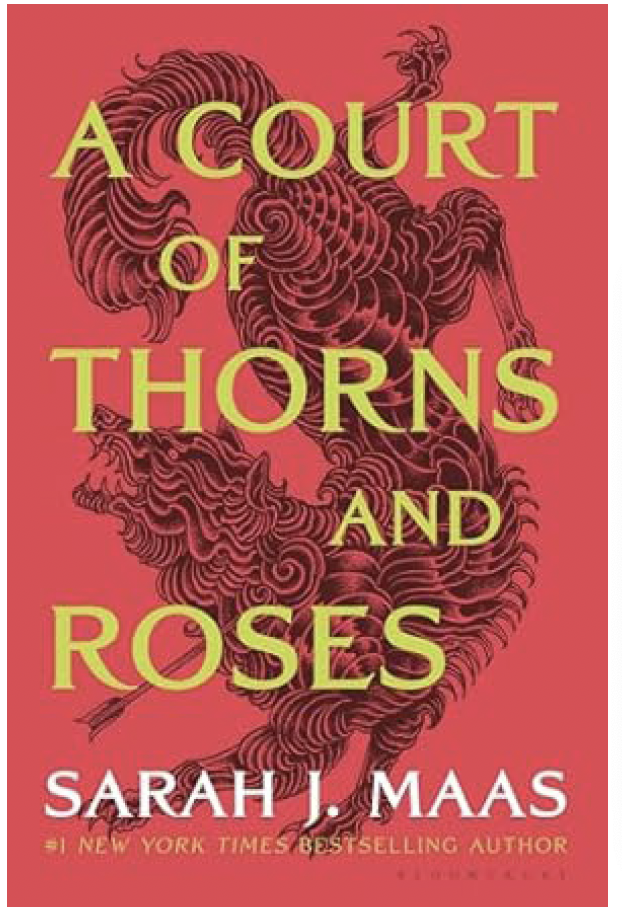
When it was published in 2015, ACOTAR was intended for the classification of New Adult, a smaller and less popular genre of literature aimed at those in their twenties who have recently reached adulthood. However, due to the worry that a smaller genre label would not sell well, Maas agreed to publish the book under the genre of Young Adult as long as her editors did not censor any of the explicit content. Since its release, ACOTAR has been bumped up to New Adult.
For the most part, the plot of the first book seems like it was intended for teenage readers. Feyre, the nineteen year old courageous and determined protagonist, is hunting to provide food for her starving family when she shoots and kills a faerie. Another faerie shows up at her family’s home to demand that she come with him to Prythian, the territory of the faeries, for the rest of her life as recompense. Once in Prythian, Feyre meets two men: Tamlin, the kind and gentle natured faerie who kidnapped her, and Rhysand, a sociopathic bad boy cliché.
Neither of these men are morally good people, but Rhysand’s behavior in particular would classify him as a domestic abuser as defined by the National Domestic Violence Hotline. Domestic abuse is defined as a pattern of behaviors used by a person in order to gain or maintain power or control over another person in an intimate relationship.
Rhysand acts violently towards Feyre, brands her with a magical tattoo that can spy on her without her consent, and coerces her into a deal in which she gives him one week of each month of her life in exchange for him healing her. During these weeks, Feyre describes herself as a “heathen god’s plaything.” She is forced to wear clothes that she feels uncomfortable wearing in front of a crowd of strangers and taken advantage of. Afterwards, Feyre has no memory of the event since she was unknowingly drugged by Rhysand to make her more complicit in his abuse.

The perpetrator of this abuse goes on to become the main love interest of the book whom Feyre ultimately ends up with, and he claims to have acted in the name of protection and love. Sexual abuse is not an action that any sane person would take to protect someone they care for.
Later on, Rhysand admits to Feyre that the reason he did not go further with her than touching her waist and arms was because the fact that he did not assault her was the “only claim I have to innocence.” In the same conversation, Rhysand claims that “there are bigger things at stake than taking a human woman to my bed,” implying that he would have assaulted her while she was drugged if circumstances had been different.
Rhysand does not apologize or feel any sort of guilt for this behavior, and goes on to continue manipulating and exploiting Feyre in the rest of the series. The fact that Rhysand had endured abuse from another character in his past does not excuse his actions. Being abused is never an excuse or reason to abuse someone else.
“The whole book [Feyre is] in a state of fight or flight,” said Caroline Stinner ‘27, the co-leader of Book Club.
Feyre is never in a place to make level headed decisions about what she wants in her life or in romance. Being taken from her family and town and passed between abusive men does not constitute a healthy state of mind. She is 19 years old, barely an adult, with very little experience in romance, and in an unfamiliar country with social standards she had no way of understanding. She is barely in a position to give consent, and she hardly does. It is always the men who initiate intimacy, never Feyre, and her consent is always questionable.
The message that Feyre and Rhysand’s relationship sends to young readers is not a healthy one. According to Maas’s description in ACOTAR, a woman’s discomfort and fear should be ignored, even by herself, if the man manipulating and controlling her is charismatic, powerful, and sexy enough.
Books that rely on the reader’s literary analysis skills to understand when the author does not condone the actions of their characters are valid and valuable pieces of literature. However, ACOTAR was not written to educate readers or provide them with a literary perspective on domestic abuse. It was written as a ‘dark’ romance, to appeal to readers who want to be swept up and excited by a high tension, high stakes, steamy romance.
ACOTAR’s GoodReads reviews reflect this message sinking into the minds of its readers.
One review exclaims “[I] can’t stress enough how much I loved their relationship,” another states “I take back every bad thing I’ve said about Rhys[and].”
The problem here isn’t with romance or sexual violence being shown in Young Adult books. In fact, these topics should be explored with the teenage age group, who are at risk of encountering unhealthy romantic or sexual relationships and being involved in them. It isn’t inherently bad to portray an evil character doing evil things; the problem is that these traits are glorified and seen as desirable in a partner. By the end of the story, or once the couple officially gets together, the earlier problems are often swept under the rug and left unaddressed, leading to the mistaken belief that these relationships are normal or healthy and that these toxic behaviors should even be replicated. Fiction itself is not the issue, but the harmful, misogynist behaviors that readers may wrongfully believe are being justified by that fiction.
When asked about their thoughts on the current state of romance novels, Gray Holmes ‘27 concluded, “It’s important to realize this shouldn’t happen in real life at all. It’s only good when it’s fiction. There’s a line between fiction for fun and what you bring into reality. If this was real… just no.”