by Alice Littlehale ’26
March 7, 2025
At the beginning of the millennium, there was a rise in a genre of media that was new to the mainstream: Grimdark.
Grimdark is a fiction genre that is defined as pervasively gritty, violent, and pessimistic. It’s a bleak, nihilistic story in a hostile setting. The term is inspired by the tagline of the miniature wargame Warhammer 40,000: “In the grim darkness of the far future there is only war.”
The characters are morally ambiguous, and often imply that evil is a matter of perspective. Popular examples include Game of Thrones, The Walking Dead, Breaking Bad, and Batman v. Superman. Fans of grimdark argue that it makes for more realistic stories than ones with unambiguously happy endings.
However, current audiences aren’t looking for realism when they enter theaters. They’re looking for an escape. Our country, and the world, is a turbulent place right now. People want to believe that we can build something better. That’s where director James Gunn’s new movie Superman fits in. His vision is a return to hope.
Shows like Amazon original The Boys, produced by Eric Kripke, parody the classic morally virtuous superheroes with the scenario of people with superhuman abilities who behave as they might in the real world: they are petty, tyrannical, and easily corrupted by influences like capitalism.
The problem is, most people already know that humans can be cruel and power hungry. What they need to see is someone with unlimited power who still chooses to be radically kind.
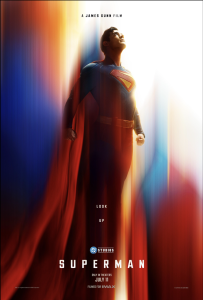
So how does the new DC Superman movie, Superman: Legacy aim to fulfill this? We first need to look at the history of the character.
In 1938 the first Superman comic ever was released. It was the Great Depression, World War II was on the horizon, and two men both born to families of Jewish immigrants became fast friends in high school. Jerry Seigel and Joe Shuster created a hero that defended the weak, fought anti-semites, and provided hope for America during a time where much seemed hopeless.
Director James Gunn isn’t afraid to take this source material seriously. In the teaser trailer for the new film, Superman, played by David Cornswet, wears a classic colorful costume. In an interview with Screen Rant, Gunn described the rationale for this choice by saying, “Superman wants kids to not be afraid of him.”
In an interview with Screen Brief, Gunn discussed what audiences can expect from his take on the decades-old character, “We can expect a Superman who is about the compassion of the human spirit, a Superman who is about kindness, love and compassion, while also being a very strong character. He is the best of humanity, even though he is an alien from outer space.“
He further described it as a movie about kindness, a movie about being good. He wants to show the basic, fundamental decency of human beings across the globe. One way he does this is by showing Superman bruised and bleeding in a key scene in the trailer. This was a controversial choice for a normally bullet-resistant character. In the interview with Screen Brief, Gunn states that he wanted to give the man of steel moments of vulnerability.
He also stated that the scene is a commentary on the concept of Superman itself, “We’re dealing with Superman, this symbol of really old-fashioned values and hope, and it’s an idea that’s been a bit battered over the years. Both that sort of concept of Superman and the concept of just kindness in general. And I think that this is about letting that be what it is, and allowing those traditional values to manifest themselves in a completely new way.”
People are deeply influenced by the media they watch. According to The New York Times, new studies show that viewing habits can affect people’s thinking, political preferences, and even their cognitive ability. If you are regularly exposed to violent, disturbing, or uninspiring content, you may find yourself more anxious and pessimistic.
We need movies that can give our minds a model for positivity when things seem difficult.
It’s unclear whether Superman: Legacy will meet this bar, be well-received by audiences, or if James Gunn effectively implemented his vision. If he did, and the movie is a commercial success, it could signal to Hollywood that audiences are looking for media that leaves them feeling more positively about the world. If it’s not, it may signal the end of DC Superman movies as we know them, and a continued shift towards media that reflects the current cultural and political tensions within our society rather than providing an escape from them.
Children today are growing up in a polarized and contentious world. They deserve paragons. They deserve the ability to trust that tomorrow will be a little bit brighter. Can this new Superman movie give them that? No one will know until it comes out in theatres on July 11.
But if it does, perhaps it will teach the next generation the importance of fighting for a kinder world.