The opinions expressed here are strictly those of the writer and do not reflect the views of University School of Nashville or the Peabody Press.
Music is inherently human. It evolved alongside us; before we ever developed language, we shared songs.
Music is deeply tied to emotion, and is one of the last things people with memory issues retain. Aristotle once said that music “directly represents the passions of the soul.” What then, is music created by something soulless?
Artificial Intelligence has begun infiltrating the music industry. The market is estimated to be worth 39 billion dollars by 2033, and music platforms everywhere are now flooded with AI songs. It’s estimated that a quarter of the songs on Spotify are now AI generated. However, as Spotify does not provide any tools for the user to flag AI music or remove it from their playlists, many users do not realize the content they’re listening to is AI generated.
Sienna Rose, for example, is a singer with over 3 million monthly listeners. She’s posted videos thanking her fans for her meteoric rise to success and talking about her creative process.
The issue? Sienna Rose isn’t real. Everything from her face to her name to her music was created with AI.
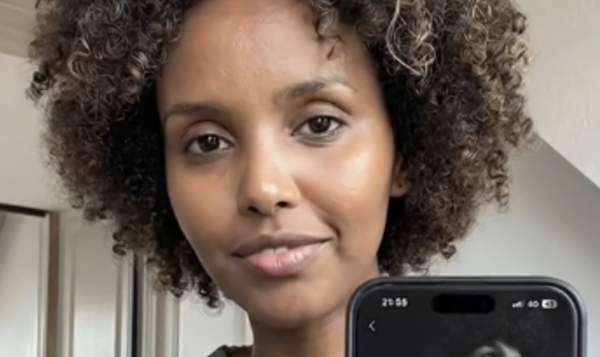
However, the team behind her is desperate to convince the world she is. The character has a variety of social media accounts, including Instagram and TikTok, where she talks about how excited she is to perform live, asks for advice to help with writer’s block, and posts videos where she sways to her music with captions like, “when the everyone thinks you’re fake, but you’re really just out here living your dream life.”
Though none of Sienna Rose’s social media accounts have admitted to being AI-generated, the account released 45 tracks in a month, an impossibly high output for a human artist. Streaming platforms’ detection tools have flagged much of the music as inhuman. In her online videos, her hair color and eye color changes regularly, and her face distorts in unnatural ways.
In short, a team of producers has invented a musician that doesn’t exist.
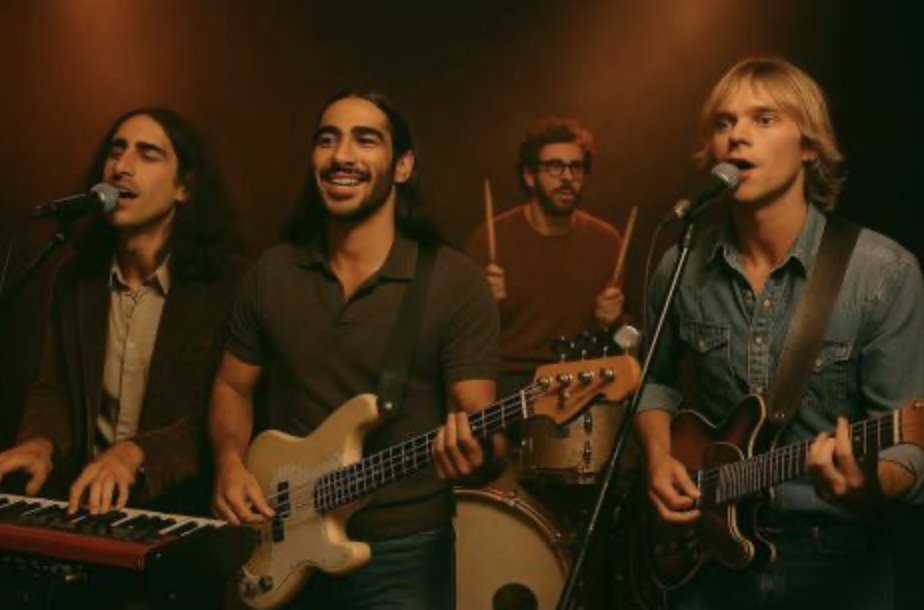
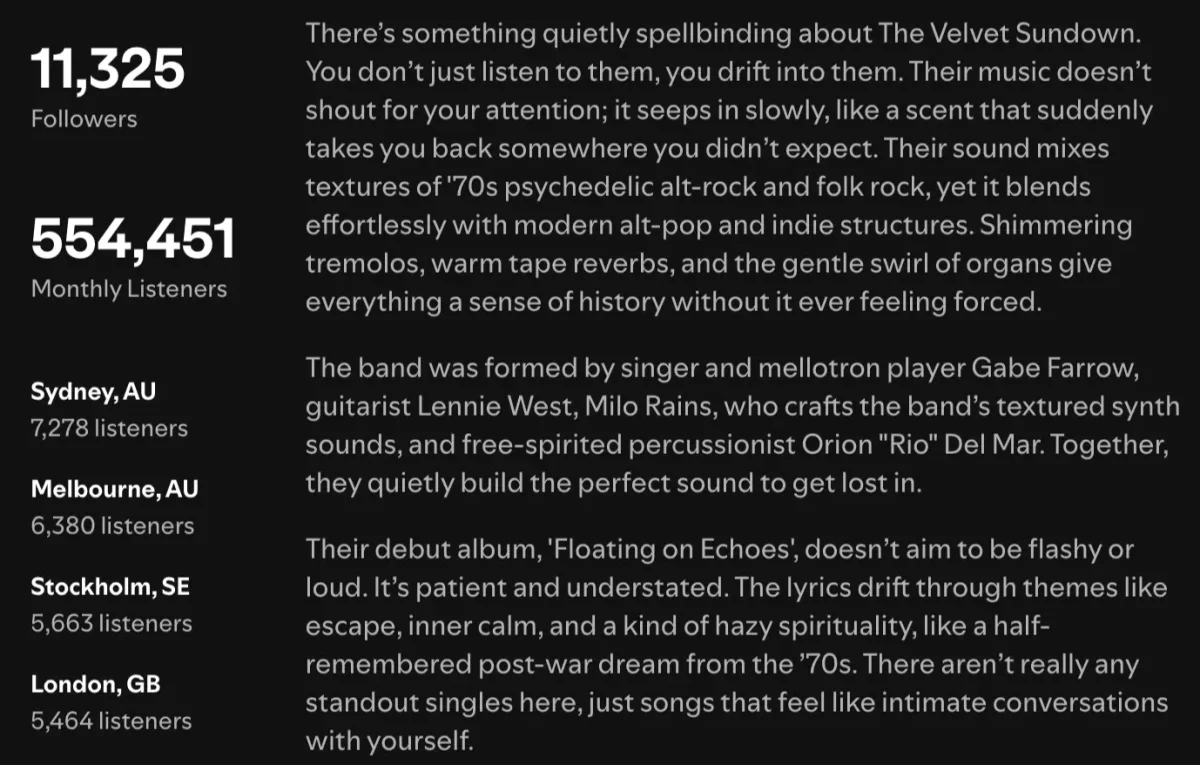
Another band, the Velvet Sundown, had a meteoric rise to popularity. Their description on Spotify claimed they were a psychedelic rock project, and showed an image of four men. After widespread public suspicion about whether or not the band was AI generated, the profile finally acknowledged itself as an AI project after almost a year of existence.
On Spotify, their new description claims that The Velvet Sundown is, “a synthetic music project guided by human creative direction, and composed, voiced, and visualized with the support of artificial intelligence.”
Proponents of using AI to generate music claim that it makes music creation accessible to a wider range of people, and that human creativity is still involved in creating prompts and tweaking a generated song.
Robert Kyncl, the CEO of Warner Music Group said in an interview with the Guardian, “Now we are entering the next phase of innovation. The democratization of music creation.”
Others, particularly career musicians, think of AI as a form of theft or plagiarism. AI models are trained on massive datasets of audio produced by human artists, usually without those artists’ consent. Then, models learn to produce the most likely chords, notes, and rhythms that go into a song.
Spencer Kornhaber, a journalist who has long covered music and popular culture, wrote for The Atlantic criticizing trends in AI music.
“The technology also seems to devalue the hard work, skill, and knowledge that flesh-and-blood musicians take pride in–and threaten the livelihoods of those musicians. Another problem: AI music tends to be, and I don’t know how else to put this, creepy,” Kornhaber wrote.
Currently, a major roadblock exists to AI music’s success: U.S. copyright law. On March 21, 2025, the U.S. Court of Appeals issued a ruling that anything created entirely by AI is not eligible to be copyrighted. That means that although producers can profit off of AI music, as seen with Spotify, so can anyone else who finds their track. It could be reuploaded to different platforms, sold, and even used in movies or shows. This challenge remains the largest disincentive for major music labels using AI. Though it would be cheaper than paying their human artists, they would also lose out on many attempts to profit off of it.
Today, it’s unclear what the future of AI music will bring. It’s a near-certainty that it will only continue to improve, and to be harder for the average human listener to detect. Listeners who are against the medium will need to lobby platforms like Spotify and Apple-Music to label AI generated content as such. Proponents of AI tools will have to find ways to prove that AI music is “human” enough to be protected under copyright law.
And all groups will need to reckon with the major practical and ethical issues that come with its creation.