by Bronson Schmidt ’25
March 7, 2025
The opinions expressed here are strictly those of the writer and do not reflect the views of University School of Nashville or the Peabody Press.
TikTok was banned for the wrong reasons.
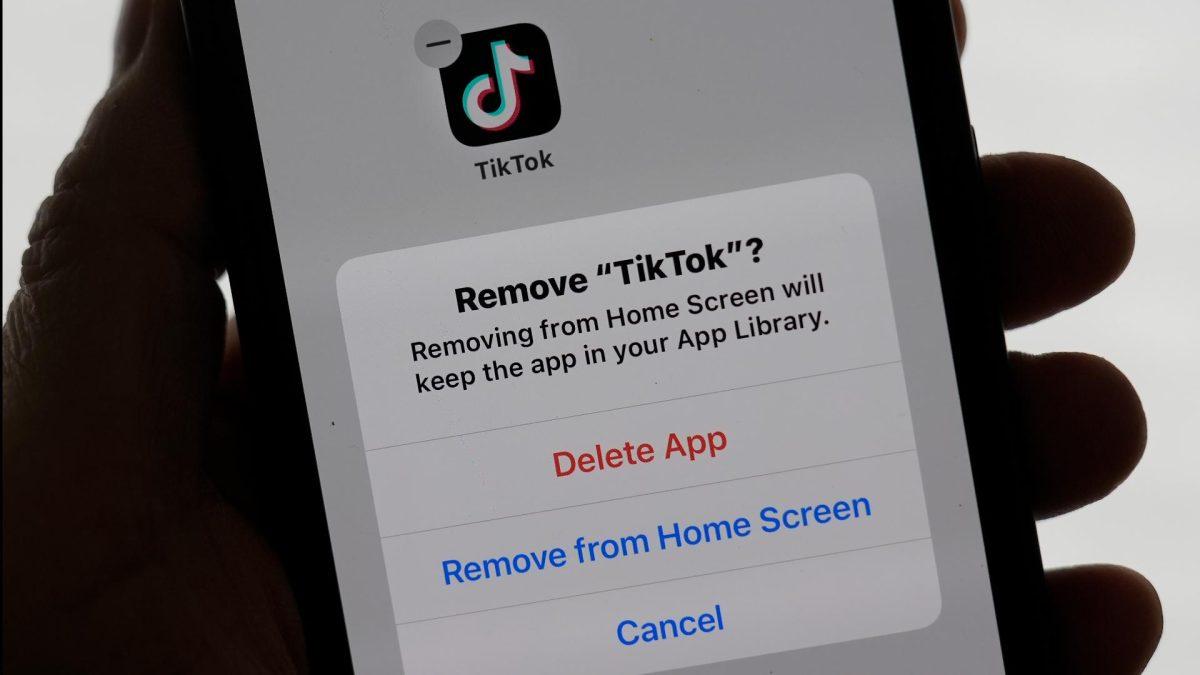
On April 24, 2024, Joe Biden signed into law a demand that TikTok sell itself to a United States based buyer. This law was signed due to concerns around user privacy and antitrust violations. And, while these issues are important, they completely ignore much larger and existentially threatening features of the design of TikTok and every other social media platform. In the age of social media, the world has come face to face with one of the most evil and predatory systems that humankind has created: The Algorithm.
We live in a world defined by algorithms. Whether you know it or not, nearly every facet of modern culture is created or propagated by an algorithm. Mass media, humor, news, products, all of which are dictated by the algorithms that run our governmental systems, technology, and especially social media.
Social media algorithms now are incredibly different than algorithms of the past. Even just a few years ago in 2017, social media algorithms could be easily categorized into two categories; functional algorithms and bulk content algorithms.
Functional algorithms can be understood as algorithms which drive the underlying design of user interaction with the platform. Think search algorithms, lag-reducing algorithms, algorithms that would organize the posts of who you personally followed into a discrete feed, etc. Functional algorithms have existed since the creation of the first search engines in 1990 and are at the core of any online system.
Bulk content algorithms are algorithms which display many previews of content such that the user can select one piece of content out of a sea of others. A good example of bulk content algorithms could be the YouTube video recommended page, or even a Netflix “For You” page. These algorithms have existed since YouTube switched their content recommendation system to prioritize watch time over clicks in 2012, and many platforms, both social media and non-social media, have followed.
Both functional algorithms and bulk content algorithms have their fair share of moral and ethical dilemmas, all of which seem meaningless when compared to the current state of algorithms: algorithms which instantaneously change the content viewed by a user to perfectly match their exact compulsive interests. These algorithms can be called “quick predict algorithms”.
Quick predict algorithms exist in essentially every single social media platform of the modern day. The quick predict algorithm is entirely characterized by short form content. TikTok, Instagram and Facebook Reels, and Snapchat’s Spotlight are all examples of short form content and, by proxy, quick predict algorithms.
The quick predict algorithm represents a markedly unethical and existentially threatening development in social technology.
The algorithm follows the following procedure: a user opens a short form content application and the application immediately begins to analyze every minute action of the user. How quickly they scroll, what they like, if they open the comments: all of these are pieces of information which the application’s algorithm will near-instantaneously categorize to create a nearly perfect representation of what the user is compulsively drawn to. The precision and speed in which these applications utilize algorithms to rigorously pinpoint the minutia of impulsive responses that the user will experience to a given piece of content is so extreme that it creates a feedback loop of constant user input and perfectly curated output. This feedback loop causes a variety of disturbing side effects including severe mental health conditions, increased suicide rates, and the perpetuation of misinformation, all of which are enabled by the incredibly dangerous addiction that comes with this short form feedback loop.
It is undoubtable that short form content is incredibly addictive. TikTok users spend on average 95 minutes per day on the app, with this number reaching as high as five or more hours daily for the younger generation specifically. TikTok proves to be especially addictive for the younger generation, with 63% of all teenagers using the app, and 25% of 1.04 billion monthly users being under the age of 20.
One major consequence of social media addiction is increased suicide rates. TikTok’s algorithm often will push harmful and deprecatory content to its users, which especially affects teenagers and young girls. A 10-year longitudinal study at BYU has found that teenage girls who spend two or more hours on social media like TikTok at age 13 were far more likely to commit suicide, and further studies link the 62% increase in suicide deaths among 10-24 year olds from 2007 to 2021 with increased social media usage.
The reason that short form content in particular creates an environment in which suicide is a risk is that quick predict algorithms strongly ostracize users from real life social scenarios, and prey upon the real life insecurities of users through online content. This abstracts the user from real life solutions and keeps them in a state of constant self denial, comparing themselves to standards of beauty, talent, and wealth set online that would be impossible to meet in the imperfectness of the real world.
The addiction of social media also, importantly, causes sleep deprivation, which poses major risks to the health of humans. Studies have found that users who use social media an excessive amount report going to sleep later, waking up later, and being unable to go back to sleep after waking up in the middle of the night. Sleep deprivation has been proven to cause many mental health conditions which are only compounded by further sleep deprivation. These conditions include depression, suicide, psychological distress, anxiety, difficulty concentrating, hyperactivity and nervousness, aggression, substance abuse, and long-term mental illness.
All of the consequences of sleep deprivation are already caused by other aspects of short form content, creating a perpetuation of a variety of symptoms. Studies have found that depression, psychological distress, and anxiety are all greatly worsened by time spent, emotional investment, addiction and activity related to social media and short form content.
The research into the negative effects of social media is extensive, and there is an immense volume of research supporting that social media causes all of the aforementioned side effects and more. With such an apparent public health crisis on the hands of American citizens, it becomes clear that America is banning TikTok for the wrong reasons. While improper use of data is certainly an issue in both the privacy and security of citizens, what is more imminently harming Americans are the tangible symptoms of prolonged social media addiction that is perpetuated by every example of short form content, not just TikTok.
Of course, the immensity of banning all short form media seems to make this task impossible. But states within the United States have already begun doing so. California and New York have recently passed legislation which aim to heavily regulate the presence of “addictive feeds,” which according to the language of California’s legislature is defined as “an internet website, online service, or app, or a portion thereof, in which user-generated content is recommended for display to a user based on information provided by the user or otherwise associated with the user or their device.” The legislation in both New York and California aim to ensure parental consent in the use of addictive feeds, while simultaneously limiting data harvesting of social media companies.
The legislation passed in New York and California are important first steps in mitigating the threats of addictive short form content, but they are not enough. Addictive substances such as tobacco, alcohol, cannabis, and pornography are all restricted by age in the United States because they pose extreme physical and mental health threats if not properly regulated, especially to young Americans. It is time that American’s legislatures recognize that addictive social media feeds are just as pertinent of a threat; addictive short form content must be banned for underage citizens.