by Cameron Boros ’25
November 2024
The opinions expressed here are strictly those of the writer and do not reflect the views of University School of Nashville or the Peabody Press.
On February 16 2018, Former CIA director James Woosley appeared on Laura Ingraham’s Fox News segment “The Ingraham Angle.” He raised concerns over the Russian Interference in the 2016 election. He spoke about their overall operation “Disinformatzia” and echoed a claim from a defected Romanian Intelligence operative that there are more Russians working in disinformation than the armed forces.
None of his warnings are what drew attention to the interview however. What did was the question Ingraham asked at the end, if the US had ever ‘meddled’ in other countries’ elections.
“Oh probably, Woolsey said. “But it was for the good of the system in order to avoid the communists taking over. For example in Europe in ‘47, ‘48, 49 [with the] Greeks and the Italians” Woolsey stated, with a slight smirk.
“We don’t do that now though?” Ingraham asked.
“Well… Mhememem,” Wooley simply made a strange noise with his mouth to create a strange diversion from the admission of the current subversion of democracy being committed by our nation’s intelligence agencies.
“Can you do that to a Vine video?” Ingraham said, laughing.
The underlying issue here is the attitude in which the subversion of democracy is addressed. If twentieth century politics has taught us anything, it’s that authoritarianism is always closer than we may think. Just as the United States has benefited from subverting the fair elections of nations abroad for its own ideological and personal benefit, so do other states stand to benefit from our democracy’s backslide.
Election interference isn’t as dramatic as one might think. Donald Trump and his allies painted a false narrative of a stolen 2020 election that included dead people voting, interference from voting machine technology provided by the late Venezuelan dictator Hugo Chavez (who died in 2013) and scores of votes simply being thrown out.
The reality was that the 2020 election was the most secure in American History, according to the Cybersecurity Infrastructure and Security Administration. When people vote their votes are counted.
The issue is that America’s democracy has never been very democratic. In the beginning only land owning white men could vote, a fraction of the population. Later, other white men gained the right to vote, and then Black people technically acquired the right as well in 1869, but poll taxes, literary tests, violence against voters and systemic disenfranchisement made it virtually impossible for many to vote until the Voting Rights Act of 1965. Women only gained the right to vote nationwide 104 years ago in 1920. To this day gerrymandering, felon disenfranchisement and the difficulty that it takes to vote prevents or discourages so many from being able to participate in democracy.
Even if everyone is able to vote, our system makes it so that many Americans’ and their beliefs are not represented. Every major public office uses “first past the post” voting, meaning whoever gets the most votes wins. This method is obvious for electing presidents, but for electing congressmen and senators it means a large number of people’s votes and opinions are nullified as long as the other candidate gets one more vote than theirs. For example, if a candidate gets 50.1% of the vote compared to their opponents 49.7%, all the interests of almost half the voters are practically ignored. The two party system also leads to limitations in the amount of people’s interests being represented.
On the executive level, the electoral college leads to candidates only campaigning in a handful of swing states such as Arizona, Pennsylvania, Michigan and Georgia, rejecting the interests of people in most states. In 2020, 96% of campaign events were concentrated in just twelve states, ignoring the majority of Americans.
Not only do these issues display a lack of representation in American Democracy, they create cracks in the system that allow for policies to be controlled via other means. It’s common knowledge that in most elections, money is the deciding factor. For House seats more than 90% of candidates who spend the most win. This means policy groups, lobbyists and corporations can routinely influence congressmen to get what they want. Famously, a 2014 Princeton study found that public opinion has a ‘near zero’ impact on policies that get passed. However money does. The 200 most politically active companies spend $5.8 Billion influencing the government and get $4.4 Trillion back in taxpayer subsidies and support.
To make matters worse, in 1987 The Federal Communications Commission under President Reagan repealed the fairness doctrine, which had allowed for unbiased and truthful radio and television broadcasts. Think tanks, primarily conservative think tanks, had long been funded by corporations, but this allowed for tens of million Americans to have narratives funded by groups such as investment finance companies, such as BlackRock and Vanguard, beamed directly into their living rooms through news channels like Fox News.
Misinformation reached new heights with the advent of social media. In theory, the internet should allow for anybody to access free and unbiased information on any subject. While this does still occur, misinformation has proliferated and spread via the internet at unforeseen rates. Much of this misinformation has been funded from state governments. According to the U.S. Government Accountability office, Russia, China and Iran are the main foreign states responsible for spreading disinformation. The acquisition of Twitter by Elon Musk and the rapid development of large language models have increased the effectiveness of the spread of disinformation at terrifying rates. These technologies allow for the creation of convincing fake news articles deep fake videos and social media bots that can manipulate public opinion on a massive scale. It is dystopian to imagine a world in which robots posing as people funded by mal-intended state governments work to subvert our elections.
But we don’t have to imagine, because it’s already here. Woolsey was right when he called alarm to the dangers of disinformatzia, the irony of which is deep and rich.
During the Cold War, government agencies such as the CIA went to drastic measures to fight the spread of communism around the World. They subverted elections and supported regimes that often became authoritarian, such as the Military Dictatorship in Brazil in the 1960s, as well as the Chilean Dictatorship and Argentine regimes in the 1970s. Political discourse shifted further to the right, free market ideals were celebrated and the Red Scare took hold of America. Senator Joseph McCarthy and his allies accused many of being communists or communist sympathizers. Those in Hollywood and the government were arrested and tried for being allies to the enemy, meaning American Politics was partially governed by fear, fear of the spread of communism and its supposed threat to destroy American life. As a result, the media reflected an American Dogma that defined American life at the time.
This American Dogma, American exceptionalism, patriotism, and capitalistic growth, as well as a deep opposition to foreign ideas has existed since or before the birth of the nation. It was supercharged by the Cold War, which used paranoia and genuine fear of total annihilation to unite a nation against all that was emblematic of an ‘evil empire’ and their allies.
This dogma did not die off with the dissolution of the Soviet Union in 1991, but it lingered around and coalesced on the right wing of the American two party system.
This brings us to now, here in Nashville. In September the Department of Justice indicted Tenet Media, a media company based in Green Hills, only a few miles from USN, for receiving $10 million dollars from Russia Today, a Russian state controlled news outlet, effectively designating it as foreign propaganda. It was removed from YouTube on September 5. Tenet Media consisted of six right wing influencers, including Tim Pool, Dave Reuben and Laura Southern. Some of their YouTube channels have over a billion views, and they have millions of subscribers and followers across different platforms.
Pool, in particular, has hosted guests such as Laura Loomer, a conspiracy theorist who has appeared on many events with Donald Trump.
In retrospect it’s sometimes extremely obvious that Pool was funded by the Kremlin. “Ukraine is the enemy!” he shouts in one video clip, banging his fist on a table. “Ukraine is the enemy of this country, being funded by the Democrats, Ukraine is our enemy!”
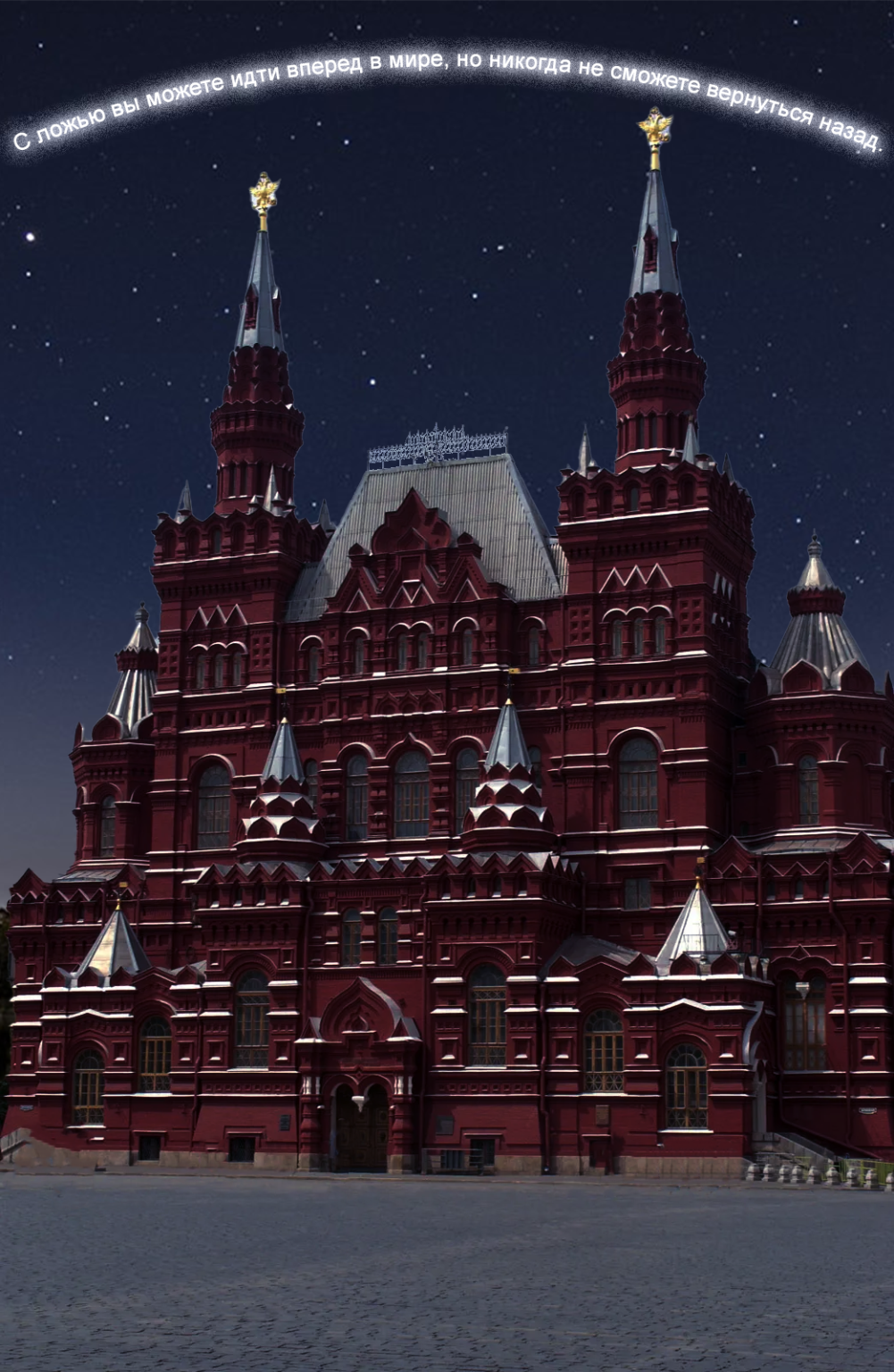
What’s clear about Russian disinformation is that they have obvious favorites. Moscow wants Donald Trump to win. American Intelligence agencies concluded that Putin ordered interference with the 2016 election in order to help Trump win. Russian disinformation campaigns target conservatives in order to shift public opinion. Since Moscow is more ideologically similar with the American right, they can mold the right’s opinions towards their own and expand their sphere of influence.
In a September 27 meeting with Ukranian President Volodymor Zelensky Donald Trump stated that he and Putin had good relations. The Ukrainian president quickly interjected to say that he hoped that Trump had better relations with him than the Russian authoritarian. Trump later chastised Zelensky, saying that he ‘refused to make a deal’ regarding Russia’s war. It has also been reported by the New York Times on October 8 that Trump has met with Putin at least seven times after leaving office, also giving him COVID-19 tests when they were rare during 2020. Trump has also refused to state that he wants Ukraine to win the war.
Additionally, Trump has been accused of breaking the Logan Act, an act which prevents private citizens from negotiating with foreign governments on behalf of the US by allegedly negotiating with Israeli Prime Minister Benjamin Nethanyahu, urging him not to make a ceasefire deal because it would help the Harris Campaign. Both Nethanyahu’s office and Trump have denied these allegations.
For many Americans, it doesn’t matter if Russia seizes Kyiv and Ukraine falls. The suffering of people in far away countries can seem insignificant to many. The question that we should be asking ourselves is what role America has on the global stage. We should be confused about how our nation, which was so vehemently opposed to everything coming from Communist Russia that it was stirred into a fervor which partially defined the zeitgeist of generations, can now be so apathetic towards the threat of subservience to the will of Moscow.